 0
0
 0
0
NEW DELHI — As India undergoes an unprecedented expansion of its medical education sector, the very body tasked with ensuring the quality of the nation’s future doctors is operating significantly shorthanded.
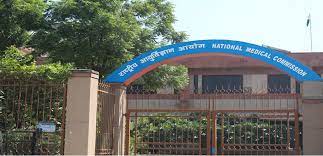
In a statement to the Rajya Sabha on February 10, 2026, Minister of State for Health Anupriya Patel confirmed that 19 out of 54 sanctioned leadership positions within the National Medical Commission (NMC) and its autonomous boards remain vacant. This admission comes at a critical juncture: the government has greenlit a record-breaking surge in student enrollment, raising urgent questions about whether a depleted regulator can effectively police the standards of medical training for 1.4 billion people.
The Staffing Gap: A Hollowed-Out Hierarchy
The NMC was established under the National Medical Commission Act, 2019, to replace the controversy-ridden Medical Council of India. Its mission was to provide a transparent, modern regulatory framework. However, the current vacancy rate—nearly 35%—suggests a systemic bottleneck.
While the main Commission holds 28 of its 33 sanctioned posts, the real “engine room” of the regulator—its four autonomous boards—is bearing the brunt of the shortage. These boards are responsible for:
-
Undergraduate Medical Education (UGMEB): Setting the curriculum for MBBS students.
-
Postgraduate Medical Education (PGMEB): Overseeing specialist training (MD/MS).
-
Medical Assessment and Rating (MARB): Inspecting and approving new colleges.
-
Ethics and Medical Registration (EMRB): Enforcing professional conduct and maintaining the national doctor register.
Key roles, including board presidents and whole-time members, sit empty. “Key positions remain vacant for months, stalling regulatory functions,” notes health activist Dr. K.V. Babu, who has tracked the issue through Right to Information (RTI) requests. He points out that despite recruitment advertisements issued as far back as late 2024, the government’s response has remained a repetitive “under process.”
The “Boom” vs. The “Watchdog”
The urgency of these vacancies is magnified by the sheer scale of India’s medical education “boom.” In the last year alone, the NMC approved over 20,000 new MBBS seats and 777 postgraduate seats. Total MBBS capacity now exceeds 137,000 seats—a massive leap toward the government’s target of adding 75,000 seats over five years.
However, growth without rigorous oversight is a recipe for long-term health crises. The Medical Assessment and Rating Board (MARB), which currently lacks full leadership, is the frontline defense against subpar institutions. Recent data shows that 162 Letters of Disapproval were issued to colleges for deficiencies in infrastructure, patient load, and faculty numbers.
Dr. Sanjay Tiwari, a medical education analyst, warns that “numbers alone won’t fix a broken system.” He notes that many existing colleges already struggle with a 30% faculty shortage. Without a fully staffed NMC to conduct stringent audits, there is a fear that “ghost faculty” and inadequate facilities could become the norm in newer, rapidly approved private institutions.
Expert Concerns: Quality Over Quantity
The Indian Medical Association (IMA) has been vocal about the potential dilution of standards. Dr. Dilip Bhanushali, President of the IMA, expressed strong opposition to recent NMC moves that eased faculty hiring norms—such as allowing Ph.D. holders to make up 30% of certain departments—to plug gaps.
“We oppose these provisions. They are unacceptable,” Dr. Bhanushali stated, suggesting that lowering the bar to accommodate growth risks producing doctors who are inadequately prepared for the complexities of clinical practice.
The concern is not just academic; it is a matter of public safety. If the Ethics and Medical Registration Board (EMRB) is understaffed, the processing of medical negligence cases and the enforcement of ethical codes may lag, leaving patients with little recourse against malpractice.
The Public Health Ripple Effect
For the average citizen, the NMC’s internal staffing might seem like “inside baseball,” but the real-world implications are profound.
-
Variable Care Quality: When oversight is stretched thin, the quality of a doctor’s education can vary wildly between a premier government institute and a newly minted private college.
-
Specialist Shortages: India faces an 80% shortage of specialists in rural districts. A shorthanded PGMEB may struggle to streamline the approvals needed to train more surgeons, cardiologists, and pediatricians where they are needed most.
-
Cost vs. Competency: With private medical fees reaching up to ₹25 lakh annually, students and parents expect an education that meets global standards. A weakened regulator fails both the student and the future patient.
The Government’s Defense and the Path Forward
The Ministry of Health has downplayed the disruptions, assuring Parliament that “appropriate institutional mechanisms” are in place to ensure the NMC continues to function. The government views the filling of posts as a “continuous process” and has recently sought to hire retired officers as consultants to bridge the gap.
However, critics argue that a “consultant-led” regulator lacks the long-term accountability required for such a high-stakes sector. The rigorous criteria for board members—requiring over 15 years of experience—is a double-edged sword: it ensures expertise but creates a shallow pool of eligible candidates willing to navigate the bureaucratic appointment process.
What Should Consumers and Students Do?
-
Verify Before Enrolling: Prospective students should use the NMC portal to check the latest ratings and “Letter of Permission” status for any medical college.
-
Monitor Ethics: Patients can still report ethical violations to the State Medical Councils, though the NMC remains the ultimate appellate authority.
-
Stay Informed: Follow updates from the Ministry of Health and Family Welfare (MoHFW) regarding new college approvals and infrastructure mandates.
Conclusion
India’s ambition to become a global healthcare hub requires more than just more hospital beds and college seats; it requires an ironclad regulatory framework. As the nation eyes “self-reliance” in healthcare, a fully staffed, robust National Medical Commission is not a luxury—it is a necessity. Until those 19 chairs are filled, the quality of India’s medical future remains under a shadow of doubt.
Medical Disclaimer: This article is for informational purposes only and should not be considered medical advice. Always consult with qualified healthcare professionals before making any health-related decisions or changes to your treatment plan. The information presented here is based on current research and expert opinions, which may evolve as new evidence emerges.
References
-
Parliamentary Data: Rajya Sabha Unstarred Question No. 642, answered on Feb 10, 2026, by MoS Health Anupriya Patel.