 0
0
 0
0
LONDON — In a shift of rhetoric that moves immunizations from the doctor’s office to the situation room, leading global health authorities are warning that vaccines must now be viewed as a “national security imperative.” On February 12, 2026, Richard Hatchett, CEO of the Coalition for Epidemic Preparedness Innovations (CEPI), declared that rising anti-vaccine sentiment and drastic funding cuts to international aid have left the world dangerously “disarmed” against a triple threat of naturally emerging viruses, laboratory accidents, and AI-enhanced bioweapons.
The announcement comes at a volatile moment for global health. As CEPI launches a $3.6 billion fundraising drive for its 2027–2031 cycle, the organization is navigating a landscape where U.S. policy shifts have slashed international vaccine aid, including a full cutoff of funding to Gavi, the Vaccine Alliance.
The Triple Threat: Nature, Accidents, and AI
Speaking from London, Hatchett emphasized that the definition of a “security risk” has evolved. While traditional defense focuses on borders and ballistics, the modern age faces biological vulnerabilities that can be exploited by nature or intent.
“Epidemics and pandemics are not just health challenges; they are security risks,” Hatchett stated. He outlined three core pillars of concern:
-
Natural Outbreaks: The continued spillover of viruses from animals to humans, such as H5N1 avian influenza.
-
Laboratory Leaks: The risk of accidental release of pathogens during research.
-
Engineered Threats: The potential for deliberate biological attacks, which Hatchett noted could be “amplified by AI advancements” that lower the barrier for creating sophisticated bioweapons.
To counter these, CEPI is championing the “100 Days Mission”—a goal endorsed by G7 and G20 leaders to develop and authorize a vaccine within 100 days of a new viral threat being identified.
The Funding Gap and the “Reckless” Retreat
The call to action follows significant friction between global health entities and the current U.S. administration. Under the influence of Health Secretary Robert F. Kennedy Jr., the U.S. has pivoted away from the international vaccine collaborations that characterized the post-COVID recovery.
Recent casualties of this policy shift include:
-
The mRNA Bird Flu Project: The U.S. recently canceled $700 million in funding for Moderna’s mRNA bird flu vaccine research.
-
Gavi Funding: A total freeze on contributions to the organization that procures vaccines for the world’s most vulnerable populations.
Stephen Morrison, Director of Global Health Policy at the Center for Strategic and International Studies (CSIS), described the halting of mRNA funding as “reckless.” Morrison argues that these platforms are the only defense against bioterrorism, where speed is the primary factor in saving lives.
Dr. Katherine E. Bliss, a Senior Fellow at CSIS, echoed this sentiment. “For the United States, closing global gaps in access to immunizations is not just charity; it is a matter of national security,” Bliss noted. “Outbreaks elsewhere inevitably become threats here.”
A Decade of Lost Progress?
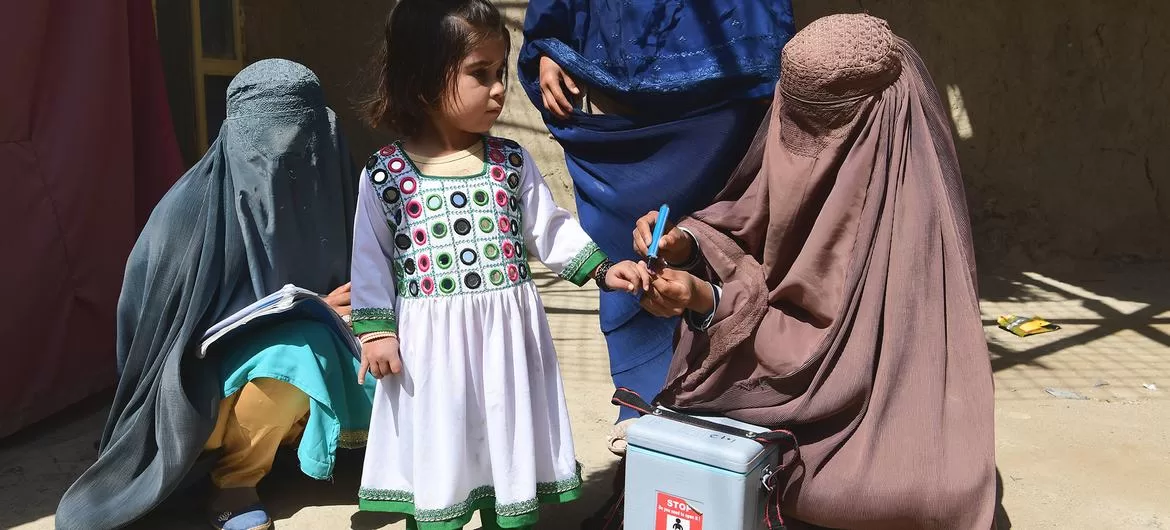
The urgency is underscored by a sobering statistic: in 2021, approximately 25 million children missed core vaccinations like DTP (diphtheria, tetanus, and pertussis). This represents the largest sustained drop in routine immunization in 30 years.
While countries like India have maintained strong Universal Immunization Programme coverage—exceeding 90% for DTP in regions like Himachal Pradesh—the global decline creates “pockets of vulnerability.” These pockets allow diseases like measles and polio to resurge and eventually cross borders through international travel.
The Public Health Bottom Line
For the average citizen, the “national security” framing might seem abstract, but its implications for daily life are concrete. When vaccine infrastructure fails, the resulting outbreaks:
-
Strain Economies: The COVID-19 pandemic cost the global economy trillions of dollars.
-
Displace Populations: Health crises often lead to regional instability and migration.
-
Overwhelm Healthcare: Routine medical care—from elective surgeries to cancer screenings—is often halted during infectious disease surges.
Experts compare vaccines to “societal seatbelts.” While they are often invisible when working correctly, they are the most cost-effective insurance policy against “black swan” viral events.
“Vaccines are a national security issue because they protect the functional capacity of our state and our economy,” Hatchett argued.
Challenges and Counterarguments
Despite the authoritative push, the “security” argument faces stiff opposition. Critics of the current model, including Secretary Kennedy, have raised questions regarding the long-term safety profiles of rapid-response platforms like mRNA. They argue that the speed of the “100 Days Mission” may come at the cost of rigorous, multi-year longitudinal studies.
Furthermore, there is the issue of “pandemic fatigue.” After years of COVID-19 restrictions, public appetite for funding multi-billion dollar preparedness programs has waned. Skeptics also point out that focusing on high-tech vaccine platforms often ignores “last-mile” delivery problems—such as the lack of refrigeration (cold chains) in developing nations—where even existing vaccines fail to reach those in need.
Moving Forward: Diplomacy and Science
CEPI remains optimistic, citing ongoing successes such as the rapid response to Marburg virus outbreaks in Rwanda. However, the path forward requires more than just lab work; it requires “health diplomacy.”
To maintain readiness, health leaders suggest:
-
Elevating vaccine access in diplomatic talks.
-
Countering online misinformation with transparent, evidence-based communication.
-
Diversifying manufacturing so that low-income nations aren’t dependent on a few Western suppliers.
As the 2026 global health summit approaches, the message from London is clear: the world can choose to invest in the “cheap insurance” of vaccines now, or pay the catastrophic price of an undefended border later.
Would you like me to provide a breakdown of how the “100 Days Mission” differs from traditional vaccine development timelines?
Medical Disclaimer: This article is for informational purposes only and should not be considered medical advice. Always consult with qualified healthcare professionals before making any health-related decisions or changes to your treatment plan. The information presented here is based on current research and expert opinions, which may evolve as new evidence emerges.
References
-
Reuters. (2026, February 13). Vaccines are a national security issue, says global health official. https://www.reuters.com/business/healthcare-pharmaceuticals/vaccines-are-national-security-issue-2026-02-13/