 0
0
 0
0
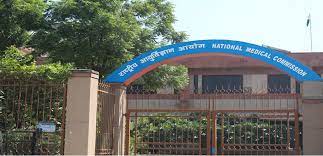
NEW DELHI — In a move that could significantly alter the landscape of post-graduate medical education in India, the National Medical Commission (NMC) has formally initiated a review to evaluate whether doctors with specialized master’s degrees in Biochemistry, Emergency Medicine, and Tropical Medicine should be permitted to pursue advanced super-specialty Doctorate of Medicine (DM) degrees.
The Postgraduate Medical Education Board (PGMEB) under the NMC issued an office order forming a dedicated sub-committee to rigorously examine this proposal. While the initiative remains in the evaluation phase, it signals a potential shift toward an integrative model of medical education—one that recognizes the overlapping clinical, metabolic, and emergency care realities of modern hospital medicine.
If recommended and officially notified, the reform would expand the list of eligible “feeder specialties” for six-year and post-MD super-specialty training programs, widening the pool of applicants for fields facing high demand across tertiary healthcare institutions.
What the Proposed Eligibility Expansion Entails
Under current rules established by the Post-Graduate Medical Education Regulations, 2023, a doctor must hold a specific broad-specialty Doctor of Medicine (MD) degree to qualify as an applicant for a Doctorate of Medicine (DM) super-specialty program. These pre-approved pathways are strictly defined under Annexure-9 of the regulations to ensure candidates possess foundational clinical experience before entering advanced fellowship training.
The newly constituted NMC sub-committee is specifically tasked with reviewing three proposed feeder expansions:
-
MD Biochemistry $\rightarrow$ DM Endocrinology: Integrating molecular and laboratory expertise into metabolic and hormone-related clinical specialties.
-
MD Emergency Medicine $\rightarrow$ DM Cardiology and DM Neurology: Connecting acute resuscitation and stabilization competencies directly into advanced cardiovascular and neurological critical care.
-
MD Tropical Medicine $\rightarrow$ DM Gastroenterology, Rheumatology, Endocrinology, Critical Care, Nephrology, and Hematology: Leveraging specialized knowledge in infectious and systemic diseases across several organ-system super-specialties.
The panel’s directive is strictly evaluative: members will scrutinize curriculum alignment, clinical exposure requirements, and entry competency standards before submitting recommendations to the commission.
Bridging Clinical Overlap: The Expert Case for Reform
The proposal reflects growing recognition within academic medicine that traditional boundaries between foundational sciences, acute care, and sub-specialty medicine are increasingly fluid.
Laboratory Science Meets Clinical Endocrinology
Endocrine disorders, including diabetes mellitus, thyroid dysfunctions, and metabolic syndromes, heavily rely on advanced hormonal assays, molecular pathology, and laboratory diagnostics. Experts point out that candidates with an MD in Biochemistry bring a deep understanding of metabolic pathways, translational research, and biomarker interpretation.
“Endocrinology is fundamentally a discipline rooted in biochemical pathways,” notes Dr. Rajesh Sharma, a senior endocrinologist and medical educator not affiliated with the panel. “Allowing a physician with an advanced background in biochemistry to transition into clinical endocrinology could foster a generation of clinician-scientists who excel at both diagnostic synthesis and patient management.”
Acute Care as a Gateway to Invasive and Critical Care
Similarly, emergency medicine specialists manage life-threatening cardiac arrests, acute coronary syndromes, and stroke protocols on a daily basis.
“Emergency medicine physicians operate on the front lines of stroke and heart attack management,” explains Dr. Ananya Iyer, an emergency care consultant. “Their core training centers on rapid clinical assessment, hemodynamic stabilization, and critical interventions during the golden hour. Transitioning these clinicians into advanced Cardiology or Neurology training leverages skills they already execute under immense pressure.”
Public Health Implications for Healthcare Workforce Planning
India continues to navigate a structural shortage of medical super-specialists, particularly outside major metropolitan hubs. According to public health data from the Ministry of Health and Family Welfare, regional disparities in specialist access leave millions dependent on overburdened urban tertiary hospitals for complex cardiovascular, renal, and endocrine care.
       CURRENT PATHWAY                         PROPOSED FLEXIBLE PATHWAY
   ┌──────────────────────┐                    ┌──────────────────────┐
   │ Standard MD Feeder   │                    │ Standard MD Feeder   │
   │ (e.g., Gen. Medicine)│                    │ (e.g., Gen. Medicine)│
   └──────────┬───────────┘                    └──────────┬───────────┘
              │                                           │
              ▼                                           ├───► MD Emergency Medicine ──► DM Cardiology / Neurology
   ┌──────────────────────┐                               ├───► MD Biochemistry       ──► DM Endocrinology
   │   DM Super-Specialty │                               └───► MD Tropical Medicine   ──► DM Multiple Disciplines
   └──────────────────────┘                                           │
                                                                      ▼
                                                       ┌──────────────────────────────┐
                                                       │ Widened DM Specialist Pool   │
                                                       └──────────────────────────────┘
By expanding eligibility to include MDs in Tropical Medicine and Emergency Medicine, public health analysts suggest the NMC could diversify and expand the applicant pool for crucial sub-specialties. For instance, Tropical Medicine specialists routinely treat complex systemic infectious diseases, multi-organ involvement, and severe inflammatory responses—skills directly applicable to Nephrology, Hematology, and Critical Care.
However, medical policy analysts caution that expanding entry doors is only one half of the equation.
“Widening eligibility can increase the volume and diversity of applicants, but public health outcomes depend entirely on maintaining rigorous training standards,” says Dr. S. K. Mukherjee, a health policy researcher. “Super-specialty training quality depends on high patient volumes, state-of-the-art bed capacity, structured mentorship, and rigorous clinical exams.”
Concerns, Nuances, and Counterarguments
While the proposal offers clear advantages, it is not without debate among medical educators:
-
Curriculum Gaps: Critics contend that MD programs in non-internal medicine pathways (such as pure Biochemistry) may lack sufficient bedside patient care experience, requiring supplementary bridging modules before entry into a direct patient-facing DM program.
-
Capacity Constraints: Super-specialty seats in top-tier medical colleges remain severely limited. Increasing the pool of eligible applicants without expanding physical infrastructure or faculty counts could heighten competition for existing seats without increasing total specialist output.
-
Standardized Competencies: Faculty bodies emphasize that clear competency thresholds must be established so that all incoming DM trainees, regardless of their background MD qualification, start with equivalent clinical foundations.
What This Means for Physicians and Patients Today
It is important to emphasize that this announcement represents a preliminary review, not an immediate change in policy.
-
For Medical Graduates: Prospective applicants should note that admission eligibility for upcoming national entrance examinations (such as NEET-SS or INI-SS) remains governed by current Annexure-9 rules until official regulatory notifications are published.
-
For Patients: This administrative policy review will have no immediate impact on day-to-day healthcare delivery or clinic appointments. Over the long term, however, successful implementation could lead to more robust, interdisciplinary specialist teams across Indian hospitals.
The NMC sub-committee is expected to complete its technical evaluation, hold stakeholder consultations, and present its recommendations to the main commission board in the coming months.
References
-
Medical Dialogues News Bureau. NMC forms panel to examine inclusion of 3 new feeder qualifications for DM courses. Published July 27, 2026. Medical Dialogues Article
Medical Disclaimer: This article is for informational purposes only and should not be considered medical advice. Always consult with qualified healthcare professionals before making any health-related decisions or changes to your treatment plan. The information presented here is based on current research and expert opinions, which may evolve as new evidence emerges.