 0
0
 0
0
JODHPUR, INDIA — A severe clash between medical trainees and institutional leadership has erupted at one of India’s premier medical institutes, casting a shadow over institutional governance and trainee welfare.
Dr. Vikrant Sharma, an MCh Neurosurgery graduate from the 2020–2023 batch at the All India Institute of Medical Sciences (AIIMS) Jodhpur, has publicly alleged that reporting a senior resident for ragging in 2021 triggered years of deliberate academic retaliation. Speaking at a press conference in Jodhpur on Friday, July 25, 2026, and dramatically breaking protocol during the institute’s official convocation ceremony on Sunday, July 27, 2026, Dr. Sharma stated that institutional bias led to him failing his high-stakes practical examinations three consecutive times before he finally passed under independent, strictly monitored conditions.
Allegations of Systematic Academic Retaliation
According to Dr. Sharma, the trouble began in 2021 when he filed a formal anti-ragging complaint with the institute’s administration against a senior resident doctor, Dr. Nitin Kumar. Following the report, Dr. Sharma alleges that senior faculty members within the Department of Neurosurgery developed a hostile bias toward him, compromising the objectivity of his academic evaluations.
Dr. Sharma was subsequently failed in his final MCh Neurosurgery examinations in June 2023, as well as in two subsequent reassessment attempts. He contends these failures were orchestrated to stall his professional advancement.
It was only in December 2024—on his fourth attempt, conducted as an independent external examination under strict security measures and video recording—that Dr. Sharma officially passed.
“I should have been declared successful on my very first attempt had the evaluation been fair,” Dr. Sharma stated, adding that his official degree now unfairly reflects a fourth-attempt pass.
To back his claims, Dr. Sharma cited internal evaluation documents obtained through the Right to Information (RTI) Act, which he asserts demonstrate clear discrepancies and deliberate grade manipulation during his initial assessment attempts.
Timeline of Events:
├── 2021: Dr. Sharma files formal ragging complaint against senior resident.
├── June 2023: Fails first MCh Neurosurgery final examination attempt.
├── 2023–2024: Fails two subsequent re-evaluation attempts.
├── Dec 2024: Passes 4th attempt under videographed, external supervision.
└── July 2026: Public allegations raised at press conference & convocation.
Government Outreach and Public Outcry at Convocation
Seeking redress outside the institution, Dr. Sharma escalated the matter to Union Minister of State for Health and Family Welfare, Anupriya Patel. In a official communication dated April 22, 2026, Minister Patel acknowledged the seriousness of the ragging and retaliation complaint and formally forwarded the matter to the health ministry for review. Dr. Sharma subsequently submitted an additional petition to the Executive Director of AIIMS Jodhpur on April 25, 2026.
Despite these escalations, Dr. Sharma maintains that no transparent, independent internal inquiry was launched by the institute.
The tension culminated on stage during the AIIMS Jodhpur convocation ceremony on July 27. Upon receiving his post-doctoral degree, Dr. Sharma addressed the gathering, stating bluntly into the microphone: “I have received a degree, but not justice. Justice is still pending.”
The institute’s director intervened shortly thereafter, halting his remarks before he was escorted off the stage.
Context: The Persistent Shadow of Ragging in Medical Training
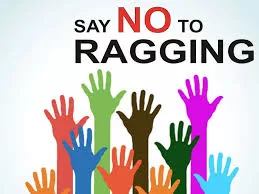
Ragging—a form of systemic hazing and harassment inflicted on junior students by seniors—remains a deeply ingrained issue within Indian higher education, particularly in high-stress medical environments. While the National Medical Commission (NMC) maintains strict “zero-tolerance” guidelines, enforcement across regional campuses remains inconsistent.
AIIMS Jodhpur itself has faced recent scrutiny regarding institutional climate. As recently as February 2025, the administration suspended two nursing students following an investigation into verbal harassment and inappropriate remarks targeted at a first-year trainee.
However, Dr. Sharma’s case highlights a far more sinister dimension: institutional retaliation by faculty members. While peer-to-peer hazing is well-documented, allegations that senior academic faculty weaponized high-stakes examinations to punish a whistleblower signal a profound failure in institutional oversight.
Independent medical ethicists note that while academic grading in surgical specialties inherently involves subjective clinical evaluations, high-stakes postgraduate examinations require robust checks and balances to prevent personal bias from interfering with professional outcomes.
Public Health Implications and Student Mental Health
The broader implications of this case extend far beyond a single administrative dispute. Postgraduate medical residency is notoriously grueling, characterized by prolonged sleep deprivation, heavy patient loads, and significant emotional stress. When residents feel that reporting abuse or unsafe conditions will result in career destruction, a dangerous “culture of silence” takes hold.
| Key Public Health & Policy Concerns |
| Deterrence of Whistleblowing: Trainees may tolerate abuse or medical errors out of fear of academic retaliation. |
| Mental Health Risks: Unfair academic barriers and persistent harassment significantly increase rates of clinical depression and burnout among resident doctors. |
| Systemic Quality of Care: Chronic stress and toxic training environments directly compromise the safety and quality of patient care delivered in teaching hospitals. |
“If a resident physician believes that speaking up against harassment will cost them their medical license or delay their career by years, the system fails,” says Dr. Aris Thorne, a medical education policy analyst not involved in the case. “Ensuring transparent, merit-based grading is not just about fairness to the student—it’s a patient safety issue. We need mentally sound, uncompromised physicians at the bedside.”
Institutional Limitations and Pending Litigation
While the allegations are severe, several important counterarguments and analytical limitations must be noted:
-
Unproven Claims: Dr. Sharma’s allegations remain unproven in a court of law. The legal petition filed by Dr. Sharma remains active and pending judicial resolution.
-
Subjectivity in Surgical Assessment: Advanced neurosurgical examinations evaluate complex clinical judgment, manual dexterity, and high-pressure decision-making. Examiners often disagree on candidate performance without malicious intent.
-
Lack of Public Records: AIIMS Jodhpur has not released a detailed public rebuttal regarding the specific internal evaluation sheets, nor have the RTI documents cited by Dr. Sharma been made available for independent journalistic audit.
The Road Ahead
As of late July 2026, the legal battle between Dr. Sharma and AIIMS Jodhpur remains active in the court system. The case has ignited widespread debate on social media and within medical professional associations regarding the need for external, anonymized evaluation protocols for higher medical degrees across India.
For current medical trainees, the incident underscores the critical necessity of thoroughly documenting institutional interactions, utilizing anti-ragging committees early, and seeking independent legal or organizational advocacy when facing structural retaliation.
Medical Disclaimer
Medical Disclaimer: This article is for informational purposes only and should not be considered medical advice. Always consult with qualified healthcare professionals before making any health-related decisions or changes to your treatment plan. The information presented here is based on current research and expert opinions, which may evolve as new evidence emerges.
References
-
The Print. “Doctor calls out ragging at AIIMS Jodhpur—Got degree, not justice.” Published July 27, 2026. https://theprint.in/feature/doctor-calls-out-ragging-at-aiims-jodhpur-convocation-says-got-degree-not-justice/2997710/