 0
0
 0
0
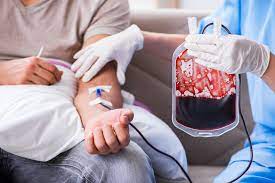
GENEVA, Switzerland — The World Health Organization (WHO) released a comprehensive global assessment revealing that over 85% of the world’s blood supply now comes from voluntary, unpaid donors. This milestone marks a major victory for global health security, with voluntary donations climbing significantly over the last decade to fuel an estimated 120 million blood donations globally. However, the agency issued a stark warning alongside the data: deep systemic inequalities mean that where a person is born still dictates whether they will survive a medical emergency requiring a blood transfusion. In lower-income countries, critical shortages and unsafe infrastructure continue to cost lives.
Tracking a Decade of Progress
The findings, published in the Global status report on blood safety and availability 2025, aggregate data from 168 countries and represent 97% of the global population. According to the report, total blood collections surged by nearly 19% between 2013 and 2023. A driving force behind this growth was a collective increase of 11.6 million donations from voluntary, unpaid individuals across 132 nations.
Public health institutions widely consider voluntary, unpaid donors to be the gold standard for a resilient blood system. Because these individuals donate out of altruism rather than financial incentive or familial pressure, they are significantly less likely to withhold information about high-risk behaviors or hidden health conditions.
Consequently, the prevalence of transfusion-transmissible infections (TTIs)—such as HIV, hepatitis B, hepatitis C, syphilis, and Chagas disease—is lowest among this demographic.
The Geography of Inequality
Despite these global strides, the data exposes a profound imbalance between wealthy nations and developing economies. High-income countries, which account for a mere 15% of the global population, secure 36% of all global blood donations.
The discrepancy becomes even more vivid when looking at localized donation metrics:
-
Global donation rates stretch across a massive chasm, from 0.4 to 53 donations per 1,000 people.
-
Twenty-four countries reported collecting fewer than 5 donations per 1,000 people, creating a state of chronic shortage.
-
While voluntary unpaid donations comprise 98.4% of the blood supply in high-income countries, they drop to just 63.4% in low-income nations.
This shortage has direct, fatal consequences due to the differing clinical profiles of patients requiring transfusions across regions. In wealthy nations, blood products are primarily utilized for supportive care in advanced cardiovascular surgeries, organ transplants, massive trauma recovery, and sophisticated cancer therapies.
In low- and middle-income countries (LMICs), however, the demand is driven by acute, life-threatening crises. The primary beneficiaries are women suffering from severe postpartum hemorrhage (bleeding during childbirth) and young children experiencing profound anemia, often triggered by malaria or malnutrition.
Infrastructure Gaps: Regulation and Screening
A safe blood supply chain requires more than willing donors; it demands stringent regulatory frameworks, high-tier laboratory equipment, and sustainable financing. The WHO analysis reveals that the foundation is fractured in many regions:
| Governance & Safety Indicator | Percentage of Countries Achieving |
| Possess specific national blood safety legislation | ~67% (Nearly 33% lack legislation) |
| Maintain regular inspection systems for blood facilities | 64% |
| Utilize formal licensing systems for blood centers | 62% |
| Operate accredited transfusion services | 40% |
Financing represents another major vulnerability. More than 1 in 7 countries operate without a dedicated government budget allocation or an established cost-recovery mechanism for blood services, placing long-term operational sustainability in jeopardy.
Furthermore, screening protocols remain uneven. While the WHO mandates that 100% of donated blood must be screened for HIV, hepatitis B, hepatitis C, and syphilis before clinical use, 10 reporting countries admitted they are unable to screen all donations for one or more of these pathogens.
Quality assurance programs, which ensure screening labs perform accurately, are utilized by 92% of laboratories in high-income nations but by only 48% of facilities in lower-middle-income countries.
Processing Barriers and the “Component” Deficit
The disparity extends to how blood is processed. Modern medicine rarely requires “whole blood.” Instead, a single donation is typically separated into distinct therapeutic components: red blood cells, plasma, and platelets. This allows one donation to benefit multiple patients based on their specific physiological needs.
[1 Whole Blood Donation]
       │
       ├─► Red Blood Cells (For severe anemia, blood loss)
       ├─► Platelets       (For clotting disorders, cancer therapy)
       └─► Plasma          (For trauma, volume replacement)
In high-income countries, 98% of collected blood is successfully separated into these components. In low-income nations, that figure plummets to 52%, meaning nearly half of all donations are underutilized due to weak laboratory infrastructure and logistical barriers.
Additionally, only 49 of the 168 reporting nations possess the domestic infrastructure to fractionate plasma into plasma-derived medicinal products (PDMPs), forcing 119 countries to rely entirely on expensive imports or go without these vital therapies entirely.
Expert Perspectives and Red Flags
Independent public health experts stress that while the 85% voluntary donation threshold is a milestone, celebrating too early masks dangerous institutional weaknesses.
“Voluntary unpaid blood donors are the cornerstone for a safe, sufficient supply in any country,” noted Dr. Tedros Adhanom Ghebreyesus, WHO Director-General, in a statement reacting to the findings. “These data show encouraging progress… but it also reminds us that where a person lives can still determine whether they have access to the blood transfusion they need.”
However, hematologists and supply chain experts point out significant lingering vulnerabilities. For instance, 59 countries still rely on family/replacement donors or paid donors for more than 50% of their total blood volume.
Replacement donation—where a patient’s family must find donors to replenish the hospital’s stock—frequently delays critical care and places immense emotional and financial pressure on families during medical crises.
Furthermore, nearly half of the responding countries (48%) lack a functional haemovigilance system. Without these dedicated surveillance networks to track the adverse effects of blood collection and transfusions, public health officials remain blind to the true scale of unsafe transfusion practices or complications in the field.
Global Framework and Practical Implications
Ahead of World Blood Donor Day on June 14, observed under the slogan “One Drop of Humanity. Give Blood. Save Lives,” the WHO is urging member states to honor World Health Assembly resolution WHA63.12. This framework calls for fully integrated, nationally coordinated blood supply networks to replace fragmented, hospital-based collection models.
For the Public and Health-Conscious Consumers
This data serves as a call to action regarding the tangible value of altruistic donation. Regular, voluntary blood donation is not merely a charitable act; it is a vital contribution to local community health resilience. Maintaining a steady pool of safe, unpaid donors ensures that local blood banks are insulated against sudden trauma spikes, natural disasters, or seasonal shortages.
For Healthcare Professionals
The report emphasizes the critical importance of clinical governance. Beyond seeking more donations, medical teams must actively reduce unnecessary transfusions through rigorous adherence to patient blood management protocols. Unnecessary transfusions expose patients to avoidable risks of adverse reactions or infections while placing preventable strain on an already fragile global supply chain.
As global health leaders align for the upcoming year of advocacy, the mandate remains unyielding. In the words of Dr. Tedros: “No one should die because safe blood is unavailable when it is needed.”
Medical Disclaimer
This article is for informational purposes only and should not be considered medical advice. Always consult with qualified healthcare professionals before making any health-related decisions or changes to your treatment plan. The information presented here is based on current research and expert opinions, which may evolve as new evidence emerges.
References
-
World Health Organization. “World Blood Donor Day 2026 Campaign: ‘One Drop of Humanity. Give Blood. Save Lives.'” Released June 12, 2026.