 0
0
 0
0
PUNE, INDIA — Scientists at the Agharkar Research Institute (ARI) have engineered an innovative, smart nanomedicine platform capable of selectively hunting down breast cancer cells and shutting off the genetic engines that keep them alive.
The peer-reviewed study, published in the medical journal Advanced Healthcare Materials, details a dual gene-silencing strategy that achieved robust tumor inhibition and regression in advanced laboratory models. By using biodegradable nanoparticles to transport a therapeutic payload directly into cancer cells, the research team successfully bypassed healthy tissues, mitigating the systemic toxicity and severe side effects long associated with conventional chemotherapy.
The Precision Delivery Vehicle: Disarming Cancer’s Defenses
Traditional cancer treatments often act like a sledgehammer, damaging healthy cells along with malignant ones. To achieve a more precise “surgical strike,” the ARI Nanobioscience Group—led by researchers Niladri Haldar, Rajkumar Samanta, Surajit Patra, Devyani Sengar, Sachin Jadhav, and Virendra Gajbhiye—built a tiny, high-tech delivery vehicle known as a nanocarrier.
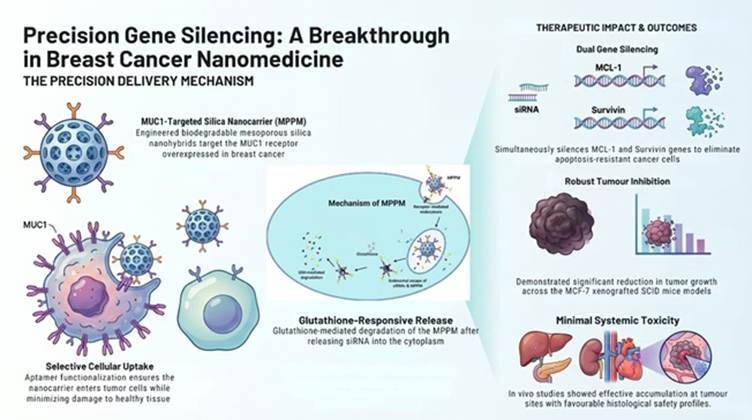
The foundation of this system relies on biodegradable mesoporous silica nanoparticles. These microscopic structures act like highly porous sponges, featuring an exceptionally high loading capacity and customizable surfaces that can be chemically modified for specific tasks.
To turn these nanoparticles into cancer-seeking missiles, the team wrapped them in a protective protamine biopolymer and attached a specialized molecule called an MUC1-specific aptamer.
Aptamers function as chemical “GPS systems.” Because breast cancer cells heavily overexpress a surface protein known as the MUC1 receptor, the aptamer-guided nanocarrier ignores healthy cells and binds tightly to the tumor cells. This targeted mechanism significantly enhances how efficiently the cancer cells swallow the therapeutic payload—a process called cellular uptake—while shielding the rest of the body from exposure.
A One-Two Punch: The Dual Gene-Silencing Strategy
Once inside the malignant cell, the nanomedicine deploys its secret weapon: a combinatorial payload of small interfering RNA (siRNA) molecules.
In the realm of modern genetics, siRNA acts as a molecular volume control, capable of selectively turning off, or “silencing,” specific faulty genes before they can produce harmful proteins. The Pune-based team designed their platform to deliver a coordinated one-two punch against two notorious anti-apoptotic genes:
-
MCL-1 (Induced Myeloid Leukemia Cell Differentiation Protein)
-
Survivin
In a healthy body, apoptosis is a natural mechanism of programmed cell death that instructs old or damaged cells to self-destruct. Cancer cells, however, mutate to overproduce proteins like MCL-1 and Survivin. These proteins effectively act as cellular bodyguards, rendering the tumor immortal and highly resistant to standard therapies.
By simultaneously silencing both genes, the ARI nanocarrier strips the cancer cells of their defenses, forcing them to undergo normal cell death.
Furthermore, the vehicle features an intelligent, stimuli-responsive release trigger. The nanocarrier is engineered to stay locked until it encounters a chemical called glutathione, which exists in uniquely high concentrations inside the tumor microenvironment. This environmental trigger ensures that the siRNA payload is only unleased once it is safely inside its cellular target.
Promising Evidence from the Lab
To test the system’s real-world potential, the researchers conducted biological evaluations using MCF-7 breast cancer cell cultures. The results demonstrated robust gene knockdown, a significant surge in cancer cell death, and a dramatic halt in tumor replication.
The most critical milestone, however, occurred during in vivo testing in Severe Combined Immunodeficiency (SCID) mice bearing humanized tumors. The nanomedicines selectively accumulated inside the tumor masses. Favorable histological examinations of vital organs confirmed that the treatment caused minimal systemic toxicity—meaning the mice did not suffer from the cellular damage usually triggered by traditional oncology treatments.
Expert Perspectives and the Path to the Clinic
Independent experts view the findings as a significant step forward for precision oncology, though they caution that the journey from laboratory bench to pharmacy shelf is a long one.
“What makes this study particularly elegant is the trifecta approach: active targeting, environmental triggering, and a multi-gene attack,” explained Dr. Arisudan Mishra, an independent oncology researcher and molecular biologist not involved in the study. “Silencing a single survival gene often allows cancer cells to adapt and find alternate survival pathways. Knocking out both MCL-1 and Survivin simultaneously closes those escape routes. It makes it incredibly difficult for the tumor to build resistance.”
However, medical professionals note that mouse models, while invaluable, do not always perfectly mimic human biology.
“We must maintain balanced expectations,” Dr. Mishra added. “Developing biodegradable silica platforms looks highly promising in mice, but human clinical trials will need to thoroughly evaluate how the human immune system interacts with these nanocarriers over time, alongside the long-term clearance of the silica from liver and renal tissues.”
According to global cancer registries, breast cancer remains the most prevalent malignancy worldwide, accounting for roughly 12.5% of all newly diagnosed cancer cases annually. For patients grappling with aggressive or drug-resistant subtypes, next-generation RNA-interference (RNAi) therapies could eventually offer a life-saving alternative to traditional toxic chemical regimens.
While the ARI platform must still undergo rigorous optimization, scale-up manufacturing validation, and extensive clinical trial phases before it can be integrated into mainstream hospital care, this preclinical breakthrough establishes a strong framework for the future of targeted, safer cancer treatments.
Reference Section
-
Publication Reference Link: https://advanced.onlinelibrary.wiley.com/doi/abs/10.1002/adhm.202505296
Medical Disclaimer: This article is for informational purposes only and should not be considered medical advice. Always consult with qualified healthcare professionals before making any health-related decisions or changes to your treatment plan. The information presented here is based on current research and expert opinions, which may evolve as new evidence emerges.