 0
0
 0
0
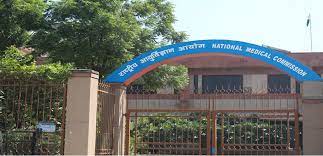
PATNA, INDIA — In a major escalation of regulatory oversight following allegations of systemic examination fraud, the National Medical Commission (NMC) has directed the Bihar state government to launch a formal state-level inquiry into severe irregularities surrounding undergraduate and postgraduate medical examinations at the Indira Gandhi Institute of Medical Sciences (IGIMS), Patna.
The directive, issued in a letter dated July 22, 2026, from the NMC’s deputy secretary to the Director of Medical Education, Bihar, demands a comprehensive investigation into reports of question paper leaks, answer sheet tampering, and monetary kickbacks at one of eastern India’s premier autonomous medical institutions. The regulator’s action comes after an internal institutional probe confirmed widespread malpractice during the December 2025 second-semester supplementary MBBS examination, raising critical concerns about medical education integrity and patient safety.
Inside the Investigation: Paper Leaks and Systemic Tampering
The controversy at IGIMS first surfaced in mid-March 2026, when an anonymous whistleblower submitted detailed complaints to institutional leadership and the NMC’s Medical Assessment and Rating Board (MARB). The complaint detailed an organized racket operating within the institute’s examination wing, allegedly charging students between ₹5 lakh and ₹8 lakh for compromised test materials and score inflations.
The specific allegations involved:
-
Pre-examination leaks: Advance distribution of question papers to select candidates.
-
Unauthorized time extensions: Allowing targeted students to continue writing answer sheets past official deadlines.
-
External answer sheet insertion: Writing or correcting answer scripts outside the examination hall before surreptitiously introducing them into the official grading stack.
Following public pressure, IGIMS constituted a four-member internal inquiry panel headed by Dean (Academics) Dr. Om Kumar. The committee’s report, submitted in late April 2026, corroborated significant breaches of standard operating procedure. Investigators cited suspicious CCTV footage within the examination branch, structural discrepancies in physical answer scripts, and uncharacteristically high scores among historically underperforming students from the 2021 MBBS batch.
The internal probe specifically implicated a non-academic, outsourced employee within the examination cell, alongside approximately 40 to 50 students. In response, IGIMS cancelled the affected December 2025 supplementary MBBS examinations, issued show-cause notices to staff and involved students, and reshuffled examination management by appointing senior faculty members—Prof. Anju Singh, Prof. Vinod Kumar, and Prof. Sarita Mishra—as sub-deans to oversee assessment protocols.
Regulatory Escalation and Broader Scrutiny
Despite internal corrective measures, civil rights advocates argued that institutional action was insufficient. Social activist Vikash Chandra filed formal complaints with federal authorities, highlighting that a localized panel lacked the jurisdiction to investigate broader financial networks or multi-year historical malpractices.
The NMC’s subsequent intervention elevates the matter from an internal administrative dispute to a state-sanctioned investigation. The Bihar Directorate of Medical Education has been tasked with evaluating all allegations raised in the whistleblower petitions and submitting a detailed action-taken report to both the complainant and federal oversight bodies.
       WHISTLEBLOWER COMPLAINT
   Anonymous mail sent to IGIMS & NMC
               │
               ▼
     INTERNAL INSTITUTIONAL PROBE
   4-member committee confirms fraud
               │
               ▼
   ADMINISTRATIVE CORRECTION & CANCEL
   Dec 2025 supplementary MBBS exam voided
               │
               ▼
     FEDERAL REGULATORY ESCALATION
  NMC mandates Bihar State Inquiry (July 2026)
This state-level probe takes place amidst heightened national sensitivity regarding assessment security in healthcare training, coming on the heels of countrywide scrutiny and administrative shifts within India’s medical entrance examination framework.
Expert Commentary: The Human Cost of Compromised Standards
Medical educators warn that academic fraud in health sciences carries consequences far more dangerous than simple academic dishonesty.
“When examination integrity in a medical college is compromised, the downstream risks are borne directly by the public,” said a senior medical educator and former university dean not affiliated with IGIMS. “Medical assessments are not mere academic hurdles; they are regulatory checkpoints designed to ensure that every graduate possesses the essential clinical judgment and knowledge required to safely manage human lives. Allowing unearned progression directly compromises patient safety.”
The National Medical Commission, established under the NMC Act of 2019 to replace the Medical Council of India, holds statutory responsibility for maintaining uniform standards across India’s more than 700 medical colleges. Public health policy experts emphasize that standardizing clinical evaluation is vital in a country balancing a doctor-to-population ratio of approximately 1:834 with variable healthcare infrastructure quality.
Public Health and Systemic Implications
While academic integrity investigations often center on administrative compliance, the implications for the wider health sector are significant:
-
Patient Safety and Competency: Standardized examinations ensure that healthcare practitioners possess verified diagnostic and therapeutic skills before entering clinical rotations or independent practice.
-
Institutional Credibility: As an autonomous tertiary care center handling high patient volumes across Bihar, institutional scandals at IGIMS risk eroding community trust in the clinical care delivered by its affiliated hospital system.
-
Pipeline Delays: Cancelling and rescheduling national or institutional medical examinations creates bottlenecks in the workforce pipeline, delaying the entry of qualified junior residents into primary and secondary care facilities.
Unresolved Questions and Looking Ahead
As the Bihar state government initiates its investigation, several procedural questions remain:
-
Law Enforcement Involvement: Despite recommendations from the internal inquiry panel advocating for a formal police investigation to trace financial transactions, an official First Information Report (FIR) had not been lodged by institutional leadership immediately following the panel’s findings.
-
Historical Scope: Investigators have yet to determine whether answer sheet manipulation was confined to the December 2025 supplementary tests or extended to earlier academic sessions.
-
Student Progression Timelines: IGIMS has not yet published an updated timetable for valid re-examinations, leaving unaffected, compliant students in academic limbo.
When contacted regarding the ongoing state probe, IGIMS Deputy Director (Administration) Dr. Bibhuti Prassan Sinha noted that administrative inquiries remain active and comprehensive actions will follow the completion of statutory reviews.
Medical Disclaimer: This article is for informational purposes only and should not be considered medical advice. Always consult with qualified healthcare professionals before making any health-related decisions or changes to your treatment plan. The information presented here is based on current research and expert opinions, which may evolve as new evidence emerges.
References
- https://medicaldialogues.in/news/education/nmc-asks-bihar-govt-to-conduct-state-level-probe-into-alleged-mbbs-exam-irregularities-at-igims-patna-176148