 0
0
 0
0
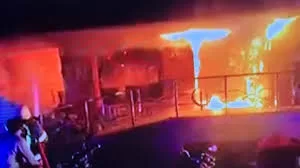
BHUBANESWAR, Odisha — A massive fire ripped through the All India Institute of Medical Sciences (AIIMS) Bhubaneswar Nursing College in the early hours of June 18, 2026, forcing the midnight evacuation of hundreds of residential students. Thanks to the rapid activation of automated smoke alarms and swift coordination between campus staff and local emergency services, all occupants were successfully rescued with zero casualties or injuries reported. The incident has renewed urgent national conversations regarding fire safety compliance and electrical infrastructure vulnerabilities within Indian medical institutions.
The Midnight Blaze and Rapid Escape
The crisis began at approximately 12:15 AM at the four-story nursing college facility located in the Sijua, Patrapada area of Bhubaneswar. The fire broke out on the upper floors, quickly engulfing lecture halls and adjacent student accommodation wings. Preliminary investigations by local fire safety authorities point to an electrical short circuit on a higher floor, which rapidly ignited nearby combustible materials and sent thick smoke billowing through the corridors.
As smoke began filling the residential halls, automated smoke detection systems triggered campus-wide alarms. Awakening to the alerts, hundreds of nursing students executed an emergency exit strategy.
“We were woken up by the alarms and the shouting of hostel wardens,” recalled one student who evacuated safely. “The main elevator shafts filled with smoke almost instantly, so we immediately diverted to the emergency stairways to reach the ground floor.”
Multiple fire tenders were dispatched to the scene immediately after the emergency call. It took firefighting crews approximately three hours of continuous effort to fully contain and extinguish the blaze. Following the evacuation, the AIIMS Bhubaneswar administration activated its emergency response protocol, temporarily relocating all affected students to campus guest houses and alternative accommodation facilities.
The Anatomy of Healthcare Electrical Fires
While the lack of casualties is being hailed as a triumph of campus emergency preparedness, medical safety experts warn that the underlying cause of the fire highlights a persistent, dangerous trend.
According to historical data from the National Disaster Management Authority (NDMA), electrical short circuits account for roughly 40% to 45% of all healthcare and medical campus fires across India. These systemic vulnerabilities are frequently exacerbated in facilities where electrical wiring infrastructure has not kept pace with the growing power demands of modern medical and educational equipment.
Dr. Rajesh Kumar, a senior emergency medicine physician based in Delhi with two decades of experience in disaster management, emphasizes that medical college environments present unique structural risks.
“The successful outcome at AIIMS Bhubaneswar demonstrates the life-saving impact of functioning early-warning systems and clear evacuation routes,” Dr. Kumar stated in an interview. “However, we cannot ignore that electrical faults remain the leading catalyst for these fires. As institutions integrate more high-power equipment, their internal wiring systems must be audited and updated aggressively to handle the increased load.”
Safety Mandates for Healthcare and Educational Facilities
Under the National Disaster Management Authority (NDMA) guidelines and relevant regional fire service acts, large-scale healthcare and medical education facilities are legally obligated to maintain rigorous safety infrastructure.
| Required Safety Component | Purpose / Operational Standard | Status at AIIMS institutions |
| Automatic Detection & Alarms | Immediate warning via smoke and thermal sensors. | Functioned successfully in this incident. |
| Zonal Extinguishers | 24-hour accessible fire extinguishers in all wings. | Standard protocol; reviewed monthly. |
| Unobstructed Exit Routes | Dedicated, clearly marked emergency stairways. | Utilized effectively by students to escape smoke. |
| Thermal Scanning Audits | Routine infrared scanning of electrical panels to catch overloads. | Mandated but compliance verification varies. |
In the wake of past national tragedies, premier institutions like AIIMS Delhi have historically expanded their safety infrastructure to include dozens of dedicated fire officers and monthly evacuation drills. While AIIMS Bhubaneswar’s early-detection infrastructure clearly performed as intended, the official investigation will determine whether preventative maintenance, such as thermal scanning of the electrical grid, was fully up to date.
A History of Regional Infrastructure Vulnerabilities
The incident at AIIMS Bhubaneswar occurred nearly a decade after one of the darkest chapters in Indian healthcare safety: the October 2016 SUM Hospital fire in Bhubaneswar. That disaster, which also originated from an electrical short circuit in a dialysis ward, claimed the lives of 22 critically ill patients and injured over 100 others who were trapped in intensive care units.
The legacy of the SUM Hospital tragedy prompted the Odisha government to mandate strict, high-level fire safety audits across the state. However, enforcement gaps have periodically re-emerged. More recently, in March 2026, a devastating fire at the SCB Medical College and Hospital in Cuttack, Odisha, resulted in the tragic deaths of 12 ICU patients, drawing sharp criticism from public health advocates regarding systemic infrastructure maintenance.
Government Intervention
In direct response to this latest blaze at AIIMS, the Odisha Health Department has ordered an immediate, comprehensive investigation. The office of Chief Secretary Aditya Padhi confirmed that a high-level probe will evaluate the exact cause of the electrical failure, the facility’s compliance with structural safety codes, and the speed of the emergency response.
Furthermore, the State Health Minister announced that all government-run and public healthcare institutions across Odisha will undergo a mandatory fire safety audit within the next 30 days.
Odisha Healthcare Fire Timeline:
[Oct 2016: SUM Hospital Fire] ---> [March 2026: SCB Medical College Fire] ---> [June 2026: AIIMS Bhubaneswar Fire]
    (22 Fatalities - ICU)              (12 Fatalities - ICU)                  (0 Fatalities - Successful Evacuation)
Implications for Public Health and Medical Education
The structural demands of medical and nursing education present a distinct challenge for public health infrastructure consultants. Unlike standard academic buildings, medical training complexes often fuse dense residential dormitories, lecture halls, and active clinical laboratories under unified power grids.
“Medical training facilities operate around the clock, housing hundreds of students in close quarters while drawing heavy electrical loads for both residential and educational purposes,” explains Dr. Anjali Mehta, a healthcare infrastructure consultant. “When medical campuses expand rapidly to meet the growing demand for healthcare professionals, the auxiliary safety infrastructure—like dedicated transformer grids and localized circuit breakers—can sometimes lag behind.”
Limitations and Uncertainties
While the immediate crisis has passed, several key aspects of the AIIMS Bhubaneswar fire remain under official review:
-
The exact threshold that caused the electrical breakdown remains unverified pending a technical forensic report.
-
It is currently unknown whether recent modifications or additional power loads were introduced to the building’s wiring prior to the short circuit.
-
The administration has yet to release financial estimates regarding property and equipment damage, or a concrete timeline for when normal academic operations will resume in the building.
Practical Checklist for Families and Healthcare Staff
For health-conscious consumers, medical students, and the families of those enrolling in professional healthcare tracks, institutional safety should be an active consideration. Experts recommend verifying that educational and residential campuses strictly adhere to the following safety indicators:
-
Clear Certifications: Ask campus administrations for proof of a valid, updated Fire No Objection Certificate (NOC) from regional authorities.
-
Drill Frequency: Ensure the facility conducts mandatory, documented evacuation drills for residential students at least twice a year.
-
Visible Infrastructure: Check that emergency exit signs are self-luminous and that stairwells remain completely unobstructed by storage or administrative equipment.
-
Staff Accountability: For practicing healthcare professionals, continuous participation in localized fire warden training and rapid-response drills is essential to protect vulnerable populations during off-hours crises.
The successful evacuation at AIIMS Bhubaneswar serves as a powerful case study showing that robust early-warning systems and clear exit protocols save lives. However, public health experts emphasize that until preventative electrical maintenance is treated with the same urgency as emergency response, the underlying systemic risks to India’s medical infrastructure will remain.
References
- https://medicaldialogues.in/news/health/hospital-diagnostics/massive-fire-breaks-out-at-aiims-bhubaneswar-nursing-college-173307
Medical Disclaimer: This article is for informational purposes only and should not be considered medical advice. Always consult with qualified healthcare professionals before making any health-related decisions or changes to your treatment plan. The information presented here is based on current research and expert opinions, which may evolve as new evidence emerges.