 0
0
 0
0
MUMBAI — In a major public health intervention aimed at bridging the steep divide between urban and rural oncology services, the Maharashtra government has greenlit a comprehensive, state-backed initiative to build an international-standard cancer care and research network.
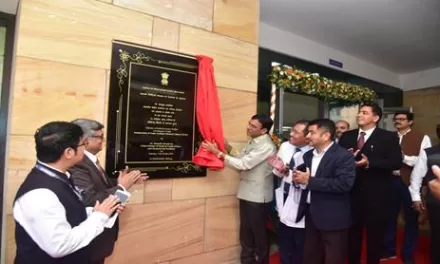
Presiding over the inaugural board meeting of the newly established Maharashtra Cancer Care, Research and Education Foundation (MahaCare) at the Sahyadri Guest House on July 16, 2026, Chief Minister Devendra Fadnavis directed officials to develop a world-class, multi-tier ecosystem. The ambitious strategy, driven by a ₹100 crore initial corpus fund cleared under the Mahatma Phule Jan Arogya Yojana, marks a systemic shift toward decentralizing cancer diagnostics and therapeutics across the state.
A Three-Tier Grid: Bringing Treatment to the Districts
For decades, cancer patients across Maharashtra’s rural and semi-urban districts have faced significant “financial toxicity”—a term oncologists use to describe the crushing indirect costs of travel, lodging, and lost wages incurred when seeking treatment in metropolitan hubs like Mumbai.
To systematically address this, the MahaArogya project will implement a structured, three-tier framework anchored by the world-renowned Tata Memorial Hospital (TMH) as the apex academic and technical collaborator.
   [ Tier 1: Apex Center ]
    Tata Memorial Hospital (Mumbai)
    - Specialized Treatment & Clinical Research
    - Standardized Protocols & Workforce Training
               │
               ▼
 [ Tier 2: Comprehensive District Centers ]
   9 Cities (e.g., Pune, Nagpur, Nashik)
   - Advanced Surgeries, Radiotherapy, & Systemic Chemotherapy
               │
               ▼
 [ Tier 3: Diagnostic & Day-Care Units ]
   9 Locations (e.g., Ratnagiri, Thane, Shirdi)
   - Early Screening, Basic Chemotherapy, & Palliative Care
Under the signed Memorandum of Understanding (MoU), TMH will oversee clinical training and standardize therapeutic protocols across 18 state-linked hospitals. This ensures that a patient treated in a remote district receives the same baseline quality of evidence-based care as one walking into a major metropolitan facility.
The network spans across strategic geographies:
-
Comprehensive Level-2 District Centers: Mumbai, Pune, Chhatrapati Sambhajinagar, Nagpur, Nanded, Kolhapur, Chandrapur, Nashik, and Amravati.
-
Diagnostic and Level-3 Day-Care Facilities: Cama and Albless Hospital (Mumbai), Ratnagiri, Satara, Baramati, Jalgaon, Yavatmal, Ambajogai, Thane, and Shirdi.
Overcoming the Isotope Bottleneck: The Nagpur Cyclotron
A cornerstone technical development approved during the board meeting is the establishment of a dedicated subsidiary to manage the Nagpur High-Energy Medical Cyclotron Project. Backed by a ₹300-crore joint allocation from the Medical Education and Industry Departments, the facility will occupy 30 hectares in Hingna taluka, Nagpur.
Medical cyclotrons utilize electromagnetic fields to accelerate subatomic particles, bombarding target materials to synthesize short-lived radioisotopes like Fluorine-18. These isotopes are essential biomarkers used in Positron Emission Tomography–Computed Tomography (PET-CT) scans to track metabolic tumor activity.
Because these radiopharmaceuticals possess incredibly short half-lives—often decaying within hours—hospitals in Central India have historically had to fly them in from distant metros, leading to high cancellation rates, compromised diagnostic precision, and elevated patient costs.
“Localizing radioisotope production changes the physics of delivery,” explains an independent radiologist based in New Delhi. “When you eradicate a 500-kilometer supply chain bottleneck, you aren’t just lowering costs—you are expanding the clinical window to catch metastasizing cells early, when they are most treatable.”
The Rising Burden: Why Structural Expansion Can No Longer Wait
The necessity for a distributed network is underscored by stark epidemiological data. According to the World Health Organization’s International Agency for Research on Cancer (IARC) Global Cancer Observatory, India recorded an estimated 1.41 million new cancer cases and over 916,000 deaths in 2022. Projections suggested that the country’s annual burden reached roughly 1.6 million new diagnoses by 2024, with a steep upward trajectory expected through 2050 if systemic intervention is not scaled.
Closer to home, data from the Indian Council of Medical Research (ICMR) National Centre for Disease Informatics and Research (NCDIR) Maharashtra profile reveals that malignant tumors account for approximately 9% of all non-communicable disease deaths in the state. Furthermore, the report highlights a high prevalence of modifiable risk factors—such as adult tobacco and alcohol use, obesity, and secondhand smoke exposure—suggesting that nearly half of these cancer deaths could be avoided through aggressive primary prevention and timely detection.
Historically, Maharashtra’s vast health infrastructure, which features dozens of medical colleges and district hospitals, possessed only a small handful of standalone, fully equipped tertiary cancer institutes. This deficit left patients trapped in long, agonizing waitlists for basic radiotherapy and surgical staging.
The Implementation Challenge: Infrastructure vs. Human Capital
While public health experts uniformly praise the network’s decentralized layout, seasoned administrators note that structural announcements represent only the first step of an arduous journey. The true metric of success will be operational quality and equity on the ground.
Large-scale public health infrastructure projects frequently encounter significant bottlenecks:
-
Super-Specialty Staffing: Building a wing is simpler than staffing it. The network will demand a massive influx of radiation oncologists, medical physicists, oncology-trained nurses, and specialized histopathologists. MahaCare must aggressively recruit and retain this highly specialized workforce in tier-2 and tier-3 towns.
-
Equipment Upkeep: Sophisticated linear accelerators (LINACs) and PET-CT scanners require continuous, highly calibrated maintenance. Downtime in a remote center forces patients right back onto the trains to Mumbai.
-
Operational Equity: Lowering the travel distance helps, but the state must ensure robust referral pathways, transparent budgeting, and seamless integration with free or highly subsidized state insurance models so that low-income agricultural workers are not excluded due to out-of-pocket costs for ancillary diagnostics.
What This Means for Your Health Decisions
For residents of Maharashtra, this policy initiative signals a future where an individual’s geographic location does not dictate their oncology prognosis. However, public health experts emphasize that infrastructure cannot replace personal vigilance.
While the state constructs diagnostic and day-care centers to make screenings more accessible, individuals must take proactive advantage of local primary care centers for routine clinical breast exams, oral cancer screenings, and cervical PAP smears. Early detection remains the single most effective tool for long-term survival. Simultaneously, utilizing localized tobacco-cessation programs and managing modifiable metabolic risk factors continue to be the front line of defense against the state’s growing non-communicable disease burden.
Reference Section
- https://medicaldialogues.in/state-news/maharashtra/maha-to-develop-international-standard-cancer-care-and-research-facilities-175187
Medical Disclaimer: This article is for informational purposes only and should not be considered medical advice. Always consult with qualified healthcare professionals before making any health-related decisions or changes to your treatment plan. The information presented here is based on current research and expert opinions, which may evolve as new evidence emerges.