 0
0
 0
0
NAGPUR, Maharashtra — June 15, 2026 — In a major breakthrough for oncology infrastructure, the Maharashtra cabinet has approved a ₹300-crore High-Energy Medical Cyclotron Project (HEMCP) to be established in Nagpur. Formally cleared by the Medical Education and Drugs Department, this first-of-its-kind regional facility is poised to fundamentally alter cancer diagnosis, treatment, and clinical research across central India. By establishing a localized supply of ultra-short-lived radioisotopes, the project will eliminate the need for thousands of critically ill patients from Vidarbha, Marathwada, and surrounding states to make exhausting, expensive journeys to distant metropolitan centers like Mumbai or Hyderabad for advanced diagnostic imaging.
Bridging the Diagnostic Divide: What is a Medical Cyclotron?
To understand why this facility represents a paradigm shift, it helps to understand the physics powering modern oncology. A medical cyclotron is a sophisticated particle accelerator that uses powerful electromagnetic fields to propel charged particles (protons) to near-relativistic speeds. When these high-velocity particles collide with a target material, a nuclear reaction occurs, generating radioactive isotopes—or radiopharmaceuticals—essential for molecular imaging and nuclear medicine.
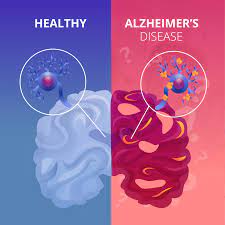
These isotopes act as highly specific biological tracers. When injected into a patient, they accumulate in areas of high metabolic activity, such as malignant tumors. Doctors detect these signals using Positron Emission Tomography (PET) scans, which allow them to visualize cancers, evaluate cardiovascular disease, and track neurodegenerative disorders like Alzheimer’s disease at their earliest cellular stages.
The upcoming Nagpur facility is designed to match the highest-powered medical cyclotron currently operating in India—the 30 mega electron volt ($\text{MeV}$) facility managed by the Variable Energy Cyclotron Centre (VECC) in Kolkata. This technical capability positions Nagpur as a state-of-the-art hub for precision diagnostics.
Inside the Project: Logistics and Capabilities
The HEMCP will operate as a collaborative ecosystem, leveraging the academic, clinical, and engineering expertise of several premier institutions across the region.
| Aspect | Project Detail & Specifications |
| Total Capital Investment | ₹300 crore |
| Proposed Location | Between MIHAN and Butibori, Nagpur (Final site assessment pending) |
| Spatial Footprint | Approximately 50 acres |
| Coordinating Agency | Visvesvaraya National Institute of Technology (VNIT) Nagpur |
| Consortium Partners | VNIT, AIIMS Nagpur, GMCH, IGGMC, and the National Cancer Institute (NCI) |
| Chronology | Initiated Feb 2025 by leadership directives; Cabinet clearance granted June 2026 |
The facility will produce key medical isotopes, including Fluorine-18 ($\text{}^{18}\text{F}$), Carbon-11 ($\text{}^{11}\text{C}$), and Gallium-68 ($\text{}^{68}\text{Ga}$). A critical hurdle in nuclear medicine is the concept of a half-life—the time it takes for half of the radioactive atoms in a substance to decay.
For instance, Fluorine-18 has a half-life of just 110 minutes, while Carbon-11 lasts a mere 20 minutes. Because these tracers degrade so rapidly, they cannot withstand long-distance transit. Localized production is the only way healthcare providers can reliably utilize these advanced diagnostic tools.
Addressing India’s Escalating Cancer Burden
The establishment of the HEMCP comes at a critical time. Data released by the Indian Council of Medical Research (ICMR) and the National Cancer Registry Programme highlights an escalating public health challenge:
-
Rising Incidence: India’s estimated cancer burden reached 15.33 lakh cases in 2024, marking a $10.4\%$ increase from 13.9 lakh cases in 2015. By 2025, registry figures climbed further to 1,569,793 new cases.
-
Escalating Mortality: Annual cancer deaths rose from 6.8 lakh in 2015 to 8.7 lakh in 2024, crossing 8.68 lakh in 2025.
In managing this burden, integrated PET-CT imaging is vital. Clinical literature indicates that PET-CT scans alter therapeutic strategies in $15\%$ to $40\%$ of oncology cases, with up to $87\%$ of reviewed cases resulting in modified oncological decisions. This precision prevents both the under-treatment of aggressive malignancies and the over-treatment of patients who would not benefit from toxic therapies.
Statistically, PET-CT imaging demonstrates an average sensitivity of $93\%$ and specificity of $96\%$ in cancer staging, vastly outperforming conventional imaging modalities, which average a baseline sensitivity of just $52\%$.
Socioeconomic and Public Health Implications
Beyond its technological achievements, the Nagpur cyclotron addresses a profound geographic and economic divide in Indian healthcare. Research reveals that $83\%$ of families dealing with a cancer diagnosis in India face “catastrophic” non-medical expenses. A major driver of this financial strain is travel: approximately $75\%$ of patients must journey long distances to access metro-centric tertiary care. Rural residents travel a median distance of 110 kilometers to reach sub-specialized oncology services—more than double the distance faced by urban populations.
The Nagpur facility will serve as a central medical sanctuary, drawing patients from across the Vidarbha and Marathwada regions, as well as vast swathes of neighboring Madhya Pradesh, Chhattisgarh, Jharkhand, and Odisha.
By decentralizing the supply of radiopharmaceuticals, the project provides immense financial and logistical relief to economically vulnerable families who previously faced the choice between traveling to distant coastal metros or foregoing advanced diagnostic imaging entirely.
Multi-Sector Applications: Beyond Oncology
While medical care remains its primary driver, the 30 $\text{MeV}$ cyclotron will operate as a multi-sector facility, fueling advancements across several fields:
-
Advanced Scientific Research: The facility will support specialized investigations into radiochemistry, basic nuclear physics, and novel isotope development.
-
Engineering Education: By establishing a high-energy particle accelerator ecosystem, the project offers a practical training ground for nuclear engineers, medical physicists, and radiopharmacists.
-
Industrial and Materials Science: The cyclotron’s testing capabilities will support private-sector applications, including high-precision metallurgy, semiconductor manufacturing, and non-destructive quality control to detect microscopic defects in industrial components.
Regulatory Hurdles, Safety, and Implementation Limitations
Despite the project’s clear benefits, experts emphasize that building a high-energy nuclear facility requires navigating rigorous regulatory and operational challenges. Before the first particle is accelerated, the facility must secure formal clearance from the Department of Atomic Energy (DAE) and the Atomic Energy Regulatory Board (AERB).
While local production solves the issue of isotope decay during transport, it shifts the logistical burden to local infrastructure. Operating a 30 $\text{MeV}$ particle accelerator requires highly trained personnel and strict radiation safety protocols. The facility must feature robust, heavy concrete shielding and continuous environmental monitoring to ensure that ambient radiation levels outside the complex remain entirely within safe, natural background limits. Furthermore, the final allocation of land requires meticulous technical and seismic assessments to ensure long-term structural integrity.
Looking Ahead
The Maharashtra cabinet’s approval solidifies an initiative that began in February 2025, when Chief Minister Devendra Fadnavis directed the Medical Education department to sketch out a viable cyclotron center for the region. With site selection currently underway by district administrators, the project is moving from a policy directive to an active engineering phase. Once operational, the Nagpur High-Energy Medical Cyclotron Project will anchor central India’s expanding medical infrastructure, making precision medicine an accessible reality for millions.
Medical Disclaimer
This article is for informational purposes only and should not be considered medical advice. Always consult with qualified healthcare professionals before making any health-related decisions or changes to your treatment plan. The information presented here is based on current research and expert opinions, which may evolve as new evidence emerges.
References
- https://medicaldialogues.in/state-news/maharashtra/maha-approves-rs-300-crore-high-energy-medical-cyclotron-facility-in-nagpur-173029