 0
0
 0
0
Read Time:5 Minute, 36 Second
NEW DELHI — In a landmark legislative push that could reshape healthcare delivery for over 1.4 billion people, India’s Parliamentary Standing Committee on Health and Family Welfare has called for the immediate transition of artificial intelligence (AI) tools and medical drone logistics from isolated pilot projects into full-scale, nationwide public health operations.
The recommendations, detailed in the committee’s newly released reports tabled in Parliament, provide a comprehensive roadmap for leveraging cutting-edge technology to bridge the nation’s stubborn urban-rural healthcare divide. By establishing dedicated “Green Medical Air Corridors” and deploying AI-driven diagnostic tools directly to primary health centers, parliamentary leaders aim to reduce diagnostic delays, prevent catastrophic out-of-pocket medical expenses, and save thousands of lives annually.
Drones Beyond Pilots: Establishing ‘Green Air Corridors’
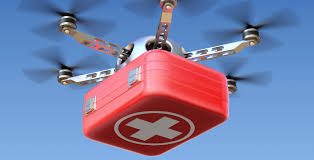
Over the past three years, trial programs under the Indian Council of Medical Research’s (ICMR) i-DRONE initiative demonstrated that autonomous aerial vehicles can overcome complex terrain. Drones successfully delivered life-saving vaccines through the mountainous passes of Himachal Pradesh and Nagaland, carried ultra-critical intraoperative biopsies in Karnataka, transported blood products across congestion-plagued Delhi-NCR, and dispatched corneas for urgent transplant surgery in Haryana.
However, the parliamentary committee noted that remaining in the “pilot phase” limits the transformative potential of these technologies.
+-----------------------------------------------------------------------------------+
|                        PARLIAMENTARY PANEL ROADMAP AT A GLANCE                   |
+-----------------------------------------------------------------------------------+
|  LOGISTICS         ->  Establish "Green Medical Air Corridors" for hard-to-reach  |
|                        regions, integrated into national health programs.         |
|                                                                                   |
|  DIAGNOSTICS       ->  Deploy AI screening tools to Ayushman Arogya Mandirs;     |
|                        expand national reference datasets (MIDAS).                |
|                                                                                   |
|  SURVEILLANCE      ->  Link real-time AI predictive models with state health      |
|                        cadres for early outbreak warnings.                        |
|                                                                                   |
|  AFFORDABILITY     ->  Add essential pediatric oncology drugs (e.g., PREVALL) to    |
|                        the National Essential Medicines List (NEML).              |
+-----------------------------------------------------------------------------------+
To achieve universal health access, the committee recommended that the Department of Health Research (DHR) collaborate directly with the Ministry of Civil Aviation. Together, they are tasked with building designated “Green Medical Air Corridors” connecting remote peripheral health centers to district and tertiary hospitals.
Furthermore, the panel urged the formal integration of drone-based logistics into flagship public health frameworks:
-
Universal Immunization Program (UIP): Ensuring zero-breakage cold chains for childhood vaccines.
-
National TB Elimination Program (NTEP): Speeding up sputum sample transport for drug-resistant tuberculosis testing.
-
National Organ and Tissue Transplant Organization (NOTTO): Drastically shrinking the “ischemic window”—the limited time an organ remains viable outside the body—during organ and tissue transplants.
Democratizing AI at the Primary Care Level
Beyond physical logistics, the report focuses heavily on digital equity. While institutions like the ICMR-IISc Centre for Medical Image Datasets (MIDAS) have pioneered indigenous AI validation for oral cancer and dural lesions, a lack of standardized local reference data often slows down medical technology innovation.
To solve this, the panel advised expanding MIDAS datasets to cover high-burden conditions such as:
-
Diabetic Retinopathy: Visual screening to prevent diabetes-related blindness.
-
Maternal-Fetal Anomalies: Ultrasound AI models tailored for rural prenatal care.
-
Chest Radiographs: Rapid automated screening for pneumonia, TB, and structural lung diseases.
                              LOCAL HEALTH CLINIC
                           (Ayushman Arogya Mandir)
                                      │
              ┌───────────────────────┴───────────────────────┐
              ▼                                               ▼
     [AI Point-of-Care]                               [Medical Drones]
   Immediate high-accuracy                         Rapid transport of samples,
   screening for retinopathy,                      blood, and vaccines to
   TB, and fetal anomalies.                        tertiary hospitals.
              │                                               │
              └───────────────────────┬───────────────────────┘
                                      ▼
                        DISTRICT & TERTIARY HOSPITALS
The committee urged the Ministry of Health to progressively procure and deploy AI-enabled point-of-care instruments across all Ayushman Arogya Mandirs (grassroots health and wellness centers). This strategy empowers mid-level health providers, such as Community Health Officers and nurses, with high-accuracy diagnostic capabilities previously restricted to major urban hospitals.
Independent public health experts have welcomed the directive, emphasizing its potential to curb late-stage disease presentation.
“In resource-constrained settings, the primary challenge is rarely the lack of treatment—it is the delay in initial diagnosis,” notes Dr. Arisudan Dutt, a senior community medicine specialist not involved in drafting the report. “Equipping a rural nurse with an AI-assisted diagnostic tool supported by rapid drone delivery for verification creates a tertiary-level safety net right at the village doorstep.”
Proactive Outbreak Analytics & Essential Drug Pricing
Addressing disease surveillance, the parliamentary panel highlighted work by the newly established ICMR-National Institute of Research in Digital Health and Data Sciences. The institute uses predictive analytics to track vector-borne illnesses like Dengue and Malaria, alongside respiratory viruses.
The panel emphasized that proactive, data-driven epidemic forecasting is far more cost-effective than reactive outbreak response, which strains public finances and overwhelms hospitals. The committee recommended establishing real-time linkages between ICMR’s early-warning models and state public health cadres to trigger automated alerts before disease surges occur.
Finally, the report championed financial protection against catastrophic healthcare expenditure:
+----------------------------------------------------------------------------------+
|                     BRIDGING TIER-3 CARE TO RURAL POSTS                          |
+----------------------------------------------------------------------------------+
|  CHALLENGE                   PARLIAMENTARY RECOMMENDATION                        |
|                                                                                  |
|  High cost of pediatric       Add drugs like PREVALL to the National Essential   |
|  cancer therapies            Medicines List (NEML) for zero-cost distribution.   |
|                                                                                  |
|  Delayed lab results in      Establish "Green Air Corridors" using drones to     |
|  hilly or remote regions     transport biopsy, blood, and tissue samples.        |
|                                                                                  |
|  Undiagnosed occupational     Deploy low-cost, mandatory screening drives for    |
|  lung diseases (Silicosis)   miners, industrial workers, and builders.           |
+----------------------------------------------------------------------------------+
Highlighting breakthroughs where indigenous manufacturing reduced costs—such as providing PREVALL, a formulation for pediatric acute lymphoblastic leukemia, at one-tenth of international prices—the panel recommended inserting these treatments directly into the National Essential Medicines List (NEML). Combined with centralized public procurement, this policy aims to guarantee zero-cost access across all public pediatric oncology centers in India.
Similarly, the report called for mandatory, low-cost screening drives targeting occupational diseases like silicosis among high-risk mining, construction, and industrial workers.
Balancing Tech Enthusiasm with Ground Realities
While the committee’s recommendations mark an ambitious leap forward, healthcare policy researchers stress that execution will determine success. Establishing air corridors requires seamless coordination with air traffic control systems, strict weather navigation protocols, and robust battery infrastructure in off-grid regions. Likewise, AI clinical tools depend heavily on stable electric grids, digital literacy training for health workers, and strict data privacy safeguards.
Nevertheless, the parliamentary report provides a clear consensus: bridging health disparities requires adopting modern, scalable technologies. By converting successful trials into national policy, India aims to build a faster, fairer, and more resilient health system.
References
-
Parliamentary Standing Committee on Health and Family Welfare. (2026, August 7). 175th, 176th, and 177th Reports on Public Health Infrastructure, AI Deployment, and Disease Surveillance. Press Information Bureau (PIB), Government of India, Delhi.
Medical Disclaimer: This article is for informational purposes only and should not be considered medical advice. Always consult with qualified healthcare professionals before making any health-related decisions or changes to your treatment plan. The information presented here is based on current research and expert opinions, which may evolve as new evidence emerges.


Happy
0 %

Sad
0 %

Excited
0 %

Sleepy
0 %

Angry
0 %

Surprise
0 %