 0
0
 0
0
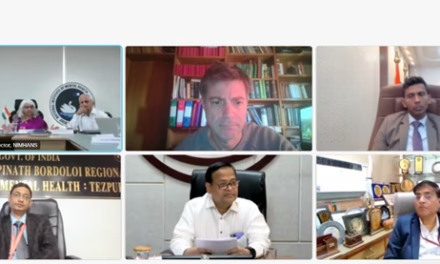
THIRUVANANTHAPURAM, Kerala — Responding to an aggressive spike in communicable illnesses that has claimed 41 lives across the state in just 13 days, the Kerala government has established a high-powered expert committee on infectious diseases. The emergency measure, announced Tuesday by Health Minister K. Muraleedharan, comes as heavy monsoon rains accelerate the transmission of waterborne and vector-borne pathogens. Surveillance data reveals that highly contagious Shigella bacterial infections and rare, lethal amoebic meningoencephalitis (often referred to as “brain-eating amoeba” fever) are driving the most critical public health concerns across multiple districts.
The newly formed independent panel will be chaired by Dr. S.S. Lal, a distinguished global public health expert and former consultant with the World Health Organization (WHO). To address the complex, interconnected roots of the seasonal surge, the committee unites specialists from the departments of health, animal husbandry, food safety, and local self-government, alongside leading clinicians from both public and private medical sectors.
A Multifaceted Crisis: Breaking Down the Numbers
Data released by the Kerala Directorate of Health Services (DHS) underscores the severity of the outbreak. Since the arrival of the monsoon rains on June 1, health authorities have logged 24 confirmed and 12 suspected deaths directly linked to communicable diseases.
While seasonal flare-ups of mosquito-borne illnesses like dengue and chikungunya are common in Kerala’s tropical climate, epidemiologists are particularly alarmed by a parallel surge in severe waterborne bacterial and amoebic infections.
The following data outlines the impact of key infectious diseases recorded during this brief June window:
| Disease | June Cases (Confirmed/Suspected) | Reported Fatalities (June) | Primary Transmission Route |
| Influenza | 5,291 infections | 9 | Airborne droplets / respiratory |
| Leptospirosis (Rat Fever) | 88 cases | 8 | Water contaminated with rodent urine |
| Dengue Fever | Rising confirmed caseloads | 5 | Aedes mosquito bites |
| Hepatitis A & Diarrheal Diseases | 265 cases (Hepatitis A) / multiple outbreaks | 4 each | Fecal-oral route / contaminated water |
| Chikungunya | 617 confirmed (2,161 suspected) | 3 | Aedes mosquito bites |
| Amoebic Meningoencephalitis | 3 cases this month (133 cases in 2026) | 3 this month (33 total in 2026) | Nasal exposure to contaminated fresh water |
| Shigella (Shigellosis) | 70 cases this month (146 total in 2026) | 4 this month (5 total in 2026) | Contaminated food/water; person-to-person |
Shigella infections have shown an especially stark escalation. The 70 cases reported so far in June represent a 70% increase in monthly incidence, elevating the total caseload for 2026 to 146 infections.
Similarly, amoebic meningoencephalitis—caused by free-living amoebae found in warm, stagnant freshwater bodies and soil—continues a worrying multi-year upward trajectory. The 133 infections and 33 deaths recorded between January and mid-June 2026 mark a substantial increase relative to the 201 cases and 47 fatalities documented across the entirety of 2025.
Expert Perspectives on Pathogens and Policy
Public health experts stress that understanding how these specific pathogens behave is essential to curbing their spread. Shigella is a highly infectious bacterium that invades the lining of the intestines, causing shigellosis.
According to clinical data from the Cleveland Clinic and the CDC, symptoms include severe abdominal cramps, fever, and acute diarrhea that frequently contains blood or mucus. It spreads rapidly via the fecal-oral route, meaning even microscopic amounts of bacteria from an infected person’s stool can contaminate drinking water supplies or food handled without proper hygiene. While many healthy adults recover without targeted treatment, severe or vulnerable cases require specific courses of antibiotics such as ciprofloxacin or azithromycin to mitigate life-threatening dehydration and systemic complications.
In contrast, amoebic meningoencephalitis presents a completely different clinical challenge. It occurs when water containing free-living amoebae enters the nasal passages, typically during swimming or diving. The pathogen travels along the olfactory nerve into the brain, causing massive inflammation and tissue destruction.
Medical literature indicates early symptoms include a severe frontal headache, fever, nausea, and vomiting, which rapidly progress to a stiff neck, altered mental status, and seizures. Because the condition carries an exceptionally high fatality rate, early detection and aggressive medical intervention are vital.
“The committee’s immediate role is to comprehensively analyze ongoing field data and deliver swift, actionable recommendations to the government,” stated Health Minister Muraleedharan during a press briefing in Thiruvananthapuram.
The Minister acknowledged that administrative overlaps during the recent Assembly and local body election cycles led to critical delays in pre-monsoon sanitation and drainage clearance campaigns, leaving many local areas highly vulnerable to stagnant water accumulation.
Dr. S.S. Lal, whose extensive background includes shaping global control strategies for major infectious diseases like tuberculosis, HIV, and malaria, will direct the panel’s operational strategy. The committee will hold mandatory weekly review sessions to analyze real-time epidemiological reports and issue immediate directives to district health officers.
“We are not just looking at temporary crisis management,” Muraleedharan emphasized. “This high-powered body is tasked with conducting long-term research to build permanent, structural prevention mechanisms against these seasonal epidemics.”
Environmental Triggers and Systemic Response
Kerala’s tropical geography makes it highly susceptible to seasonal disease patterns. Intense monsoon downpours routinely overwhelm local drainage infrastructure, resulting in flash floods and the cross-contamination of municipal and private well-water systems with sewage. Stagnant pools left in the wake of heavy rains provide ideal breeding grounds for Aedes mosquitoes, accelerating the transmission cycles of dengue and chikungunya.
However, state health officials noted that this year’s data indicates anomalies extending beyond standard seasonal variations. The sharp, localized spikes in Shigella and the steady, month-by-month emergence of amoebic meningoencephalitis cases over the last year suggest persistent environmental reservoirs or systemic vulnerabilities in water safety.
To combat this, the newly formed committee is developing a comprehensive, year-round “epidemic calendar” designed to help municipal authorities anticipate outbreaks and deploy targeted preventive protocols before the rains begin.
Practical Guidance for Public Safety
To support public health efforts and protect families from exposure, medical authorities have issued urgent safety directives tailored for consumers and frontline healthcare providers.
For Health-Conscious Consumers:
-
Water Safety First: Drink exclusively boiled, filtered, or chemically purified water. Ensure that water intended for drinking is brought to a rolling boil for at least one full minute to kill bacterial pathogens like Shigella and Hepatitis A.
-
Amoeba Prevention: When swimming, bathing, or diving in local ponds, lakes, or freshwater bodies, use nose clips or tightly pinch your nose closed. Avoid submerging your head entirely in unchlorinated fresh water, as preventing water from entering the nasal passages is the primary defense against amoebic brain infections.
-
Rigorous Hand Hygiene: Wash hands thoroughly with soap and clean running water for at least 20 seconds after using the restroom, changing diapers, and strictly before preparing or consuming food. Ensure all food items are kept securely covered from flies and pests.
-
Occupational Protection: Individuals engaged in farming, sanitation work, or occupations requiring prolonged contact with muddy water or waterlogged fields should consult local health centers to receive prophylactic doses of Doxycycline, which protects against Leptospirosis (rat fever).
For Healthcare Professionals:
-
Localized Surveillance: District-level outbreak monitoring units and multi-departmental action committees are being activated to track cluster infections in real time.
-
Rapid Deployment: Rapid Response Teams (RRTs) are positioned across high-risk districts to manage localized outbreaks and oversee emergency chlorination drives for public water sources.
-
Clinical Guidelines: Providers are urged to strictly adhere to India’s first-ever formal technical guidelines for the diagnosis and management of amoebic meningoencephalitis, which were officially issued by the Kerala Health Department in May 2026 to improve early detection and survival rates.
Political Debate and Data Limitations
The sharp increase in fatalities has sparked intense political debate across the state. Opposition leaders, including BJP Kerala President Rajeev Chandrasekhar, criticized the timing of the announcement, characterizing the new committee as a political “cover-up” designed to distract from the administration’s failure to execute timely pre-monsoon sanitation drives.
Minister Muraleedharan defended the state’s transparency, countering that public health management should transcend political divisions. “The government is not hiding any data,” Muraleedharan stated. “Concealing the reality of an outbreak would only cripple our response capacities in the future. Public health intervention will always face scrutiny, but our absolute priority remains saving lives.”
From an epidemiological standpoint, independent analysts note that the current data carries inherent limitations. The figures provided by the DHS combine both laboratory-confirmed and clinically suspected cases, meaning exact pathogen tracking is ongoing. Furthermore, because the current registry is updated through June 11, actual case counts may rise as backlogged laboratory results are finalized. Health officials also emphasize that the apparent surge in rare conditions, such as amoebic meningoencephalitis, may be partially attributed to enhanced diagnostic awareness and better reporting protocols across Kerala’s medical network rather than an absolute increase in environmental risk alone.
Broader Context: Kerala’s Health Resilience
This is not the first time Kerala’s healthcare system has been tested by severe infectious threats. The state has maintained a high state of vigilance since managing recurring localized outbreaks of the highly lethal Nipah virus in recent years. Addressing concurrent public health concerns, Minister Muraleedharan noted that while a single suspected Nipah case was recently isolated in Kozhikode, all initial diagnostic tests have returned negative, and there is currently no indication of a broader outbreak.
Kerala’s history with complex pathogens includes managing 69 documented cases of primary amoebic meningoencephalitis in 2025, with 19 fatalities attributed specifically to the Naegleria fowleri amoeba. The creation of this multi-sectoral, high-powered expert panel represents the state’s most structurally integrated effort to date to transition from reactive crisis management to an active, science-driven disease surveillance framework.
Medical Disclaimer
Medical Disclaimer: This article is for informational purposes only and should not be considered medical advice. Always consult with qualified healthcare professionals before making any health-related decisions or changes to your treatment plan. The information presented here is based on current research and expert opinions, which may evolve as new evidence emerges.
References
Additional Press Documentation: Contextual reportage from India Today (“Shigella surge in Kerala,” June 15, 2026); Outlook India (“Kerala Forms High-Powered Panel,” June 15, 2026); TheNewsMill (“Kerala Shigella Outbreak Statistical Tracking,” June 15, 2026); and The Times of India (“Kerala government to form expert panel to tackle outbreaks,” June 16, 2026).