 0
0
 0
0
Published: July 30, 2026
For decades, baby powder has been a ubiquitous staple in nurseries across the globe, with Johnson & Johnson’s iconic white bottle virtually synonymous with newborn care. However, mounting legal scrutiny and evolving scientific consensus have turned this classic household product into one of the most controversial consumer goods in modern history. With pharmaceutical giant Johnson & Johnson moving to finalize a historic $5.5 billion settlement to resolve tens of thousands of cancer lawsuits, parents worldwide are facing an urgent question: Is talcum powder actually necessary for infant health, or does it pose unnecessary risks?
The Legal Landscape: Multibillion-Dollar Battles and Global Claims
The legal battle surrounding talc-based baby powder reached a historic watershed in late July 2026. Following years of complex court battles and corporate bankruptcy petitions, Johnson & Johnson announced a landmark $5.5 billion settlement proposal designed to resolve approximately 76,000 pending lawsuits in the United States. Plaintiffs in these cases allege that prolonged exposure to the company’s talc-based products caused ovarian cancer and mesothelioma.
While Johnson & Johnson maintains that its products are safe, asbestos-free, and supported by decades of independent testing, internal company documents disclosed during litigation revealed that executives were aware of potential asbestos trace contamination as far back as the 1960s. Although the company transitioned to cornstarch-based baby powders globally in 2023, legal actions continue internationally. In the United Kingdom, a massive class-action suit representing over 7,000 claimants in the High Court of England and Wales stands as the largest product liability action in British history.
Despite these massive payouts and legal resolutions, Johnson & Johnson continues to deny any liability or scientific link between its talc products and malignancy, emphasizing that regulatory agencies like the U.S. Food and Drug Administration (FDA) have historically found cosmetic-grade talc safe when properly filtered.
The Medical Risks: Inhalation Hazards vs. Contamination Concerns
To evaluate the true necessity of baby powder, pediatricians and dermatologists separate the issue into two distinct clinical concerns: chemical exposure and immediate physical hazards.
1. Asbestos Contamination and Chemical Safety
Talc is a naturally occurring mineral composed of magnesium, silicon, oxygen, and hydrogen. Because talc deposits in the earth naturally overlap with deposits of asbestos—a known human carcinogen—raw talc can become contaminated during extraction.
The International Agency for Research on Cancer (IARC), a specialized branch of the World Health Organization (WHO), classifies the use of talc-based body powders on the perineal (genital) region as “possibly carcinogenic to humans.” While adult cosmetic use drives most cancer litigation, exposure risks begin during early infant care if contaminated particles come into contact with delicate mucosal tissues.
2. Respiratory Distress and Inhalation Hazards
For infants, however, the most immediate and clinically proven danger is not long-term carcinogenic exposure, but acute respiratory distress.
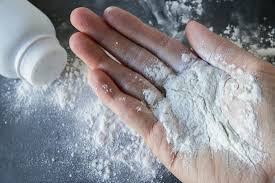
Cosmetic talc is ground into extremely fine mineral particles. When parents shake baby powder onto an infant’s skin, these microscopic airborne particles are easily inhaled by the child. Once inside a baby’s tiny airways, talc particles dry out protective mucous membranes, cause cellular irritation, and trigger inflammatory responses.
In severe cases, acute talcum powder inhalation leads to:
-
Airway obstruction and wheezing
-
Chemical pneumonitis (lung inflammation)
-
Pulmonary edema and respiratory failure
-
Long-term hyperreactive airway disease
Pediatric pulmonologists emphasize that infants under six months of age are exceptionally vulnerable due to their small, developing bronchial tubes and higher baseline respiration rates.
Guidance From Major Public Health Authorities
Leading global medical institutions have issued clear, unequivocal guidelines regarding the use of talcum powder on children:
-
American Academy of Pediatrics (AAP): Strongly advises against the use of talcum powder on infants due to the well-documented risk of accidental inhalation and subsequent respiratory injury.
-
American Cancer Society (ACS): Notes that while occupational exposure to industrial talc is clearly hazardous, consumer exposure risks remain a subject of active research, recommending caution around airborne powders.
-
World Health Organization (WHO / IARC): Maintains its classification of perineal talc application as a potential health hazard due to possible trace contamination and cellular inflammation.
-
Indian Academy of Pediatrics & Regional Health Authorities: Modern pediatric specialists across South Asia actively discourage traditional dusting powders, pointing parents toward gentle barrier creams and proper drying techniques instead.
Safe, Evidence-Based Alternatives for Infant Care
The medical consensus among modern pediatricians is straightforward: babies do not need baby powder. The natural skin barrier of a healthy infant thrives best when kept clean, dry, and free from unnecessary chemical or mineral powders.
“Less is more when it comes to infant skin care. The vast majority of mild infant skin irritation resolves with gentle hygiene, frequent diaper changes, and minimal intervention.”
— Dr. Andrew Weil, M.D., Founder of the Center for Integrative Medicine
Recommended Options for Common Infant Care Needs
| Objective | Safe, Evidence-Based Alternative | Clinical Benefit |
| Drying Skin After Bathing | Soft cotton towel patting & air drying | Prevents friction while eliminating airborne particle risks. |
| Preventing Diaper Rash | Zinc oxide paste or petroleum jelly | Creates an impermeable physical barrier against moisture and acidity. |
| Soothing Skin Folds | Breathable cotton clothing & frequent changes | Reduces moisture accumulation naturally without clogging pores. |
| Absorbing Excess Moisture | Pure cornstarch-based powders (if necessary) | Contains larger carbohydrate particles that are less easily inhaled into deep lung tissues. |
Practical Action Steps for Parents and Caregivers
If you currently have talcum-based baby powder in your home, health professionals advise taking the following precautions:
-
Discontinue Use on Infants: Immediately stop applying talc products to children, particularly infants under six months old.
-
Proper Application Techniques: If using a cornstarch-based alternative, never shake powder directly onto the child. Instead, shake a small amount into your own hands far away from the baby’s face, rub your hands together, and gently pat it onto the skin.
-
Safe Storage: Treat cosmetic powders like household chemicals—store them securely out of reach of children to prevent accidental spillages or inhalation.
Emergency Red Flags
Seek immediate emergency medical attention if a child shows any of the following signs after exposure to dusting powders:
-
Rapid, shallow, or labored breathing
-
Persistent coughing, choking, or grunting
-
Blue or grayish discoloration around the lips, tongue, or fingernails (cyanosis)
-
Sudden lethargy or extreme irritability following powder application
Expert Perspectives
Dr. Shaheena Athif, a veteran pediatric specialist, highlights the hidden dangers of daily powder routines: “Talcum powder particles are so fine that even careful application releases an invisible cloud. In babies with sensitive or hyperactive airways, these inhaled particles cause bronchial inflammation that can manifest as persistent wheezing or recurrent respiratory infections.”
Dr. Athif adds that the elimination of talc from infant routines represents a major win for preventative health: “When we weigh the zero clinical necessity of talc against its potential respiratory and toxicological risks, the medical recommendation is simple: leave the powder on the shelf.”
The Bottom Line
While corporate entities and legal teams spend billions resolving historical claims, parents can take comfort in a simple clinical reality: modern infant care does not require talcum powder. By opting for gentle towel drying, frequent diaper changes, and protective zinc-based barrier creams, parents can safeguard their children’s respiratory health and delicate skin without taking unnecessary risks.
Medical Disclaimer
Medical Disclaimer: This article is for informational purposes only and should not be considered medical advice. Always consult with qualified healthcare professionals before making any health-related decisions or changes to your treatment plan. The information presented here is based on current research and expert opinions, which may evolve as new evidence emerges.
References
- https://www.indiatoday.in/health/story/johnson-johnson-baby-powder-controversy-does-your-baby-really-need-talcum-powder-2958870-2026-07-29