 0
0
 0
0
GENEVA — In a major milestone for global health equity, the World Health Organization (WHO) has officially updated its clinical treatment guidelines for visceral leishmaniasis—a parasitic disease widely known as kala-azar—and its distressing complication, post-kala-azar dermal leishmaniasis (PKDL).
The new recommendations phase out decades-old, highly toxic injection regimens in favor of shorter, safer, and significantly more patient-friendly therapies. Published on July 29, 2026, the updated protocols offer crucial relief to tens of thousands of affected individuals across endemic regions in eastern Africa and South-East Asia.
A Turning Point for Neglected Communities
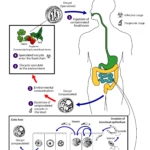
Transmitted by the bite of infected female sandflies, visceral leishmaniasis is the world’s second-deadliest parasitic killer after malaria. The disease attacks internal organs, presenting with prolonged fever, severe weight loss, anemia, and substantial enlargement of the spleen and liver. Without prompt medical intervention, kala-azar is fatal in more than 95% of cases. The WHO estimates that 50,000 to 90,000 new cases occur globally each year across 80 countries, though systemic underreporting means only a fraction (25% to 45%) are formally captured by surveillance systems.
       [ Transmission ]              [ Kala-Azar (VL) ]               [ PKDL Complication ]
   Infected Sandfly Bite  ------->  Organ Damage & Fever  ------->  Post-Cure Skin Lesions
                                   (Fatal if untreated)             (Stigma & Ongoing Reservoir)
Adding to this public health burden is PKDL, a chronic dermatological complication that can appear months or years after a patient is seemingly cured of kala-azar. Appearing as macular, papular, or nodular rashes—frequently across the face—PKDL is rarely fatal on its own, but it inflicts severe social consequences. Patients regularly face profound social stigma and isolation, while involuntarily acting as a viral reservoir that sustains sandfly transmission within vulnerable communities.
“For too long, patients suffering from leishmaniasis have endured treatments nearly as punishing as the disease itself, especially in Africa,” said Dr. Daniel Ngamije Madandi, WHO Director of Malaria and Neglected Tropical Diseases. “These new WHO guidelines mark a turning point. By recommending safer, shorter, and more patient-friendly regimens, we are not just improving care; we are accelerating our fight to eliminate this devastating disease.”
Key Updates: Shorter Stays, Fewer Injections
The 2026 updated guidelines pivot away from legacy therapies that required extended hospital stays and high-risk pharmaceuticals, focusing instead on streamlined combination therapies.
+--------------------------+-----------------------------------+------------------------------------+
| Parameter                | Legacy Regimen (Eastern Africa)   | Updated WHO Regimen (2026)         |
+--------------------------+-----------------------------------+------------------------------------+
| Primary Drug Therapy     | Sodium Stibogluconate (SSG) alone | Oral Miltefosine + Paromomycin Inj |
| Hospital Stay Required   | Up to 17–30 days                  | Reduced to 14 days                 |
| Total Injections         | Up to 34 painful injections       | Cut down to 14 injections          |
| Cure Rate                | Variable with high toxicity       | Exceeds 90% in clinical trials     |
+--------------------------+-----------------------------------+------------------------------------+
1. Eliminating Toxic SSG Monotherapy in Eastern Africa
For decades, the cornerstone of African kala-azar management was sodium stibogluconate (SSG)—a toxic, pentavalent antimonial compound requiring painful daily injections over several weeks. SSG carries a heavy risk of cardiac, pancreatic, and renal toxicity.
The new first-line therapy for primary visceral leishmaniasis in eastern Africa combines:
-
Oral miltefosine (taken daily, allowing partial home administration)
-
Injectable paromomycin (administered over just 14 days)
This dual approach yields cure rates above 90% while dramatically reducing the injection burden from 34 to 14 and cutting mandatory hospital stays to a two-week window.
2. Streamlining PKDL Care Across Regions
In eastern Africa, treating chronic PKDL previously entailed up to 60 days of toxic SSG injections or 20 days of intravenous liposomal amphotericin B. The new standard slashes treatment time to a 14-day combination of oral miltefosine and injectable paromomycin.
In South-East Asia—encompassing endemic areas across India, Bangladesh, and Nepal—where a exhausting 12-week course of oral miltefosine was previously required, the guidelines now recommend shorter protocols utilizing Liposomal Amphotericin B (LAMB) either as a monotherapy or in tandem with oral miltefosine.
3. Clearer Management of Relapse
Addressing a historical gap in care, the updated framework provides explicit, evidence-based pathways for managing relapsed visceral leishmaniasis in immunocompetent patients across South-East Asia, standardizing care where clinicians previously lacked definitive protocols.
Safety Protocols and Dosing Precision
Because miltefosine carries specific risk factors, the guidelines integrate rigorous clinical safety measures recommended by the WHO Advisory Committee on the Safety of Medicinal Products:
-
Reproductive Safeguards: Miltefosine is potentially teratogenic (harmful to a developing fetus). Women of childbearing age must undergo a pregnancy test before starting treatment and utilize effective contraception during the course and for two months following completion.
-
Allometric Dosing: New weight-band dosing schedules ensure pediatric patients receive precise doses tailored to their metabolic rates. This drastically improves drug efficacy while limiting adverse side effects in children, who make up over half of all visceral leishmaniasis cases in eastern Africa.
-
Ocular Monitoring: Enhanced guidelines require clinicians to track patients for rare but serious eye inflammation associated with systemic antiparasitic therapy.
Expert Commentary and Global Implementation
The new therapies are the result of years of rigorous clinical trials conducted across Ethiopia, Kenya, Sudan, and Uganda, spearheaded by international research consortiums including the non-profit Drugs for Neglected Diseases initiative (DNDi).
“We are delighted that more patient-friendly treatments developed with our partners have been recognized in the WHO guidelines,” stated Dr. Fabiana Alves, Director of the Leishmaniasis-Mycetoma Cluster at DNDi. “These advances are important steps towards elimination, but we are already looking ahead. We are now working with Novartis on the development of LXE408, a promising new oral candidate that could help us soon finally move away from injectable regimens entirely.”
National health agencies in endemic zones are rapidly moving to align local policies with the global benchmarks. Kenya, a key contributor to the regional clinical trials via the Leishmaniasis East Africa Platform (LEAP), has already initiated protocol updates.
“Now that the WHO has updated its treatment guidelines, we are working to include the new treatments in our national guidelines so our patients can benefit from them as soon as possible,” said Wyckliff Omondi, Head of the Division of Vector Borne and Neglected Tropical Diseases at Kenya’s Ministry of Health.
       [ Clinical Evidence ]        [ WHO Global Guidelines ]        [ National Adoption ]
   Trials in Ethiopia, Kenya,  --->  Released July 29, 2026   --->  Local Implementation
   Sudan & Uganda (DNDi)             (Updated Protocols)             (e.g., Kenya Ministry of Health)
Remaining Challenges and Public Health Outlook
While the guideline update is a milestone for tropical medicine, public health experts emphasize several ongoing operational hurdles:
-
Non-Universal Applicability: Toxic SSG cannot be retired completely; it remains a secondary option for patients who cannot receive miltefosine, such as pregnant women or those unable to access reliable contraception.
-
Access and Cold-Chain Logistics: Securing stable supply chains for high-quality medicines, specifically liposomal amphotericin B which requires cold-chain storage, remains difficult in isolated rural clinics.
-
Underreported Burden: Strengthening local diagnostic infrastructure is essential, as up to 75% of global cases currently go unreported.
Despite these hurdles, clinicians on the front lines view the shorter regimens as a transformative leap forward.
“Shorter, less toxic treatments are critical, not only to improve medical outcomes but also to ensure patients can complete treatment and return safely to their families and livelihoods,” emphasized Dr. Eleni Ayele from the University of Gondar’s Leishmaniasis Research and Treatment Centre in Ethiopia.
For communities affected by kala-azar, the shift away from painful, weeks-long hospitalizations toward shorter, safer therapies marks a profound step forward in reducing stigma, saving lives, and advancing the global fight to eliminate neglected tropical diseases.
References
-
World Health Organization. WHO updates treatment guidelines on visceral and post-kala-azar dermal leishmaniasis. July 29, 2026. Available at:
[https://www.who.int/news/item/29-07-2026-who-updates-treatment-guidelines-on-visceral-and-post-kala-azar-dermal-leishmaniasis](https://www.who.int/news/item/29-07-2026-who-updates-treatment-guidelines-on-visceral-and-post-kala-azar-dermal-leishmaniasis)
Medical Disclaimer: This article is for informational purposes only and should not be considered medical advice. Always consult with qualified healthcare professionals before making any health-related decisions or changes to your treatment plan. The information presented here is based on current research and expert opinions, which may evolve as new evidence emerges.