 0
0
 0
0
Published: July 30, 2026
DETROIT — Michigan health officials confirmed on Wednesday that the state’s cyclosporiasis outbreak has crossed a grim milestone, reaching 10,077 reported cases since tracking began in late June. The rapid escalation marks one of the largest foodborne parasite epidemics in modern U.S. history, positioning Michigan as the epicenter of a multi-state public health crisis.
According to data from the Michigan Department of Health and Human Services (MDHHS), the outbreak has spread across 70 of the state’s 82 counties, resulting in 160 hospitalizations. While no deaths have been linked to the parasite, the sheer volume of cases—jumping by nearly 400 in a single day—has strained local healthcare systems and triggered intensive investigations by federal food safety agencies.
While investigators initially pointed to shredded iceberg lettuce as a key driver, federal testing challenges have complicated efforts to isolate a single point of origin, leaving health officials and consumers grappling with ongoing uncertainty.
Key Findings: A Statewide Crisis
The surge in Michigan represents the vast majority of cyclosporiasis reports nationwide. Data from the Centers for Disease Control and Prevention (CDC) indicates that while there are over 6,700 laboratory-confirmed cases across 45 states, more than 11,500 additional unconfirmed or probable reports are currently under review—heavily driven by Michigan and neighboring Ohio.
Outbreak Distribution at a Glance
| Jurisdiction | Reported Case Tally | Notable Regional Details |
| Michigan (Statewide) | 10,077 cases | 160 hospitalizations; spread across 70 counties |
| Southeast Michigan | Heavy Burden | Wayne County alone exceeds 1,000 cases |
| Northwest Ohio | 2,576+ cases | Significant cluster mirroring Michigan’s border surge |
| National Scope | 18,000+ total cases | Confirmed and probable cases across 45 states |
Context: Michigan typically averages just 50 reported cases of cyclosporiasis in a given year. The current outbreak exceeds historical baseline figures by more than 200-fold.
What Is Cyclosporiasis?
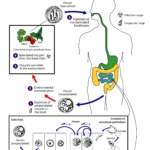
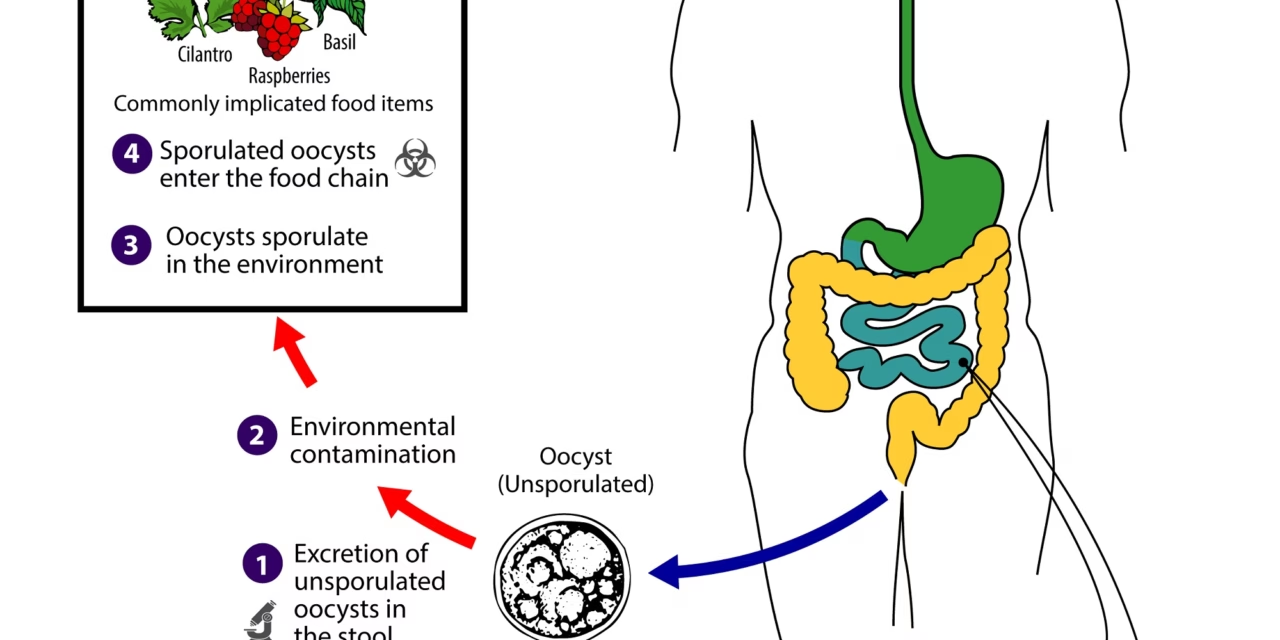
Cyclosporiasis is an intestinal infection caused by Cyclospora cayetanensis, a microscopic, single-celled parasite transmitted through food or water contaminated with human feces. Unlike common bacterial pathogens like E. coli or Salmonella, Cyclospora requires specialized laboratory testing—often missing on routine stool cultures—making early clinical identification difficult.
Exposure to Contaminated Produce / Water
                 │
                 ▼
Incubation Period (7 Days Average; Range 2–14 Days)
                 │
                 ▼
Primary Symptoms: Frequent Watery Diarrhea, Abdominal Cramps, Fatigue
                 │
                 ▼
Relapsing Pattern ("Waxing & Waning" Symptoms for Weeks if Untreated)
The parasite infects the small intestine, triggering symptoms that include:
-
Severe, frequent watery diarrhea (often described as explosive)
-
Loss of appetite and significant weight loss
-
Abdominal cramping, bloating, and persistent nausea
-
Low-grade fever, body aches, and deep fatigue
If left untreated, the illness follows a distinct “waxing and waning” cycle, where patients appear to recover only for severe gastrointestinal symptoms to return days later. Symptoms can persist for weeks or even months.
Investigation Underway: Lettuce Under Scrutiny
Federal and state agencies, including the Food and Drug Administration (FDA) and the CDC, have focused heavily on fresh leafy greens. On July 17, Taylor Farms initiated a voluntary recall of specific shredded iceberg lettuce lots sourced from Central Mexico after preliminary epidemiological tracing linked restaurant clusters—including select Taco Bell locations across multiple states—to the produce.
However, the supply chain investigation faces significant technical hurdles. Federal laboratories have encountered difficulty consistently isolating live parasite oocysts from commercial food samples due to low pathogen density and sample processing limits. Consequently, state officials suspect multiple agricultural sources or widespread irrigation contamination may be contributing to the multi-state spread.
Dr. Sarah Lyon-Callo, MDHHS State Epidemiologist, emphasized in a public health statement that tracking Cyclospora is inherently complex because the parasite requires 1 to 2 weeks outside the host in specific environmental conditions to become infectious. As a result, the contaminated food item is typically consumed weeks before an infected individual develops symptoms or seeks testing.
Expert Perspectives: What Health Professionals Are Saying
Medical experts stress that while the outbreak is vast, cyclosporiasis is treatable when correctly identified.
Dr. Natasha Bagdasarian, Chief Medical Executive for the State of Michigan, reassured healthcare providers in a clinical advisory that targeted antibiotic therapy brings rapid relief. “Cyclosporiasis responds well to treatment, with symptoms typically resolving within one to two days of initiating the correct medication,” Dr. Bagdasarian noted, citing Trimethoprim-sulfamethoxazole (TMP-SMX) as the standard first-line therapy.
Epidemiologists note that Cyclospora outbreaks in North America follow a sharp seasonal curve, peaking between May and August. Dr. Barbara Herwaldt, a veteran CDC medical epidemiologist specializing in parasitic diseases, has noted in historical surveillance analyses that summer surges typically align with seasonal import patterns and agricultural harvesting windows in warmer climates where the parasite is endemic.
Food safety analysts argue the crisis underscores systemic vulnerabilities in global supply chains. Because chemical washes like chlorine or produce sanitizers do not reliably kill Cyclospora oocysts, prevention relies almost entirely on agricultural water quality and field-level sanitation standards.
Public Health Implications: What This Means for Consumers
Because standard chemical disinfection does not destroy the Cyclospora parasite, MDHHS has updated its consumer safety guidance to reduce exposure risks, particularly when handling raw produce.
                 FOOD SAFETY STEP-BY-STEP

[Select Intact Produce] ──► [Remove Outer Layers] ──► [Thorough Washing]
Buy whole heads of           Discard 2-3 outer        Rinse inner leaves under
lettuce instead of           leaves from leafy        clean running water.
bagged salad mixes.          greens.                  Cook when possible.
Guidance for High-Risk Groups
Higher-risk populations—including older adults, young children, pregnant women, and individuals with compromised immune systems—should take extra precautions. Cooking fresh produce to an internal temperature of at least 158°F (70°C) completely inactivates the parasite.
Items Frequently Associated with Cyclospora Outbreaks
-
Pre-washed, bagged salad mixes and kits
-
Fresh herbs (cilantro, basil, parsley)
-
Fresh raspberries and blackberries
-
Snow peas and green onions
Limitations and Diagnostic Challenges
Several factors complicate the public health response:
-
Testing Bottlenecks: Standard clinical stool tests fail to detect Cyclospora. Healthcare providers must specifically order a gastrointestinal PCR molecular panel or request a specialized stool examination for ova and parasites with modified acid-fast staining.
-
Underreporting: Due to testing limitations and mild cases that go untreated, official case counts represent only a fraction of total infections.
-
Complex Traceability: The rapid decay of fresh produce means that by the time an outbreak cluster is identified, the contaminated batch has often passed through the supply chain, leaving no physical samples behind for laboratory confirmation.
Looking Ahead
While emergency room visits for severe diarrheal complaints in Southeast Michigan have shown initial signs of plateauing, health officials expect reported cases to continue accumulating through late August.
Healthcare providers across the Midwest are advised to maintain a high index of suspicion for patients presenting with persistent, relapsing gastrointestinal illness and to report confirmed cases promptly to local public health departments.
Medical Disclaimer: This article is for informational purposes only and should not be considered medical advice. Always consult with qualified healthcare professionals before making any health-related decisions or changes to your treatment plan. The information presented here is based on current research and expert opinions, which may evolve as new evidence emerges.
References
-
Reuters. “Cyclosporiasis Cases Cross 10,000 Mark in Michigan Outbreak.” Reported July 29, 2026.