 0
0
 0
0
NEW DELHI — In a historic milestone for global healthcare, India is stepping into a central leadership role in precision medicine and biopharmaceuticals as an unprecedented $300 billion wave of drug patent expirations approaches by 2030. According to a series of comprehensive industry and policy reports released this week in New Delhi, the convergence of India’s homegrown genomic infrastructure, massive policy funding, and an evolving global pharmaceutical landscape is enabling the nation to transition from its traditional status as the “Pharmacy of the World” into a global hub for advanced biosimilars, gene therapies, and personalized healthcare.
The $300 Billion Patent Wave: A Structural Shift in Therapeutics
Over the next four years, the global biopharmaceutical industry faces its largest “patent cliff”—the abrupt expiration of patent protections on blockbuster medicines. Unlike past expiration cycles dominated by simple chemical pills, this upcoming wave primarily impacts complex biologics (medicines produced within living biological systems, such as therapeutic antibodies) and targeted gene therapies.
Analysis from CareEdge Ratings reveals that drugs generating approximately $142 billion in annual global sales will lose exclusivity between 2026 and 2030. Once price reductions take effect following market competition, this shift will create a net market opportunity exceeding $30 billion to $40 billion. Indian biopharmaceutical manufacturers are uniquely positioned to capture between $3 billion and $5 billion of this emerging value.
Therapeutic Area Share of Patent Expirations (2026–2030)
├── Oncology (Cancer)         : 35%
├── Immunology                : 24%
├── Diabetes                  : 10%
├── Obesity                   : 9%
├── Cardiometabolic           : 8%
└── Other Specialty Fields    : 14%
More than 60% of the therapies losing protection are large-molecule biologics. Because these medications require sophisticated manufacturing processes and stringent regulatory oversight, capturing this market demands advanced technical infrastructure—an area where India has made substantial investments.
Mapping 10,000 Genomes: Building Precision Medicine Infrastructure
Central to India’s technological leap is the completion of the GenomeIndia Project, spearheaded by the Department of Biotechnology (DBT). The initiative has successfully completed whole genome sequencing—the comprehensive decoding of an organism’s entire DNA code—for 10,000 individuals across 99 distinct ethnic populations throughout the country.
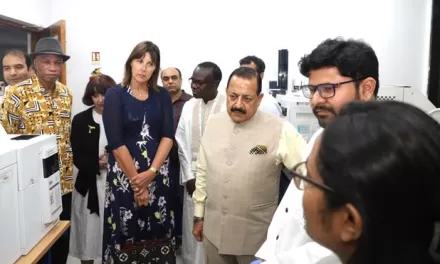
In early 2025, Union Minister of State for Science and Technology Dr. Jitendra Singh unveiled the Indian Genomic Data Set and the Indian Biological Data Centre (IBDC) portals, establishing that India no longer relies on Western genomic benchmarks to drive its clinical research. The complete dataset is now available to authorized researchers globally, providing an unprecedented genetic catalog tailored to diverse South Asian populations.
“This monumental achievement will fuel future medical and scientific breakthroughs,” Dr. Jitendra Singh stated. “This dataset will serve as a critical resource for genomics research, contributing directly to advancements in personalized healthcare.”
Building on this foundation, government authorities have announced plans to expand genomic mapping to 10 million individuals, partnering with leading oncology institutions such as Tata Memorial Hospital to accelerate targeted cancer therapies.
Policy Tailwinds and Capital Acceleration
India’s bioeconomy has expanded rapidly from $10 billion in 2014 to $195 billion in 2026, with projections reaching $300 billion by 2033. This growth is backed by aggressive government funding and regulatory modernizations:
-
Financial Commitments: The Indian government has launched the ₹10,000 crore Biopharma Shakti initiative alongside the ₹1,00,000 crore Research, Development, and Innovation (RDI) Fund.
-
Targeted Missions: NITI Aayog has proposed the dedicated “BioPharmaNext” mission, featuring a ₹50,000 crore growth fund designed to steer domestic drugmakers away from low-cost generic drugs toward high-value biosimilars (highly similar, lower-cost versions of approved biologic drugs) and AI-guided drug discovery.
-
Regulatory Streamlining: Regulatory updates enacted in March 2026 reduced clinical research review timelines by 90 to 120 days through new 45-day expedited approval pathways, significantly lowering administrative delays.
Driven by these policies, India’s biotechnology startup ecosystem grew from 50 companies in 2014 to over 8,500 in 2026, supported by 100 specialized incubators and 600 research centers.
Global Validation and Clinical Efficiency
International confidence in Indian biotechnology reached record levels in H1 2026. Breakthroughs such as the $1.9 billion licensing agreement between AbbVie and IGI, the US FDA’s acceptance of Wockhardt’s novel antimicrobial candidate Zaynich, and clinical advancements by cell-therapy firm Eyestem demonstrate that Indian research and development now competes at international standards.
Global pharmaceutical venture capital deployment rebounded sharply to $38 billion, while biopharma mergers and acquisitions reached $106 billion in the first half of 2026 alone.
A major driver of this international collaboration is India’s distinct R&D cost advantage:
-
Rapid Clinical Recruitment: Indian clinical trial centers can enroll patient cohorts up to ten times faster than traditional Western trial sites.
-
Cost-Effective Innovation: Early-stage biotech firms in India can advance novel candidates through Phase II clinical testing for less than $50 million. Compared to the global industry average of $2.2 billion per approved asset over a 100-month development cycle, India offers significantly more experimental opportunities per research dollar spent.
Practical Impact: What This Means for Patients
For healthcare consumers and clinical practitioners, this biopharmaceutical evolution delivers four direct benefits:
-
Affordable Access to Advanced Care: As patents expire on biological treatments for cancer, rheumatoid arthritis, and diabetes, Indian biosimilar production will substantially lower treatment costs, improving access for patients worldwide.
-
Tailored Therapies: Utilizing population-specific genetic data allows diagnostics and targeted therapies to be designed around local genetic profiles, improving treatment efficacy and minimizing side effects.
-
Accelerated Drug Discovery: The integration of artificial intelligence and biological simulation engines into drug development is expected to reduce discovery timelines by 60% to 80% while lowering exploratory costs by up to 30%.
-
Health Security: Indigenous production capabilities for mRNA platforms, protein therapeutics, and targeted genetic treatments reduce dependence on foreign supply chains during global public health emergencies.
Remaining Challenges and Strategic Obstacles
Despite these rapid advances, industry analysts emphasize that key structural challenges must be addressed to sustain momentum. A recent industry report from Endiya Partners highlights ongoing infrastructure bottlenecks, particularly a shortage of pilot-scale Good Manufacturing Practice (GMP) facilities, limited late-stage venture funding, and a need for more specialized translational scientists who can move research from the laboratory bench to patient bedside.
Furthermore, NITI Aayog reports emphasize that capturing market share in biosimilars—a global sector expanding at a 17% annual growth rate compared to just 2% for traditional generics—requires persistent quality control.
“India’s robust legal framework—which prevents artificial patent extension practices known as evergreening—combined with strong manufacturing capacity offers structural support to domestic biosimilar companies,” explained Pritesh Rathi, Associate Director at CareEdge Ratings. “However, maintaining global compliance standard across all facilities remains vital.”
The Road Ahead
As artificial intelligence and high-throughput genomic data compress drug development timelines from a decade down to under 18 months, India’s biopharmaceutical sector stands at a pivotal turning point.
For decades, the nation demonstrated a talent for scaling and delivering Western scientific innovations at affordable costs. In this new era of precision genomics and advanced biopharmaceuticals, India is positioning itself to invent, refine, and lead the global delivery of next-generation medicine.
Medical Disclaimer: This article is for informational purposes only and should not be considered medical advice. Always consult with qualified healthcare professionals before making any health-related decisions or changes to your treatment plan. The information presented here is based on current research and expert opinions, which may evolve as new evidence emerges.
References
- https://tennews.in/india-set-to-lead-genomics-revolution-amid-global-patents-expiry-wave-report/