 0
0
 0
0
NEW DELHI — India’s healthcare landscape has undergone an unprecedented systemic overhaul over the last 12 years, pivoting from a fractured system marked by catastrophic out-of-pocket spending toward an integrated model of accessible, technology-driven universal coverage. Driven by the central government’s milestone Swasth Bharat (Healthy India) campaign, the nation has fundamentally doubled its medical education infrastructure, introduced the world’s largest public health insurance framework, and built an agile indigenous biotechnology sector.
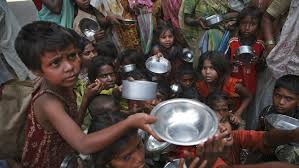
Yet, as millions of vulnerable families gain protection from medical bankruptcy, leading public health authorities warn that the nation faces a delicate transition period: balancing rapid structural growth with the grueling, long-term challenge of delivering consistent, high-quality clinical care across both remote villages and densely populated urban centers.
Expanding the Safety Net: Ayushman Bharat and Cost Affordability
For decades, a single major illness could push an entire Indian household into generational poverty. To address this vulnerability, the government launched the Ayushman Bharat Pradhan Mantri Jan Arogya Yojana (AB-PMJAY) in 2018. Designed as a foundational health assurance blueprint, the program provides up to ₹5 lakh ($6,000 USD) of annual, cashless insurance coverage per family for secondary and tertiary hospitalizations, directly targetting roughly 600 million of the country’s most vulnerable citizens.
According to the government’s Economic Survey, this massive scaling effort has fundamentally altered healthcare economics for the poor and middle class:
-
Card Issuance & Enrollment: Over 42 crore (420 million) individual Ayushman cards have been generated. This includes a recent expansion extending coverage to more than 86 lakh (8.6 million) senior citizens aged 70 and above under specialized Vay Vandana cards.
-
Provider Network: The program has empanelled 27,343 public and private hospitals, utilizing a portable system that allows migrating laborers to access cashless treatments across state lines.
-
Cumulative Household Savings: The Economic Survey notes that AB-PMJAY has saved beneficiaries more than ₹1.52 lakh crore in out-of-pocket medical bills. When coupled with price-controlled generic drugs via the Pradhan Mantri Bharatiya Janaushadhi Pariyojana network, overall household medical savings approach ₹2.25 lakh crore.
This massive influx of public support coincides with a macro shift in macroeconomics. Government health expenditure as a share of the Gross Domestic Product (GDP) rose from 1.13% in 2014 to 1.84%. Concurrently, domestic Out-of-Pocket Expenditure (OOPE)—the financial metric that measures what citizens pay directly at the point of care—dropped sharply from a burdensome 62.6% to 39.4%, drastically mitigating household financial risk.
Doubling the Workforce: The Medical Education Surge
A structural safety net is only as strong as its clinical workforce. To fix chronic doctor shortages, the Union government aggressively fast-tracked medical education infrastructure over the past decade. Data from the government’s citizen engagement portal, MyGov, indicates that the baseline capacity of India’s medical training institutions has effectively doubled.
+-------------------------------------------------------------+
|               MED-ED INFRASTRUCTURE GROWTH                  |
+-------------------+--------------------+--------------------+
| Metric            | Pre-2014 Baseline  | Current Status     |
+-------------------+--------------------+--------------------+
| Medical Colleges  | < 1,000            | > 2,000 (+102%)    |
| MBBS Annual Seats | ~ 50,000           | > 128,000 (+130%)  |
| PG Specialist     | ~ 32,000           | ~ 85,000 (+135%)   |
| Seats             |                    |                    |
+-------------------+--------------------+--------------------+
While this influx of raw clinical talent will inevitably help rebalance India’s skewed doctor-to-patient ratios, independent public health specialists emphasize that numbers tell only half the story.
“While infrastructure expansion is impressive, the real challenge lies in ensuring quality care delivery across rural and urban settings equally,” notes Dr. Ramanan Iyer, a public health specialist not involved in the government reporting. “We must ensure that these newly established colleges maintain rigorous training standards and that graduating physicians are properly incentivized to remain in underserved rural districts where primary care deficiencies persist.”
Infectious Disease Benchmarks and Implementation Realities
India’s targeted epidemiological campaigns have yielded historic milestones alongside sobering operational realities. In October 2024, the World Health Organization (WHO) officially certified India as free from trachoma—a contagious, bacterial eye infection responsible for preventable blindness. This achievement positioned India as only the third country in southern and eastern Asia to defeat the disease. Progress has similarly accelerated in targeted malaria elimination frameworks.
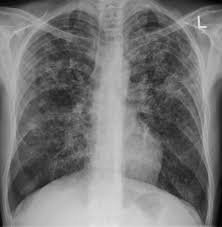
The national battle against Tuberculosis (TB), managed under a rigorous domestic elimination strategy, shows a notable trajectory. Data published in the WHO Global Tuberculosis Report confirms that India reduced its overall TB incidence by 21%—falling from 237 cases per lakh (100,000) population to 187 per lakh. This outpaced the global average decline of 8.3%. Concurrently, India’s TB mortality rate slid from 28 to 21 per lakh, while treatment coverage expanded from 53% to 92%.
      INDIA'S ACCELERATED TUBERCULOSIS REDUCTION

      2015 Baseline:  ======================= 237 per lakh
      Current Status: ================== 187 per lakh [-21%]

      GLOBAL AVERAGE DECLINE (SAME PERIOD)

      Global Trend:   ========== [-8.3%]
Despite these gains, the final leg of the journey remains steep. India continues to carry roughly 25% of the total global TB burden. Epidemiological audits reveal that approximately 100,000 cases slip through the cracks annually, remaining undiagnosed or unreported. Consequently, public health professionals acknowledge that the country’s self-imposed goal of complete TB elimination may take longer to realize. Furthermore, the WHO cautions that global funding disruptions could stall or reverse hard-won progress against these resilient infectious pathogens.
The Digital Frontier and Preventive Breakthroughs
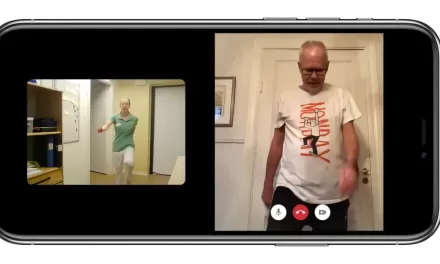
To bypass traditional geographical bottlenecks, India deployed eSanjeevani, a centralized national telemedicine portal. The platform has accommodated more than 43 crore (430 million) teleconsultations, seamlessly connecting remote rural health centers with elite diagnostic specialists located in distant metropolitan hubs.
Demographic logs highlight the platform’s role in democratizing healthcare: over 57% of eSanjeevani users are women, and 12% are senior citizens, providing vital medical access to groups whose mobility is often restricted by socioeconomic factors.
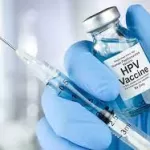
Simultaneously, the country is shifting its focus toward aggressive, early preventive medicine. The central government recently initiated a nationwide Human Papillomavirus (HPV) Vaccination Programme aimed at immunizing girls aged 14 across all states and Union Territories. Cervical cancer remains one of the leading causes of cancer-related mortality among women in India. By delivering this vaccine free of charge via local Ayushman Arogya Mandirs (community health centers) and public schools, the initiative aims to protect an estimated 1.15 crore (11.5 million) young girls each year through a voluntary, parental-consent-driven protocol.
Homegrown Innovations: Lowering the Cost of High-Tech Medicine
Perhaps the most visible evolution of India’s healthcare ecosystem is its transition from a passive consumer of foreign medical tech to an active innovation hub. The domestic biotechnology startup scene has exploded from a mere 50 enterprises a decade ago to more than 11,800 active firms, multiplying the country’s bio-economy sixteenfold.
This research-and-development push is driving down the cost of advanced diagnostic and therapeutic procedures:
-
The Indigenous 1.5 Tesla MRI Scanner: Currently, importing an MRI machine costs hospitals between ₹6 crore and ₹9 crore, making diagnostic scans prohibitively expensive for average citizens. India’s first homegrown 1.5 Tesla MRI scanner is priced at least 30% cheaper than imported counterparts, a development projected to slice consumer out-of-pocket scan fees by 30% to 40%.
-
NexCAR19 (CAR-T Cell Therapy): Developed collaboratively by ImmunoACT, IIT Bombay, and the Tata Memorial Hospital, this cutting-edge gene therapy treats advanced B-cell leukemia and lymphoma. While international variants of CAR-T therapy carry an exorbitant price tag exceeding $400,000 (over ₹3.3 crore), the Indian-engineered alternative delivers a 73% clinical success rate for approximately $30,000 (₹25 lakh)—bringing an advanced cancer cure down to a fraction of the global cost.
Looking Ahead: The Balance of Policy and Practice
India’s 12-year health journey demonstrates how centralized public policy can successfully mobilize infrastructure, lower financial barriers, and spark world-class industrial innovation. However, transitioning from systemic expansion to reliable, everyday clinical excellence requires sustained effort.
To preserve these hard-won victories, India must continuously audit its empanelled hospitals, upgrade its rural clinical pipelines, and maintain strict regulatory control over its growing medical manufacturing sector. The blueprint for a healthier India is firmly in place; the remaining task is the steady, everyday work of local implementation.
Medical Disclaimer: This article is for informational purposes only and should not be considered medical advice. Always consult with qualified healthcare professionals before making any health-related decisions or changes to your treatment plan. The information presented here is based on current research and expert opinions, which may evolve as new evidence emerges.
References
- https://www.ndtv.com/health/12-years-of-swasth-bharat-how-healthcare-sector-transformed-under-modi-govt-11635086