 0
0
 0
0
NEW DELHI — As northern India grapples with intensifying, climate-driven summer temperatures, New Delhi’s Dr. Ram Manohar Lohia (RML) Hospital has launched the nation’s first dedicated Heat Wave Centre equipped with a specialized immersion-cooling facility. Operating directly within the hospital’s emergency department, this pioneering unit marks a critical shift toward evidence-based, rapid-intervention protocols designed to dramatically reduce mortality from severe heatstroke.
By utilizing ice-filled immersion tubs to rapidly lower core body temperatures, the center establishes a new medical benchmark for treating heat-related emergencies in India—serving as a potential blueprint for healthcare facilities nationwide.
The Race Against the Clock: Why Immersion Cooling Matters
Heatstroke is a catastrophic medical emergency that occurs when the body’s thermoregulatory system fails, driving the core temperature to $40^\circ\text{C}$ ($104^\circ\text{F}$) or higher. This severe hyperthermia (overheating) triggers a cascade of cellular damage, frequently resulting in altered mental status, seizures, coma, and multi-organ failure.
Medical experts emphasize that heatstroke must be treated with the same urgency as a heart attack or an ischemic stroke. Every minute a patient’s brain and vital organs remain at these extreme temperatures, the risk of irreversible brain injury, irreversible kidney failure, or death escalates sharply.
Historically, heatstroke management in many busy Indian emergency rooms relied heavily on passive cooling methods, such as moving the patient to an air-conditioned room, applying ice packs to groin and armpit areas, or using mist and fans. However, updated international clinical guidelines explicitly favor active cooling modalities that aggressively draw heat directly out of the body.
Among these active techniques, cold- or ice-water immersion stands out as the clinical gold standard. It is highly effective for both exertional heatstroke (typically seen in outdoor laborers or athletes) and classic heatstroke (which affects vulnerable populations like the elderly or bedridden during environmental heatwaves).
According to a comprehensive consensus guideline published in 2025 by the Society of Critical Care Medicine (SCCM), clinicians should prioritize cooling methods capable of bringing a patient’s core body temperature below $39^\circ\text{C}$ ($102.2^\circ\text{F}$) within approximately 30 minutes of recognition.
Ice-water immersion achieved through dedicated tubs is uniquely capable of hitting this clinical target, delivering an extraordinarily rapid cooling rate of roughly $0.15^\circ\text{C}$ to $0.2^\circ\text{C}$ per minute. The specialized facility at RML Hospital directly operationalizes this high-velocity cooling strategy.
Inside the RML Heat Wave Centre
The specialized unit at RML Hospital bridges a long-standing gap in routine clinical practice by embedding a highly technical, rapid-cooling infrastructure right where heatstroke patients first arrive.
The dedicated Heat Wave Centre includes the following specialized components:
-
Immersion and Ceramic Cooling Tubs: Heavy-duty, ice-filled immersion tubs and ergonomic ceramic cooling baths designed for full-body submersion to maximize surface-area contact with cold water.
-
High-Capacity Ice Infrastructure: A massive 250-kilogram ice-making refrigerator and specialized insulated ice boxes to ensure an uninterrupted, round-the-clock supply of ice during peak heat months.
-
Forced-Air Evaporative Staging: High-velocity industrial fans and heavily air-conditioned treatment zones to manage milder cases or support patients post-immersion.
-
Advanced Critical Care Beds: Ventilator-supported beds and multi-channel intensive care monitoring systems dedicated to managing patients presenting with severe neurological impairment or secondary organ complications.
The unit functions 24 hours a day with a fully trained, multi-disciplinary team of emergency physicians, nurses, and support staff. Already, the center has treated and successfully discharged several critically ill heatstroke patients after stabilizing their internal temperatures and protecting vulnerable organ systems.
Expert Perspectives and Institutional Collaboration
The blueprint for the RML Heat Wave Centre was not built in isolation. Dr. Ajay Chauhan, Director-Professor of Medicine at RML Hospital and a driving force behind the facility, noted that the unit was developed via extensive consultations with an expert committee under the Union Health Ministry’s National Programme on Climate Change and Human Health (NPCCHH), operating through the National Centre for Disease Control (NCDC).
“We found that the best practice globally is immersion cooling—meaning cooling under water,” Dr. Chauhan stated in interviews with news agency IANS. “However, such a facility did not exist anywhere in India before. So, for the first time, we brainstormed and established it here.”
Public health authorities note that while the National Disaster Management Authority (NDMA) and the NCDC provide comprehensive heatwave advisories, localized clinical settings have historically lacked standardized, heavily institutionalized cooling infrastructures.
Dr. Alok Sarin, a senior critical care physician who is not affiliated with the RML project but regularly manages environmental emergencies, highly praised the development while noting the substantial operational hurdles ahead.
“Any structured unit that can cool a patient in under 30 to 40 minutes, using immersion or highly effective external cooling, substantially improves survival and reduces long-term complications,” Dr. Sarin observed. “The real challenge now is scaling this model. Moving from a well-funded pilot in a major tertiary public hospital to smaller district centers or rural regions that lack steady ice-making capacity or 24-hour emergency power is a massive hurdle.”
The Escalating Burden of Extreme Heat in India
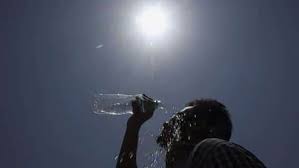
The deployment of this specialized infrastructure comes as India experiences unprecedented climate pressure. The NDMA classifies a “severe heatwave” when local maximum temperatures depart by at least $6^\circ\text{C}$ to $7^\circ\text{C}$ from the historical baseline, or when absolute maximum temperatures cross the grueling threshold of $45^\circ\text{C}$ ($113^\circ\text{F}$). In recent years, New Delhi and neighboring urban centers have repeatedly registered spikes between $44^\circ\text{C}$ and $47^\circ\text{C}$.
Medical professionals emphasize that heat illness presents as a dangerous continuum. It begins as heat exhaustion—characterized by heavy sweating, profound weakness, dizziness, headache, and intense muscle cramps. If left unmanaged or if the individual cannot escape the heat source, it progresses relentlessly into true medical heatstroke.
Practical Guidance for the Public
For everyday citizens and health-conscious consumers, the launch of a dedicated Heat Wave Centre highlights the absolute seriousness of severe hyperthermia. Public health authorities advise tracking individual risk and emphasizing early preventative measures:
| At-Risk Populations | Core Preventative Actions | Key Warning Signs |
|
• Outdoor laborers & manual workers • Older adults & young children • Individuals with cardiovascular disease • Patients managing diabetes |
• Stay in shaded or cooled indoor areas during peak sun hours. • Wear loose-fitting, light-colored, breathable clothing. • Use wide-brimmed hats or wet cotton cloths (gamchas). • Maintain continuous hydration with water and ORS. |
• Confusion, slurred speech, or erratic behavior. • Hot, red, dry skin or paradoxical heavy sweating. • Seizures or sudden fainting episodes. • Persistent nausea and severe vomiting. |
Critical Takeaway: If someone exhibits confusion, seizures, or a loss of consciousness during extreme heat, do not rely solely on fans, shade, or sips of water. Call for emergency transport immediately. Treat it with the same urgency as any life-threatening illness.
Clinical Limitations and Challenges of Immersion Cooling
While cold-water immersion is highly effective, emergency clinicians emphasize that it is a complex intervention requiring rigorous oversight, rather than a universal remedy.
First, full-body immersion can cause violent shivering, which paradoxically increases internal metabolic heat production. It can also cause peripheral blood vessels to constrict sharply, occasionally placing severe cardiovascular stress on frail, elderly patients or those with underlying heart disease. Continuous, invasive core-temperature monitoring via rectal or esophageal probes is necessary to prevent “overcooling” the patient into hypothermia.
Second, the technique demands that a patient be relatively stable from a musculoskeletal standpoint. An unconscious, actively seizing, or highly combative patient requires multiple medical staff members to safely secure them in an open water tub while carefully protecting their airway from water aspiration. In these complex scenarios, critical care teams often combine intensive intravenous fluid resuscitation, rapid medication administration to control shivering or seizures, and external ice-packing alongside the immersion protocols.
Looking to the Future
Hospital administrators and health ministry officials hope that the pilot program at RML Hospital will serve as an educational and structural template. The NDMA and NCDC are currently utilizing data from this rollout to optimize heat-health action plans and draft clinical checklists for regional health departments.
As climate patterns continue to shift, establishing dedicated, standardized units like the Heat Wave Centre could fundamentally transform how the medical system handles severe hyperthermia—moving India from a reactive stance against seasonal heatwaves toward an aggressive, highly sophisticated emergency protocol that saves lives during the critical “golden hour” of care.
References
-
Media Reports: IANS / SocialNews.XYZ & NewKerala. “RML Hospital sets up India’s 1st heat wave centre with immersion cooling facility.” Published May 22, 2026.
Medical Disclaimer: This article is for informational purposes only and should not be considered medical advice. Always consult with qualified healthcare professionals before making any health-related decisions or changes to your treatment plan. The information presented here is based on current research and expert opinions, which may evolve as new evidence emerges.