 0
0
 0
0
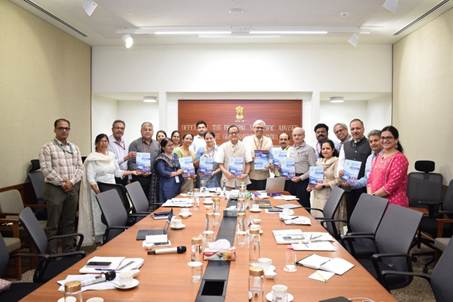
NEW DELHI — In an era defined by rapid climate shift and escalating interactions between humans and wildlife, India is consolidating its defenses against the next potential pandemic. On May 18, 2026, the Scientific Steering Committee on the National One Health Mission convened its fifth landmark meeting at Kartavya Bhavan, New Delhi. Led by Professor Ajay K. Sood, the Principal Scientific Adviser (PSA) to the Government of India, the high-level assembly brought together the nation’s top scientific, medical, environmental, and defense minds to fortify a unified front against zoonotic diseases and climate-induced health crises.
The meeting marks a pivotal shift from theoretical planning to decentralized, ground-level implementation across India’s states and union territories. With a focus on artificial intelligence (AI)-driven disease tracking, advanced laboratory infrastructure, and cross-departmental data sharing, the National One Health Mission represents a fundamental restructuring of how the world’s most populous nation anticipates and neutralizes public health threats.
The Concept of ‘One Health’
For decades, human medicine, veterinary medicine, and environmental science operated in distinct silos. However, modern epidemiological data proves that these fields are inextricably linked.
“Approximately 60% of known infectious diseases in humans can be spread from animals, and 75% of new or emerging infectious diseases originate in wildlife,” notes the World Health Organization (WHO).
The “One Health” approach acknowledges that human health does not exist in a vacuum; it is entirely dependent on the health of animals and our shared environment. When deforestation drives bats into human suburbs, or when warming temperatures allow virus-carrying mosquitoes to thrive in new regions, the risk of a spillover event—where a virus jumps species—skyrockets.
Key Milestones: Moving from Vision to Local Action
A central highlight of the New Delhi meeting was the official release of the Model Governance Framework. This blueprint is designed to assist states and union territories in setting up decentralized One Health cells. Because health administration in India is largely managed at the state level, localized governance is vital for rapid outbreak response.
The committee also reviewed major milestones achieved over the past year:
-
Genomics and Metagenomics Surveillance: India has initiated cutting-edge genetic sequencing networks capable of detecting unknown pathogens in blood or wastewater samples before they cause widespread illness.
-
Interface Tracking: Active monitoring has expanded to high-risk zones where humans, domestic animals, and wildlife collide, including zoos, bird sanctuaries, and slaughterhouses.
-
Grassroots Engagement: The publication of proceedings from the November 2025 National One Health Assembly highlighted new initiatives aimed at engaging youth and local communities in biosecurity awareness.
AI, Advanced Labs, and Medical Countermeasures
To ensure early warnings do not go unheeded, the committee detailed several core technical work streams led by prominent national experts:
1. Technology-Enhanced Surveillance & AI
Chaired by Dr. N.K. Arora, this stream focuses on AI-enabled pathogen detection. By deploying machine learning algorithms to analyze patterns in wildlife mortality, veterinary clinic data, and human hospital admissions, the mission aims to flag potential outbreaks days or weeks earlier than traditional reporting methods allow.
2. High-Containment Infrastructure
Managing dangerous pathogens requires secure environments. Lt. Gen. (Rtd.) Dr. Madhuri Kanitkar leads the committee overseeing Biosafety Level 3 and 4 (BSL-3/BSL-4) laboratories. These facilities ensure that deadly viruses can be isolated and studied without risking accidental release into the community.
3. Integrated Data Sharing
Historically, a spike in cattle illness monitored by agricultural officials might not be reported to human health authorities until it was too late. A specialized data-integration committee, chaired by Dr. Vijay Chandru, is working to dissolve these bureaucratic walls, enabling secure, real-time data exchange across ministries.
4. Medical Countermeasures
When a new threat is identified, the focus shifts to therapeutics and vaccines. Dr. Renu Swarup and Dr. Nivedita Gupta of the Indian Council of Medical Research (ICMR) presented updates on streamlining diagnostic pipelines and accelerating the development of domestic medical countermeasures.
What This Means for Public Health and Daily Life
For the average citizen, a highly technical government mission might seem distant, but its real-world implications are profound.
“Investing in One Health is essentially buying an insurance policy against future lockdowns and economic devastation,” explains Dr. Arati Verma, an independent public health policy analyst not involved in the committee. “When we track avian influenza in wild birds or screen for vector-borne diseases in changing climates, we prevent localized spillover events from mutating into national crises.”
For health-conscious consumers, this mission underscores the importance of everyday biosecurity and environmental hygiene. Safe food handling at meat processing facilities, responsible livestock management, and heightened awareness of tick- and mosquito-borne illnesses in warming regions are all practical extensions of the One Health philosophy.
Challenges, Limitations, and the Road Ahead
Despite the optimism surrounding the mission, independent experts urge cautious realism. Translating a comprehensive “Model Governance Framework” into 28 diverse states and 8 union territories presents massive logistical hurdles.
Data Silos and Resource Constraints
Funding disparities between human health infrastructure and veterinary or environmental departments remain a significant barrier. Veterinary services, particularly in rural sectors, are frequently underfunded, potentially creating blind spots in livestock disease tracking. Furthermore, establishing a truly frictionless, cross-ministerial data-sharing platform requires navigating complex privacy laws and deeply ingrained bureaucratic inertia.
Principal Scientific Adviser Prof. Ajay K. Sood addressed these challenges directly in his closing remarks. He emphasized that frameworks must be translated into “measurable and sustained action on the ground.” He called for immediate, regular mock drills to test inter-agency communication and urged member ministries to seamlessly integrate One Health priorities directly into their annual budgetary allocations.
As climate change continues to rewrite the rules of global epidemiology, India’s proactive stance serves as an important template for regional biosecurity. The success of the National One Health Mission will ultimately depend on how effectively these high-level frameworks can be executed in the villages, forests, and urban centers where the next pandemic threat is most likely to emerge.
Medical Disclaimer
Medical Disclaimer: This article is for informational purposes only and should not be considered medical advice. Always consult with qualified healthcare professionals before making any health-related decisions or changes to your treatment plan. The information presented here is based on current research and expert opinions, which may evolve as new evidence emerges.
References
-
Primary Source: Press Information Bureau (PIB) Delhi, Government of India. “Fifth Scientific Steering Committee Meeting on National One Health Mission Held in New Delhi.” Published May 18, 2026.