 0
0
 0
0
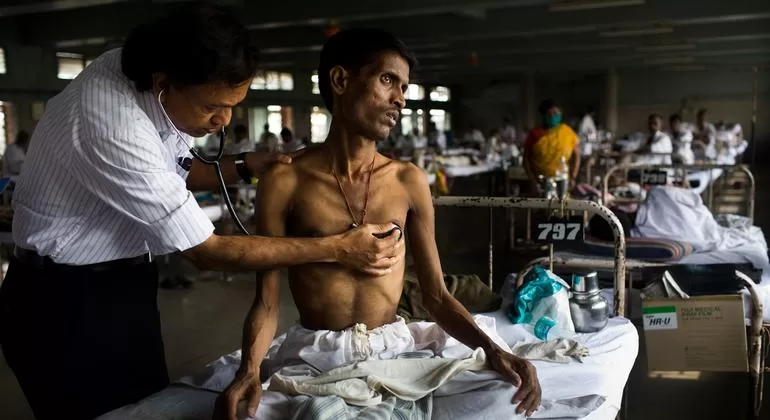
GANDHINAGAR, INDIA — In a significant expansion of its public health strategy, the Government of Gujarat has announced a new targeted initiative to distribute specialized nutritional snacks to underweight tuberculosis (TB) patients and children across the state. This fresh anti-TB push, integrated directly into the state’s public health infrastructure, aims to improve treatment adherence, accelerate recovery times, and ultimately lower mortality rates. By systematically pairing clinical medicine with targeted food support, public health officials are tackling a long-standing obstacle in infectious disease management: the dangerous, reinforcing cycle of tuberculosis and malnutrition.
The Intersection of Hunger and Illness: What the State Plan Means
The new Gujarat initiative builds directly upon India’s existing national health infrastructure, specifically complementing the Ni-Kshay Poshan Yojana—a central government program that provides monthly financial incentives to TB patients for nutritional support. However, while direct benefit transfers assist many, logistical hurdles and severe poverty mean that families often struggle to translate cash into high-protein, calorie-dense foods.
Gujarat’s localized approach steps in to fill this gap by providing physical, nutrient-dense snacks directly to the most vulnerable demographics: children, adolescents, and adults with a Body Mass Index (BMI) below $18.5\text{ kg/m}^2$.
+------------------------------------------------------------------------+
|                      The Malnutrition-TB Cycle                         |
+------------------------------------------------------------------------+
|                                                                        |
|    Undernutrition ---> Weakened Immune System ---> High TB Risk        |
|          ^                                              |              |
|          |                                              v              |
|    Severe Weight Loss <-- Muscle Wasting & Anorexia <-- Active Disease |
|                                                                        |
+------------------------------------------------------------------------+
Historically, nutritional support was viewed as a secondary comfort measure rather than a primary clinical intervention. Modern epidemiological data, however, has fundamentally shifted this paradigm. Public health officials now treat nutrition as an indispensable component of TB control. In India, where undernutrition remains the leading attributable risk factor for developing active tuberculosis, addressing a patient’s dietary status is as vital to stopping transmission as ensuring they take their daily antibiotics.
The Biological Link: Why Nutrition Matters in TB Care
According to global guidelines maintained by the World Health Organization (WHO), tuberculosis and undernutrition share a complex, bidirectional causal link.
-
How Malnutrition Fuels TB: Severe nutritional deficits impair cell-mediated immunity, which is the body’s primary defense system against Mycobacterium tuberculosis. Without adequate protein and micronutrients, the immune system cannot contain the bacteria, allowing a latent infection to progress into active, highly contagious disease.
-
How TB Fuels Malnutrition: Once active, the disease triggers a systemic inflammatory response. This metabolic shift causes a loss of appetite (anorexia), severe muscle wasting, and altered nutrient absorption, causing rapid weight loss.
For infants, children, and adolescents, the consequences are particularly devastating. Malnutrition during a TB infection doesn’t just stall recovery; it can permanently arrest physical growth and cognitive development.
The Indian Ministry of Health and Family Welfare previously expanded its national framework to provide Energy-Dense Nutritional Supplementation (EDNS) to approximately 1.2 million underweight patients during the critical first two months of therapy. Gujarat’s initiative leverages this exact strategy, targeting the intensive phase of treatment when a patient’s metabolic demands are at their highest and the risk of mortality is greatest.
Institutional Perspectives: Food is a Partner, Not a Substitute
While public health experts have broadly welcomed the state’s proactive intervention, institutional guidance from both the WHO and the Central Tuberculosis Division underlines an uncompromising clinical boundary: food support must never be viewed as a substitute for timely diagnosis or appropriate chemotherapy.
Independent public health evaluations indicate that nutritional snacks work optimally only when delivered as part of a comprehensive care package. This package must include detailed patient counseling, meticulous adherence monitoring, and robust diagnostic safeguards.
Furthermore, institutional data cautions that if a patient continues to lose weight despite receiving nutritional snacks, clinicians must not simply assume the patient requires more food. Persistent weight loss during therapy is a vital clinical warning sign that can point to serious underlying complications, such as:
-
Drug-Resistant TB (DR-TB): Meaning the standard first-line antibiotic regimen is failing.
-
Poor Adherence: The patient is unable to take their medication regularly.
-
Co-infections: Unaddressed underlying conditions, such as HIV or diabetes, complicating recovery.
Public Health Implications and Practical Daily Health Decisions
If implemented successfully across rural and urban clinics, Gujarat’s targeted food-supplement program could yield massive dividends for community health. Patients suffering from severe undernutrition are statistically far more likely to discontinue their grueling six-month medication course prematurely due to weakness or an inability to tolerate harsh drugs on an empty stomach. By mitigating these side effects through sustained nutritional support, the state hopes to significantly reduce treatment default rates.
What This Means for Families and Communities
For individuals and families navigating a tuberculosis diagnosis, this development highlights several practical, daily health actions:
-
Monitor Weight Closely: Weight gain is one of the most reliable indicators that a TB treatment plan is working. Families should track weight carefully, especially in children and adolescents.
-
Advocate for Nutritional Screenings: When visiting a clinic, patients should ensure that a baseline BMI or nutritional assessment is performed.
-
Never Ignore Persistent Weight Loss: If a family member is consuming nutritional supplements but continues to lose weight or experience a flagging appetite, report this immediately to a health provider to screen for drug resistance.
Program Limitations and Challenges Ahead
Despite its strong scientific foundation, the long-term success of Gujarat’s fresh anti-TB push hinges on overcoming steep operational hurdles.
| Potential Operational Failure Points | Required Programmatic Solutions |
| Supply Chain Disruptions: Irregular distribution of snacks can cause sudden lapses in patient caloric intake. | Establishment of decentralized storage facilities near local primary health centers. |
| Cultural and Palatability Barriers: Standardized snacks may not align with local dietary habits or patient preferences. | Formulating regionally customized, culturally familiar food supplements. |
| One-Size-Fits-All Models: Blindly distributing identical snack rations ignores unique metabolic variations. | Implementing individualized pediatric and adult screening protocols based on age and clinical status. |
| Social Stigma: Visible distribution of specialized “TB snacks” might cause patients to avoid the program to protect privacy. | Integrating snack pick-ups discreetly into routine healthcare or standard ration distributions. |
Ultimately, food support alone cannot compensate for broader structural deficiencies, such as delayed diagnosis in remote tribal regions or shortages of vital second-line medications.
The Bottom Line
Gujarat’s decision to provide targeted nutrition snacks to underweight TB patients and vulnerable children represents an enlightened, holistic approach to an ancient disease. It acknowledges that eradicating tuberculosis requires treating the whole patient, not just the pathogen.
While the initiative aligns perfectly with national mandates and global medical consensus, the ultimate test will be its execution. If the state can successfully navigate the logistical challenges of distribution, protect patient dignity, and maintain strict clinical oversight, this program may well serve as a blueprint for other states striving to achieve India’s ambitious goal of a TB-free nation.
References
- https://english.punjabkesari.com/india/gujarat-to-provide-nutrition-snacks-to-underweight-tb-patients-children-under-new-anti-tb-push/
Medical Disclaimer: This article is for informational purposes only and should not be considered medical advice. Always consult with qualified healthcare professionals before making any health-related decisions or changes to your treatment plan. The information presented here is based on current research and expert opinions, which may evolve as new evidence emerges.