 0
0
 0
0
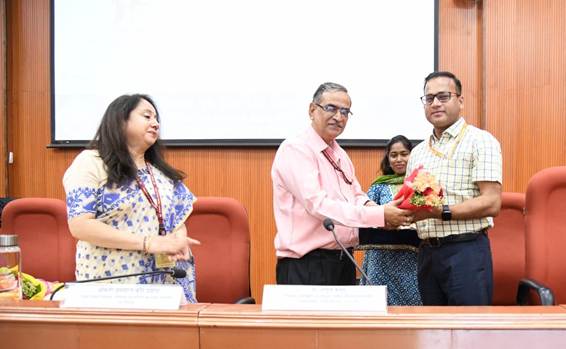
GHAZIABAD, India — In a major push to elevate the safety, efficacy, and global credibility of traditional Indian medicine and homoeopathy, a comprehensive national capacity-building initiative was launched on Monday.
The Pharmacopoeia Commission for Indian Medicine & Homoeopathy (PCIM&H), an autonomous body under the Ministry of Ayush, commenced a rigorous five-day intensive training program spanning May 18 to May 22, 2026. The initiative brings together key regulatory authorities, drug enforcement officials, top-tier scientists, and academic researchers from across the country. The central objective is to standardize quality assurance protocols and enforce stringent regulatory frameworks for Ayurveda, Siddha, Unani, and Homoeopathy (ASU&H) drugs.
As global consumer demand for complementary and alternative medicine surges, India is seeking to bridge the gap between ancient healing traditions and rigorous, modern scientific validation.
Strengthening the Regulatory Backbone
The training initiative arrives at a critical juncture for the traditional medicine sector. For consumers, the primary challenge has long been consistency. Unlike synthetic pharmaceuticals, which feature highly predictable chemical profiles, herbal and traditional remedies are inherently complex. Variations in soil, harvest timing, and processing methods can fundamentally alter the chemical composition of a botanical product.
To address these variations, the PCIM&H program focuses on equipping enforcement officers and quality control scientists with advanced analytical methodologies. Over the five-day period, participants are undergoing rigorous training in several core areas:
-
Advanced Analytical Testing: Training in pharmacognostic (botanical identification), physico-chemical, and phytochemical evaluations to verify the exact identity and purity of raw materials.
-
Safety and Contamination Monitoring: Implementing strict microbiological screening and pharmacological testing to ensure medicines are entirely free from heavy metals, pesticides, and harmful pathogens.
-
Shelf-Life and Stability Studies: Utilizing standardized testing models to determine accurate expiration dates and degradation patterns of complex formulations.
-
Regulatory Compliance: Deep dives into Good Manufacturing Practices (GMP) and National Accreditation Board for Testing and Calibration Laboratories (NABL) guidelines.
During the inaugural session, Jaspal Kaur Pradyot, Chief Controller of Accounts at the Ministry of Health & Family Welfare, highly commended the integration of modern instrumentation into the traditional medicine sector. Pradyot emphasized that adopting advanced scientific techniques is the most reliable pathway to sustaining the rich heritage of AYUSH systems while securing broader international acceptance.
Moving from Theory to the Factory Floor
A critical component of this initiative is its focus on real-world application. To ensure that regulatory guidelines translate into industry practice, the 28 selected delegates—comprising state drug controllers, national research officers, and laboratory analysts—are undergoing hands-on laboratory training at the PCIM&H headquarters in Ghaziabad.
The curriculum also includes site inspections of major manufacturing hubs, including Dr. Willmar Schwabe India Pvt. Ltd. in Noida and Hamdard Laboratories India in Ghaziabad. These site visits are designed to give regulators and scientists a firsthand look at automated, large-scale quality assurance systems in action.
Dr. Abdul Qayum, Director (Technical) and Deputy CEO of the National Medicinal Plants Board (NMPB), noted during the event that the pharmacopoeias (official books containing directions for the identification of compound medicines) developed by India are increasingly recognized on the global stage.
“There is an escalating international demand for standardized traditional medicine,” Dr. Qayum stated. “Ensuring that our regulatory gatekeepers are trained in the latest scientific methodologies is vital to meeting that demand safely.”
Public Health Implications: What This Means for Consumers
For the everyday health-conscious consumer, this regulatory push provides a crucial layer of reassurance. According to the World Health Organization (WHO), approximately 80% of the world’s population uses traditional medicine in some capacity. However, the primary barrier to incorporating these therapies into mainstream public health systems has always been the lack of uniform standardization.
When drug inspectors, state analysts, and researchers from elite bodies—such as the Central Drugs Laboratory in Kolkata and the National Institute of Siddha in Chennai—are aligned on identical quality standards, the consumer wins. It means that an Ayurvedic supplement or a Homoeopathic remedy purchased at a local pharmacy will undergo the same rigorous validation for purity and potency as conventional over-the-counter medications.
Industry Challenges and Limitations
Despite the optimistic outlook of the program, independent public health experts point out that a single training initiative is only the first step in resolving systemic industry challenges.
Independent researchers note that while training top-tier regulators is highly beneficial, the traditional medicine landscape in India is vast and highly fragmented. The sector includes thousands of small-scale, localized manufacturing units that often lack the capital to invest in high-end testing machinery or sophisticated NABL-accredited laboratory testing.
Furthermore, critics argue that enforcement remains uneven across different state borders. While premier institutes readily adopt these advanced scientific protocols, integrating these strict methodologies into smaller, rural manufacturing units across every Indian state remains an uphill logistical and financial battle.
Looking Ahead
Dr. Raman Mohan Singh, Director of PCIM&H, reaffirmed that the commission is committed to maintaining continuous oversight. By bridging the gap between ancient medical systems and modern laboratory science, India aims to solidify its position as a global leader in traditional healthcare regulation.
As the five-day program concludes later this week, the ultimate benchmark of its success will rest on how effectively these 28 national delegates implement these rigid safety standards within their respective states, ensuring public health remains protected.
Medical Disclaimer
This article is for informational purposes only and should not be considered medical advice. Always consult with qualified healthcare professionals before making any health-related decisions or changes to your treatment plan. The information presented here is based on current research and expert opinions, which may evolve as new evidence emerges.
References
Government and Official Sources
-
Press Information Bureau (PIB) Delhi: Pharmacopoeia Commission for Indian Medicine & Homoeopathy (PCIM&H) Organizes 5-Day Capacity Building Training Program for ASU&H Drug Regulators and Stakeholders. Published May 18, 2026.