 0
0
 0
0
NEW DELHI — As an intense summer grips the nation, the Ministry of Health & Family Welfare’s Ayush Vertical, operating under the Directorate General of Health Services (DGHS), has joined forces with the Ministry of Ayush to issue a comprehensive public health advisory. Released on May 18, 2026, the directive outlines crucial preventive measures, traditional wellness strategies, and emergency protocols designed to shield citizens from severe heat-related illnesses. With large swathes of the country experiencing unprecedented thermal stress, health authorities are urging the public to combine conventional heat safety with time-tested traditional practices to navigate the extreme conditions.
The joint advisory serves as a timely response to a growing environmental health crisis. By blending modern emergency medicine protocols with dietary and lifestyle recommendations from Ayurveda, Yoga, Siddha, Unani, and Homoeopathy (AYUSH), the government aims to provide a multi-layered defense against the rising mercury.
The Rising Threat: Who is Most at Risk?
According to the India Meteorological Department (IMD), heatwaves are becoming both more frequent and severe, posing a direct threat to human physiology. When ambient temperatures exceed the body’s ability to cool itself, internal temperatures can rise rapidly, damaging vital organs.
The advisory explicitly identifies several highly vulnerable demographics requiring heightened monitoring:
-
Infants and young children, whose temperature regulation systems are under-developed.
-
Pregnant women and the elderly.
-
Outdoor laborers, gig-economy workers, and sports participants.
-
Individuals living with pre-existing chronic conditions, particularly hypertension and cardiovascular disease.
Public health data underscores the urgency. According to the World Health Organization (WHO), extreme heat events kill thousands globally each year, a statistic heavily weighted toward vulnerable populations.
Medical experts emphasize that heat stress acts as a physiological amplifier. “Extreme heat doesn’t just cause heatstroke; it exacerbates underlying cardiovascular and respiratory conditions,” says Dr. Aranya Sen, an independent public health policy researcher based in New Delhi. “When the body works overtime to pump blood to the skin for cooling, it places an immense strain on the heart.”
Recognizing the Danger Signs: A Medical Emergency
The DGHS advisory emphasizes that distinguishing between mild heat exhaustion and life-threatening heatstroke can save lives.
The public is urged to remain vigilant for the following escalating symptoms:
| Condition | Common Symptoms | Immediate Action Required |
| Heat Exhaustion | Dizziness, headache, intense thirst, heavy sweating, nausea, and weakness. | Move to a cool, shaded area; loosen clothing; sip water or oral rehydration salts (ORS). |
| Heatstroke | Altered mental status (confusion, slurred speech), high body temperature, dry skin or profuse sweating, seizures, and fainting. | Medical Emergency. Call 108 or 102 immediately. Cool the person using ice packs or wet cloths. |
“Heatstroke is a catastrophic failure of the body’s thermoregulatory system,” notes Dr. Sen. “Once a patient exhibits confusion or loses consciousness, every minute without medical intervention increases the risk of permanent neurological damage or organ failure.”
Integrating Traditional Wellness: The AYUSH Blueprint
A distinctive feature of the 2026 advisory is its formal integration of traditional Indian systems of medicine to build physiological resilience against heat. Rather than replacing standard medical care, these practices are intended as proactive, daily preventive measures.
1. Ayurveda: Inner Cooling and Hydration
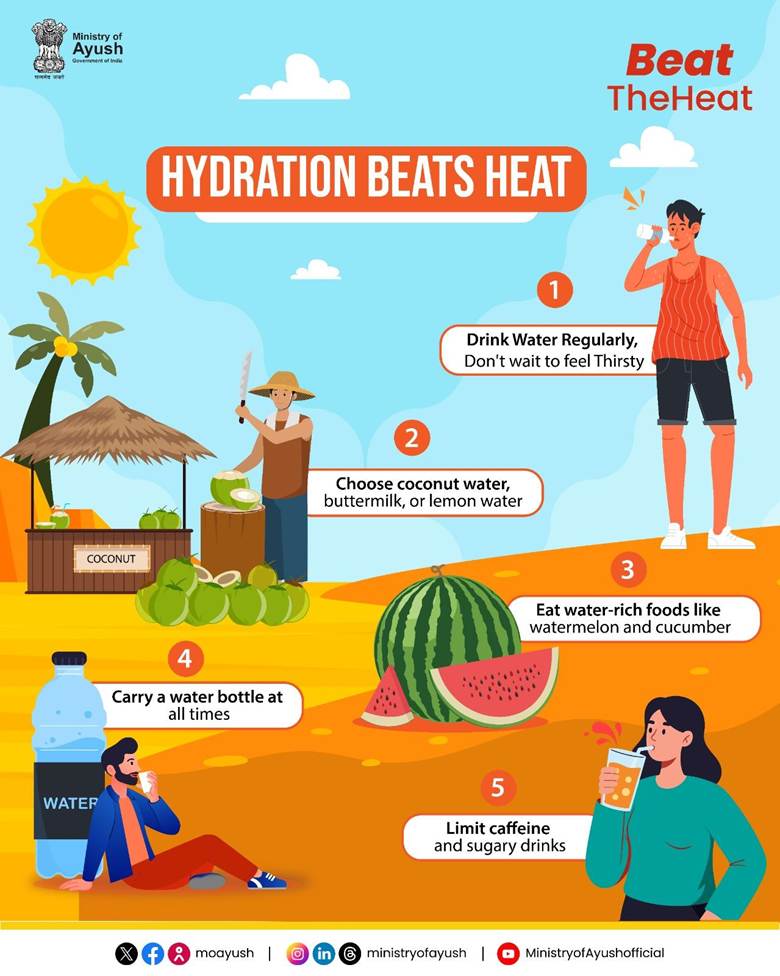
Ayurveda views extreme summer heat as an aggravation of the Pitta (fire) dosha. To counter this, the advisory recommends incorporating cooling, hydrating traditional beverages (Panakas) into daily routines. These include:
-
Nimbukaphala Panaka: A traditional formulation of lime juice, rock sugar, and cooling spices.
-
Amra Prapanaka (Aam Panna): A beverage made from boiled raw mangoes, known for replenishing lost electrolytes and preventing sodium depletion.
-
Chincha Panaka: A cooling tamarind-based drink that helps maintain fluid balance.
-
Buttermilk and Coconut Water: Excellent natural sources of potassium and essential minerals.
2. Yoga: Thermal Regulation via the Breath
The advisory highlights specific pranayama (breathing techniques) known for their immediate cooling effect on the nervous system. Sheetali Pranayama (cooling breath) involves inhaling deeply through a rolled tongue and exhaling through the nose, which helps lower core body perception of heat and reduces anxiety associated with thermal distress.
3. Siddha, Unani, and Homoeopathy
The Siddha and Unani protocols recommend dietary inclusions of naturally cooling gourds and fruits, alongside topically applying soothing herbal pastes to prevent sunburns. Homoeopathy sections emphasize strict adherence to peak-hour safety alongside individualized precautionary wellness checks.
The advisory strongly encourages incorporating hydrating, high-water-content foods into the daily diet, including cucumber, watermelon, musk melon, ash gourd, and tomatoes.
Workplace and Public Space Mandates
Recognizing that economic realities prevent many citizens from staying indoors, the advisory outlines strict directives for employers, event organizers, and local authorities.
Workplaces and mass gatherings must provide shaded rest zones, mandate regular mandatory hydration breaks, and implement gradual acclimatization periods for outdoor laborers returning to heavy work in the sun. Furthermore, public events are urged to ensure free access to cool drinking water and have trained first-aid personnel on-site.
A Balanced Scientific Perspective: Limitations and Nuance
While the integration of traditional remedies offers an accessible toolkit for the general public, mainstream medical researchers urge a balanced approach.
Clinical trials published in journals like The Lancet Planetary Health emphasize that while traditional hydration methods like buttermilk and Aam Panna are excellent for preventing mild dehydration, they cannot replace standard medical therapies—such as intravenous fluids and active external cooling—once a individual progresses to severe heat exhaustion or heatstroke.
“Traditional wellness practices are highly effective for daily maintenance and mild heat prevention,” says Dr. Sen. “However, the public must understand the boundary line. If someone is showing signs of confusion, delirium, or a dangerously high fever, you must skip the home remedies and call an ambulance immediately. Ayush practices should complement, not substitute, emergency medicine.”
Furthermore, individuals with chronic conditions like diabetes or hypertension must exercise caution. For instance, traditional sweet syrups or highly salted buttermilk preparations may need adjustment to avoid spiking blood sugar or blood pressure levels.
Practical Checklist for Daily Protection
To stay safe during this heatwave season, health authorities recommend incorporating these habits into your daily routine:
-
Track the Weather: Monitor local IMD updates and avoid outdoor activities during peak UV and temperature hours (typically 11:00 AM to 4:00 PM).
-
Dress Appropriately: Wear loose-fitting, light-colored, breathable cotton clothing to allow proper sweat evaporation.
-
Hydrate Proactively: Drink fluids before you feel thirsty. Carry water or traditional cooling drinks whenever leaving the house.
-
Protect Your Skin: Use wide-brimmed hats, umbrellas, and sunglasses when stepping outside.
By blending the rigorous emergency guidelines of modern medicine with the restorative, cooling principles of traditional wellness, health authorities hope to equip citizens with a comprehensive strategy to endure the extreme summer safely.
Medical Disclaimer
Medical Disclaimer: This article is for informational purposes only and should not be considered medical advice. Always consult with qualified healthcare professionals before making any health-related decisions or changes to your treatment plan. The information presented here is based on current research and expert opinions, which may evolve as new evidence emerges.
References
Government & Official Announcements
-
Ministry of Ayush / DGHS, Ministry of Health & Family Welfare: Public Health Advisory on Extreme Heat/Heatwave Conditions, issued May 18, 2026 (via Press Information Bureau, Delhi).