 0
0
 0
0
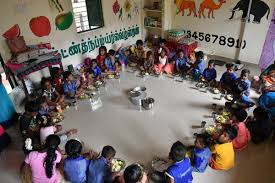
NEW DELHI – In a significant leap for public health and early childhood development, the Ministry of Women and Child Development (MWCD) announced this week that over 103,000 Anganwadi Centres have been successfully upgraded to “Saksham” status. This transformation marks a pivotal shift in India’s flagship Poshan 2.0 scheme, moving beyond simple food distribution to an integrated model that fuses clinical nutrition, digital tracking, and cognitive stimulation for millions of children.
The announcement, shared by Minister of State Smt. Savitri Thakur in the Rajya Sabha on April 1, 2026, underscores a massive logistical and pedagogical overhaul. With more than one million Anganwadi Workers (AWWs) now trained in advanced early childhood pedagogy, the initiative seeks to bridge the gap between rural health outcomes and urban developmental standards.
A Holistic Package: More Than Just a Meal
At its core, the Saksham Anganwadi and Poshan 2.0 scheme operates on the philosophy that nutrition cannot be viewed in isolation. To thrive, a child requires a “package of services” that addresses both the body and the mind. The integrated model provides six essential services:
-
Supplementary Nutrition: Tailored for children, pregnant women, and lactating mothers.
-
Pre-school Non-formal Education: Now bolstered by the Poshan Bhi Padhai Bhi (Nutrition with Education) initiative.
-
Nutrition and Health Education: Empowering caregivers with diet diversity knowledge.
-
Immunization: Delivered in coordination with the National Health Mission (NHM).
-
Health Check-ups: Regular monitoring to catch developmental delays early.
-
Referral Services: Ensuring children with severe conditions reach specialized hospitals.
“By integrating health services like immunization and referrals with daily nutritional support, we create a safety net that catches children before they fall into the cycle of chronic malnutrition,” says Dr. Aranya Sen, a public health consultant not involved in the government report. “The inclusion of AYUSH practices—traditional Indian wellness systems—further strengthens the focus on preventative immunity.”
The Science of “Diet Diversity”
A cornerstone of the 2026 update is the rigorous application of the National Food Security Act (NFSA) 2013 norms, which were revised in early 2023. The new standards move away from “calorie counting” toward dietary diversity.
The revised kits are engineered to provide high-quality protein, healthy fats, and a spectrum of essential micronutrients including:
-
Iron and B-12: Critical for combating the high prevalence of anemia in adolescent girls and pregnant women.
-
Zinc and Calcium: Essential for bone growth and immune function.
-
Dietary Folate: Vital for healthy fetal development during pregnancy.
For children identified with Severe Acute Malnutrition (SAM), the scheme now provides “Extra Supplementary Nutrition,” a clinical intervention designed to prevent the life-threatening complications associated with extreme wasting.
“Poshan Bhi Padhai Bhi”: Brain Food Meets Brain Play
Perhaps the most ambitious arm of the Saksham upgrade is the Poshan Bhi Padhai Bhi (PBPB) initiative. Recognizing that 85% of brain development occurs before the age of six, the government has launched two new frameworks: Navchetana (for ages 0–3) and Aadharshila (for ages 3–6).
These frameworks shift the Anganwadi from a “crèche” to a center of “Early Childhood Care and Education” (ECCE). With an increased allocation of ₹3,000 per center for Pre-school Education kits, the focus is now on play-based learning. As of late March 2026, a staggering 1,058,168 workers have been trained to deliver these educational modules.
“Early stimulation is as important as protein for a child’s long-term success,” explains Maria Gomez, an early childhood education specialist. “The Navchetana framework, which focuses on ‘responsive caregiving,’ essentially teaches parents and workers how to interact with infants to trigger neural pathways that govern language and emotional intelligence.”
Digital Transparency: The Poshan Tracker
To ensure these benefits actually reach the intended recipients, the government has leaned heavily into e-Governance. The Poshan Tracker portal, launched in 2021, has become the digital backbone of the mission.
Equipped with smartphones and internet connectivity, Anganwadi workers enter real-time data on stunting (low height for age) and wasting (low weight for height). The system now utilizes:
-
Facial Recognition System (FRS): To verify the distribution of Take-Home Rations (THR).
-
Growth Monitoring Devices (GMDs): To ensure physical measurements are accurate and not estimated.
-
Multimedia Learning: The tracker now delivers 249 videos and 190 voice notes directly to workers to assist in daily teaching.
Challenges and the Road Ahead
While the scale of the upgrade is unprecedented, public health experts urge cautious optimism. Critics often point to “last-mile” connectivity issues in remote tribal belts where digital tracking can falter. Furthermore, while 103,940 centers have been upgraded, India has over 1.3 million Anganwadis in total, suggesting a long road remains for universal “Saksham” coverage.
Additionally, the Ministry clarified that it does not currently propose skill development or entrepreneurship programs for women through these centers, keeping the focus strictly on health and early education for now.
For the average parent, this shift means their local Anganwadi is no longer just a place for a free meal; it is becoming a center for clinical health monitoring and foundational schooling. As the 2026 data continues to roll in via the Poshan Tracker, the hope is that these integrated “Saksham” centers will finally move the needle on India’s persistent malnutrition statistics.
Reference Section
I. Government & Statistical Sources
-
Ministry of Women and Child Development (MWCD): Official Statement, “Saksham Anganwadi and Poshan 2.0 Integrated Services,” Posted 01 April 2026, PIB Delhi.
Medical Disclaimer: This article is for informational purposes only and should not be considered medical advice. Always consult with qualified healthcare professionals before making any health-related decisions or changes to your treatment plan. The information presented here is based on current research and expert opinions, which may evolve as new evidence emerges.