 0
0
 0
0
NEW DELHI — In a decisive shift toward integrated public health policy, the Indian government has formalized a “whole of government” approach to dismantle the intergenerational cycle of malnutrition. By syncing the resources of the Ministry of Women and Child Development (MoWCD) and the Ministry of Health and Family Welfare (MoHFW), the initiative aims to transform the nutritional landscape for millions of children through high-tech tracking, diversified food norms, and grassroots mobilization.
The strategy, detailed in a report to the Rajya Sabha on April 1, 2026, by Minister of State for Women and Child Development Smt. Savitri Thakur, represents a move away from siloed governance. Instead, it creates a unified pipeline of care—from tracking anemia in pregnant women to the real-time monitoring of childhood stunting and wasting via digital platforms.
Breaking the Cycle: Beyond Calories
For decades, nutritional interventions were largely measured by caloric intake. However, the 2023 revision of nutritional norms under Mission Saksham Anganwadi and Poshan 2.0 marks a scientific evolution. The updated standards, aligned with the National Food Security Act, prioritize “diet diversity” over mere energy density.
Under the new guidelines, supplementary nutrition is no longer just about filling stomachs; it is about fueling development. The revised diet focuses on:
-
High-quality proteins and healthy fats.
-
Seven essential micronutrients: Calcium, Zinc, Iron, Dietary Folate, Vitamin A, Vitamin B6, and Vitamin B12.
“The shift from a calorie-centric model to a micronutrient-rich model is crucial,” says Dr. Aranya Sen, a public health consultant not involved in the government report. “Hidden hunger—where a child eats enough volume but lacks essential minerals—is often more insidious than overt hunger. Addressing folate and B12 specifically targets cognitive development and long-term health outcomes.”
The Digital Eye: The Poshan Tracker
A cornerstone of this administrative synergy is the Poshan Tracker, an ICT-based governance tool. By digitizing the workflow of Anganwadi Centers (AWCs), the government can now monitor the growth of children in near real-time.
The application tracks:
-
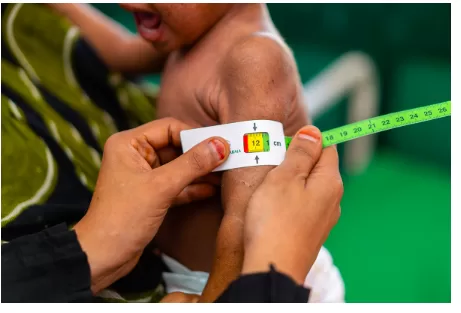
Growth Measurement: Dynamic identification of stunting (low height for age) and wasting (low weight for height).
-
Service Delivery: Daily monitoring of Hot Cooked Meals (HCM) and Take Home Rations (THR).
-
Attendance and ECCE: Ensuring Early Childhood Care and Education reach the intended beneficiaries.
Since its inception, this data-driven approach has allowed for more surgical interventions. Instead of broad, national estimates, local health workers can identify specific clusters where underweight prevalence is spiking and redirect resources accordingly.
Statistical Context and the Anemia Challenge
While the government highlights progress, the data from the National Family Health Survey (NFHS-5) underscores the magnitude of the task. Anemia remains a persistent hurdle, particularly among children and women. According to the NFHS-5 report, more than half of children and women in several states continue to show low hemoglobin levels, necessitating the MoHFW’s intensive record-keeping and iron-folic acid supplementation programs.
Interestingly, the Cause of Death Report (2021-23) from the Sample Registration System indicates that malnutrition is rarely recorded as a direct cause of death for children aged 0-4. Experts suggest this is a matter of medical coding; while malnutrition severely weakens the immune system, the terminal cause of death is often an infection like pneumonia or diarrhea.
“Malnutrition is the silent collaborator in most pediatric deaths,” explains Dr. Sen. “By improving the nutritional baseline, we aren’t just ‘feeding’ children; we are effectively vaccinating them against the complications of common childhood illnesses.”
Jan Andolan: Turning Nutrition into a Movement
The “Whole of Government” approach extends beyond office buildings and into the streets through Jan Andolans (People’s Movements). Since 2018, the government has recorded over 150 crore activities aimed at sensitizing the public.
-
Poshan Maah (September): A month-long focus on nutritional education.
-
Poshan Pakhwada (March-April): A fortnightly celebration of health practices.
-
Community-Based Events (CBEs): Anganwadi workers are now mandated to hold two CBEs monthly to change local nutritional practices at the village level.
By involving the community, the program seeks to overcome cultural barriers to breastfeeding, complementary feeding, and hygiene.
Limitations and the Road Ahead
Despite the robust framework, challenges remain. The responsibility for executing Mission Poshan 2.0 lies with individual States and Union Territories, leading to regional disparities in service quality. Furthermore, while the Poshan Tracker is a leap forward, its efficacy depends entirely on the digital literacy of Anganwadi workers and consistent internet connectivity in rural hinterlands.
Critics also point out that while the intergenerational cycle is being addressed, the economic factors—such as food inflation and access to clean water—are external variables that the MoWCD and MoHFW cannot control alone.
What This Means for the Public
For the average citizen, these developments signal a more proactive healthcare environment. Families registered with Anganwadi centers can expect:
-
Better Quality Rations: Meals now fortified with essential vitamins.
-
Growth Monitoring: Regular digital check-ups for their children’s height and weight.
-
Education: Better access to information regarding adolescent girl health and maternal nutrition.
As India continues to leverage technology and inter-departmental cooperation, the goal is clear: moving from a state of food security to a state of nutritional security.
References
- https://www.pib.gov.in/PressReleasePage.aspx?PRID=2247566®=3&lang=1
Medical Disclaimer: This article is for informational purposes only and should not be considered medical advice. Always consult with qualified healthcare professionals before making any health-related decisions or changes to your treatment plan. The information presented here is based on current research and expert opinions, which may evolve as new evidence emerges.