 0
0
 0
0
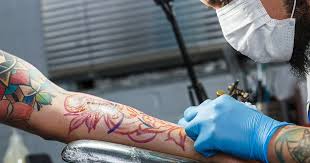
NEW DELHI — A Public Interest Litigation (PIL) filed in the Delhi High Court has thrown a spotlight on India’s rapidly expanding body art market, calling for the urgent implementation of nationwide regulations to govern the tattoo industry. The petition argues that the sector has outpaced its legal safeguards, operating without a uniform statutory framework to protect consumers. Filed amid rising medical reports of adverse reactions and skin infections, the legal action seeks to establish mandatory licensing, strict hygiene and sterilization protocols, chemical checks on tattoo inks, and age restrictions for minors. As the court considers the plea, public health officials and medical professionals are weighing in on the hidden health risks of unregulated body art, transforming a trend once seen as mere personal expression into a pressing national health debate.
A Unregulated Market Facing Medical Scrutiny
Tattooing is fundamentally a skin-penetrating procedure. While millions undergo the process safely every year, inserting ink into the dermis (the deep layer of skin) inherently bypasses the body’s primary protective barrier. When performed in non-sterile environments or with unverified materials, the procedure poses a measurable risk of local and systemic complications.
According to the PIL, India’s tattoo market has grown into a massive sector, with the petition estimating its annual value at approximately ₹20,000 crore. However, because the industry operates largely in an informal economy without centralized oversight, this commercial boom has occurred in a regulatory vacuum.
Public health advocates argue that guidelines are not meant to stifle self-expression, but rather to standardize safety. The primary objective is to transition body art from an unmonitored beauty trend into a structured service with enforceable sanitary protocols, ensuring that consumers are not unknowingly exposing themselves to preventable pathogens.
Assessing the Health Risks: From Localized Infections to Blood-Borne Pathogens
The medical literature linking unsanitary tattooing to health complications is well-documented. The most immediate concern for clinicians is infection control, which can be compromised by contaminated equipment, unhygienic studio environments, or compromised ink.
A comprehensive systematic review published in Deutsches Ärzteblatt International analyzed documented cases of tattoo-associated bacterial infections. The researchers identified 67 published cases of non-mycobacterial bacterial infections, which ranged in severity from localized abscesses and cellulitis (a deep bacterial skin infection) to life-threatening conditions like septic shock and endocarditis (an infection of the inner heart lining). Alarmingly, the review also noted that when researchers tested 39 tattoo ink samples at a professional convention, two were found to be contaminated with bacteria prior to use, demonstrating that the product itself can be a vector for disease if manufacturing controls fail.
Beyond localized bacterial outbreaks, the reuse of needles or poor sterilization of equipment creates an environment ripe for blood-borne viral transmission. Public health data from the U.S. Centers for Disease Control and Prevention (CDC) indicates that tattooing and body piercing can readily transmit Hepatitis B, Hepatitis C, and Human Immunodeficiency Virus (HIV) if infection-control practices break down.
Importantly, the CDC-backed data reveals a sharp division in risk based on environment: professional, established parlors that follow strict hygiene rules show no definitive evidence of increased Hepatitis C transmission. Conversely, the risk escalates significantly in non-sterile, informal settings—such as private homes, prisons, or unregulated pop-up shops.
Heavy Metals and Contaminated Ink: The Chemical Hazard
Microbial contamination is only half of the equation; the chemical composition of tattoo inks introduces separate toxicological concerns. Because India currently lacks Bureau of Indian Standards (BIS) parameters specifically tailored for body art pigments, industrial dyes are occasionally adapted for skin use.
This issue gained regional urgency when state health officials in Karnataka recently advocated for national guidelines after localized laboratory testing reportedly detected 22 distinct heavy metals in various tattoo ink samples collected from the market. Heavy metals such as lead, nickel, and cadmium can trigger chronic allergic contact dermatitis, severe scarring, and systemic toxicity over prolonged exposure.
This chemical vulnerability is a global challenge. In late 2024, the U.S. Food and Drug Administration (FDA) issued updated final guidance specifically directing tattoo ink manufacturers and distributors to step up testing for microbial contamination and hazardous chemicals during production. The FDA’s intervention underscores an emerging consensus among global regulators: safety must begin in the laboratory long before the ink meets the needle.
Expert Perspectives: Balancing Regulation and Stigmatization
Dermatologists and infectious disease specialists heavily endorse the transition toward structured statutory frameworks, emphasizing that the vast majority of tattoo-related hospitalizations are entirely preventable.
“We frequently see patients presenting with atypical mycobacterial infections or severe granulomatous reactions—where the skin forms firm bumps trying to wall off foreign ink particles,” says Dr. Ananya Sen, a New Delhi-based dermatologist who was not involved in the PIL. “Many times, the patient has no idea what brand of ink was used or whether the artist changed gloves. Treating these complications can take months of intensive antibiotic therapy or expensive laser work. Having a regulatory body that enforces simple baseline hygiene would drastically reduce the burden on dermatological clinics.”
However, experts caution that regulation should not cross over into a moral crusade against body art. The goal of public health policy is to eliminate unsafe practices, not to stigmatize individuals who choose to get tattooed.
“A tattoo obtained in a licensed, clean parlor that utilizes single-use, medical-grade disposables carries a very low statistical risk,” notes Dr. Sen. “We must distinguish professional, ethical artists from scratchers—untrained individuals working out of domestic spaces with sub-standard equipment. Regulation protects the legitimate industry just as much as it protects the public.”
Policy Challenges and the Road Ahead
If the Delhi High Court moves the petition forward, lawmakers will face the complex task of designing and enforcing a brand-new regulatory apparatus. This would likely require cooperation between the Central Drugs Standard Control Organisation (CDSCO) for ink standards and local municipal corporations for studio licensing.
Establishing a framework similar to the European Union’s strict chemical restrictions or the CDC’s occupational safety guidelines will present distinct logistical hurdles in India. Policymakers must balance regulatory stringency with enforcement capacity, ensuring that compliance costs do not drive smaller artists further into an underground, unmonitored market.
Furthermore, medical authorities note a limitation in current epidemiological data: because many patients do not link a delayed skin reaction or a viral diagnosis back to a tattoo session months prior, complications are widely believed to be underreported. Most available evidence relies on localized case reports or outbreak investigations rather than massive clinical trials. Nevertheless, public health officials argue that the severity of potential harms—even if statistically low in professional settings—more than justifies preventive regulation.
What Consumers Need to Know
For health-conscious consumers, medical experts advise treating a tattoo session with the same seriousness as a minor outpatient medical procedure, rather than a casual cosmetic indulgence.
Before getting inked, consumers should actively vet their chosen studio by confirming several safety benchmarks:
-
Needle Sterility: Ensure that needles are sealed in sterile packaging and opened directly in front of you.
-
Ink Disposability: Check that the artist pours inks into small, single-use caps rather than dipping needles directly into master bottles, which can cross-contaminate the entire batch.
-
Barrier Controls: The artist must wear clean, single-use nitrile or latex gloves and change them if they touch non-sterile surfaces (like a phone or a counter) during the session.
-
Pre-Existing Conditions: Individuals diagnosed with diabetes, compromised immune systems, blood-clotting disorders, or chronic skin conditions like psoriasis should explicitly clear the procedure with their primary care physician beforehand.
Following a procedure, vigilant aftercare is vital. While mild redness and tenderness are normal for the first 48 hours, certain warning signs require immediate medical evaluation.
Signs of Infection vs. Normal Healing
| Normal Healing Process | Signs of Potential Infection |
| Mild localized swelling | Worsening, expanding redness |
| Light tenderness or itching | Severe, throbbing or increasing pain |
| Minor peeling or flaking skin | Yellow or green pus oozing from the site |
| Development of a fever, chills, or body aches |
The ongoing Delhi High Court PIL serves as a critical reminder that while body art remains an ancient and celebrated medium of self-expression, modern consumer safety relies on enforceable hygiene laws, chemical transparency, and informed public choices.
References
-
The Economic Times (Health): “PIL in Delhi HC seeks nationwide regulation of tattoo industry, mandatory safety standards.” Published May 19, 2026.
Medical Disclaimer: This article is for informational purposes only and should not be considered medical advice. Always consult with qualified healthcare professionals before making any health-related decisions or changes to your treatment plan. The information presented here is based on current research and expert opinions, which may evolve as new evidence emerges.