 0
0
 0
0
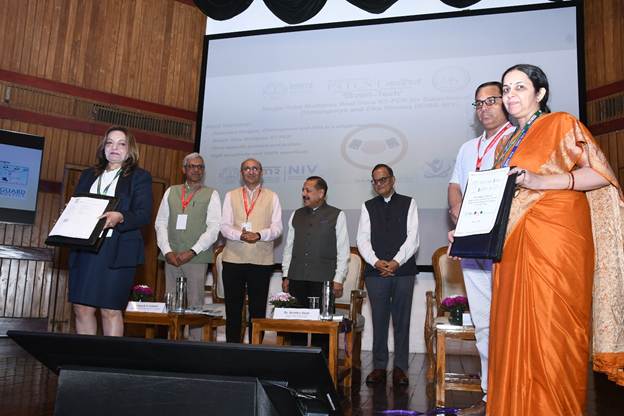
NEW DELHI – In a significant leap toward healthcare self-reliance, the Indian Council of Medical Research (ICMR) officially transferred three cutting-edge, indigenous medical technologies to private industry partners on Monday. The move, announced during the National Technology Day 2026 celebrations, promises to slash diagnostic costs and accelerate treatment for millions facing prostate cancer, hemophilia, and viral fevers like Dengue and Zika.
The transfers took place at the ‘Vigyan-Tech’ programme, a massive collaborative exhibition involving 14 scientific ministries. Presided over by Union Minister Dr. Jitendra Singh, the event underscored a “Whole-of-Government” approach to transitioning laboratory innovations into bedside clinical tools.
1. Precision in Prostate Health: The PSP94 ELISA
One of the most anticipated breakthroughs is a new cost-effective test designed to guide prostate biopsy decisions. Developed by researchers at the ICMR-National Institute for Research in Women’s Health (NIRWoH), the PSP94 ELISA kit addresses a long-standing “gray zone” in men’s health.
Currently, many men with Prostate-Specific Antigen (PSA) levels under 20 ng/ml undergo invasive biopsies that may be unnecessary. The PSP94 biomarker provides a more nuanced look at prostate health, helping clinicians decide who truly needs a biopsy.
“This technology represents a shift toward personalized diagnostics in India,” noted Dr. Dhanashree Jagtap, a lead scientist on the project. “By reducing unnecessary procedures, we aren’t just saving money—we’re reducing patient anxiety and physical risk.”
Industry Partner: Krishgen Labs Pvt. Ltd.
2. A Lifeline for Hemophilia: Point-of-Care Testing
For patients with Hemophilia A, the development of “inhibitors” (antibodies that block treatment) is a life-threatening complication. Traditionally, detecting these inhibitors required expensive, time-consuming laboratory tests known as the Bethesda assay.
Scientists at the ICMR-National Institute for Research on Blood and Immune Disorders (NIRBID) have developed a Factor VIII Inhibitor Point-of-Care (POC) Diagnostic. This “lab-on-a-strip” can detect inhibitors in just 10 minutes using a single drop of blood, making it ideal for rural clinics and resource-limited settings.
Industry Partner: Meril Life Sciences.
3. The “Triple Threat” Viral Shield: Multiplex PCR
As India continues to battle seasonal surges of vector-borne diseases, the ICMR-National Institute of Virology (NIV) has unveiled a Single-Tube Multiplex Real-Time RT-PCR assay.
Unlike traditional methods that require separate tests for different viruses, this technology can detect Dengue, Chikungunya, and Zika viruses simultaneously from one sample.
-
Efficiency: Results are available in hours rather than days.
-
Cost: Significant reduction in reagent use and laboratory labor.
-
Accuracy: Features a built-in “internal control” to ensure the sample is valid, reducing the risk of false negatives.
Industry Partner: Vanguard Life Sciences.
Why This Matters: The Public Health Impact
The transfer of these technologies is more than a business deal; it is a strategic move to lower the “out-of-pocket” expenditure that often cripples Indian families during medical crises.
According to data from the Ministry of Health and Family Welfare, India currently imports nearly 75–80% of its medical devices. By manufacturing these ICMR-developed tools locally under the ‘Medical Innovations Patent Mitra’ initiative, the government aims to create a self-reliant ecosystem that is “made in Bharat, for the world.”
Comparison of New Tech vs. Traditional Methods
| Technology | Traditional Method | Indigenous Innovation | Benefit |
| Prostate Screening | PSA Test alone | PSP94 + PSA ELISA | Higher specificity; fewer biopsies |
| Hemophilia Check | Bethesda Assay (Hours) | POC Test (10 Minutes) | Rapid, bedside results |
| Arbovirus Detection | Three separate PCR runs | Single-tube Multiplex | Lower cost; faster diagnosis |
Expert Perspectives and Limitations
While the scientific community has lauded the move, some experts urge a cautious approach toward implementation.
“The technology transfer is the first step. The real challenge lies in the scale-up and quality control during mass manufacturing,” says Dr. Rajiv Behl, Secretary, Department of Health Research and DG ICMR. He emphasized that the ICMR would provide “structured intellectual property support” to ensure industry partners maintain the high standards set in the lab.
Independent health analysts also note that while these tests are “cost-effective,” their impact on the poorest populations will depend on their integration into the Ayushman Bharat (National Health Insurance) scheme.
Looking Ahead: The Vision of ‘Viksit Bharat’
The National Technology Day 2026 event also featured a compendium of 25 other promising technologies, ranging from CRISPR-based TB detection to biolarvicides for mosquito control. As these tools move from the halls of institutes like the National Institute of Immunology (NII) to local pharmacies and hospitals, they signal a new era where Indian science directly addresses Indian health challenges.
For the average citizen, this means that the next time a family member has a mysterious fever or a chronic condition, the diagnostic solution might not be a high-priced import, but a reliable, locally-made test that delivers answers in minutes.
References
-
PIB Delhi. (2026, May 11). ICMR transfers three Indigenous Medical Technologies to Industry at National Technology Day 2026. [Release ID: 2259926].
Medical Disclaimer: This article is for informational purposes only and should not be considered medical advice. Always consult with qualified healthcare professionals before making any health-related decisions or changes to your treatment plan. The information presented here is based on current research and expert opinions, which may evolve as new evidence emerges.