 0
0
 0
0
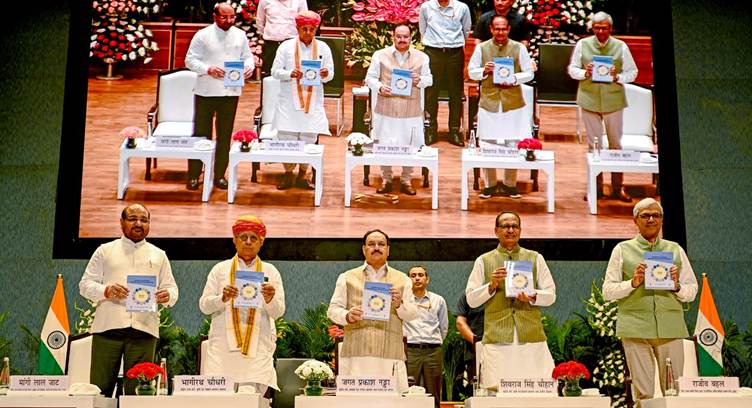
NEW DELHI — In a landmark move to reshape the nation’s nutritional landscape, the Union Government on Monday launched the SEHAT Mission (Science Excellence for Health through Agricultural Transformation). The initiative, unveiled by Union Health Minister Shri JP Nadda and Union Agriculture Minister Shri Shivraj Singh Chouhan, marks a historic convergence between the Indian Council of Medical Research (ICMR) and the Indian Council of Agricultural Research (ICAR). The mission aims to transform India’s food systems from a focus on high-yield production to a “nutrition-first” model, targeting the dual crises of micronutrient deficiencies and the surge in non-communicable diseases (NCDs) like diabetes and hypertension.
A Shift from Treatment to Prevention
The SEHAT Mission represents a fundamental pivot in Indian public health policy. For decades, agricultural policy focused on food security—ensuring there was enough caloric intake for a growing population. However, Health Minister JP Nadda emphasized that the focus must now shift toward preventive healthcare.
“The government is no longer focusing only on treatment but also on prevention, early detection, and continuous care,” Nadda stated during the launch event in Delhi. He noted that by integrating agricultural science with medical research, the government aims to deploy “indigenous, science-based, and evidence-driven solutions” to combat the rising burden of chronic illnesses.
Key Pillars of the SEHAT Mission
The mission is built upon a framework of “Healthy Food, Healthy Farms, and a Healthy India.” According to officials from ICMR and ICAR, the initiative will prioritize several critical areas:
-
Bio-fortification: Developing and scaling crop varieties naturally enriched with essential vitamins and minerals, such as zinc-fortified wheat and iron-rich pearl millet.
-
Promotion of Traditional Grains: Reintroducing “superfoods” like Kodo millet, Ragi (finger millet), and Jowar (sorghum) into the mainstream diet to improve fiber intake and glycemic control.
-
Farmer Safety: Addressing the health risks faced by agricultural workers, including pesticide exposure and physical hazards of farming.
-
Integrated Farming Systems: Encouraging rural families to combine crop cultivation with poultry, beekeeping, and fisheries to ensure a diverse, nutrient-dense diet at the household level.
“What We Grow is What We Are”
Agriculture Minister Shivraj Singh Chouhan invoked the ancient Indian principles of Hitbhuk, Mitbhuk, and Ritubhuk—eating for benefit, eating in moderation, and eating according to the season. He argued that the era of simply filling granaries is over; the new goal is filling the “nutritional plate.”
“India must now move beyond the goal of merely increasing agricultural production and instead focus on producing food that provides nutrition and protects people from diseases,” Chouhan said. He stressed that the mission would investigate how specific crop selections could act as “preventive medicine” for the 100 million-plus Indians currently living with diabetes.
The Scientific Imperative: Why Now?
The collaboration comes at a critical juncture. According to the National Family Health Survey (NFHS-5), while India has made strides in food security, “hidden hunger”—deficiencies in essential vitamins and minerals—remains a significant challenge, particularly among women and children. Simultaneously, the World Health Organization (WHO) has highlighted that NCDs now account for over 60% of all deaths in India.
“The siloed functioning of agriculture and health has historically led to a gap between what is produced and what is nutritionally required,” says Dr. Rajiv Bahl, Director General of ICMR. By syncing research, ICMR can provide data on the specific nutritional gaps in the population, while ICAR develops the agricultural technologies to fill those gaps.
Expert Perspectives and Public Impact
Independent health experts have cautiously welcomed the move. “The link between soil health, crop nutrient density, and human metabolic health is undeniable,” says Dr. Aruna Sharma, a public health nutritionist not affiliated with the mission. “If the SEHAT Mission can successfully scale bio-fortified crops to the Public Distribution System (PDS), it could be a game-changer for the country’s poorest citizens who cannot afford expensive supplements.”
However, some experts warn of the implementation challenges. “The success of this mission depends on the ‘last mile’ delivery,” notes Dr. K. Srinath Reddy, Honorary Distinguished Professor at the Public Health Foundation of India (PHFI). “We must ensure that farmers have the economic incentive to grow these nutrient-rich crops and that consumers are educated to choose them over processed, high-sugar alternatives.”
Limitations and Challenges
While the mission is ambitious, it faces hurdles:
-
Behavioral Change: Shifting dietary habits away from refined carbohydrates toward whole millets requires massive public awareness campaigns.
-
Economic Incentives: Farmers may require price supports (MSPs) specifically for bio-fortified crops to offset any initial yield differences compared to traditional high-yielding varieties.
-
Climate Change: Rising temperatures can sometimes reduce the protein and mineral content in crops, a variable that the ICAR-ICMR partnership will need to monitor closely.
Conclusion: A Vision for 2030
The SEHAT Mission is a long-term commitment to human capital. By viewing the farm as the first line of defense against disease, India is attempting to build a sustainable healthcare model that reduces the pressure on hospitals and improves the quality of life for its 1.4 billion citizens. As Minister Chouhan aptly concluded, “Food itself can function as medicine” if the science behind it is robust.
References
-
Ministry of Health and Family Welfare (2026): Official Press Release: Launch of SEHAT Mission. PIB Delhi.
Medical Disclaimer: This article is for informational purposes only and should not be considered medical advice. Always consult with qualified healthcare professionals before making any health-related decisions or changes to your treatment plan. The information presented here is based on current research and expert opinions, which may evolve as new evidence emerges.