 1
1
 0
0
NEW DELHI — In a landmark move for maternal healthcare in South Asia, India has unveiled the primary outcomes of its largest-ever pregnancy cohort study, leveraging artificial intelligence (AI) to tackle the persistent challenge of preterm births. The initiative, known as GARBH-INi (Interdisciplinary Group for Advanced Research on Birth Outcomes), has tracked 12,000 pregnant women to create indigenous medical tools designed specifically for the Indian population.
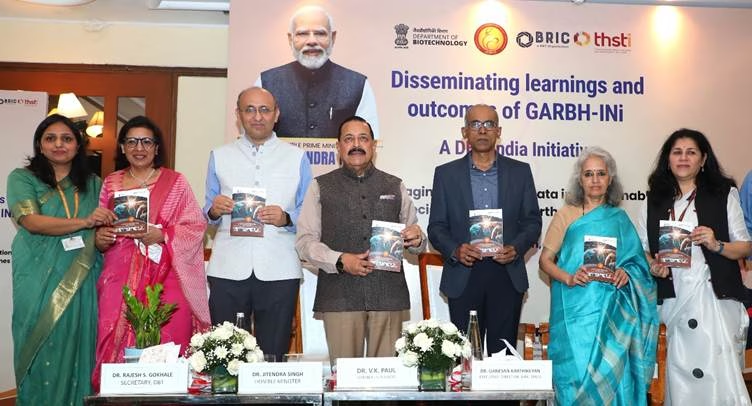
Speaking at a dissemination event at the India Habitat Centre on March 23, 2026, Union Minister Dr. Jitendra Singh emphasized that the program is not merely a research project but a “science-led intervention” essential for India’s long-term public health vision.
“India carries a significant share of the global burden of preterm births,” Dr. Singh stated. “It is essential to develop solutions suited to Indian conditions through a data-driven approach that integrates clinical epidemiology and artificial intelligence.”
The Scale of the Challenge
Preterm birth—defined by the World Health Organization (WHO) as babies born alive before 37 weeks of pregnancy are completed—is the leading cause of death among children under five years of age. For survivors, it often leads to a lifetime of health hurdles, including learning disabilities and visual or hearing impairments.
According to recent data from the World Health Organization, India marks one of the highest numbers of preterm births globally. Historically, medical models used to predict birth dates and risks in India were based on Western data, which often fails to account for the unique genetic, nutritional, and environmental factors affecting Indian women.
By the Numbers: The GARBH-INi Repository
The Department of Biotechnology (DBT) initiative has reached staggering milestones in data collection to bridge this gap:
-
12,000: Pregnant women enrolled in the cohort.
-
1.6 Million: Well-characterized biospecimens (blood, saliva, etc.) collected.
-
1 Million+: High-resolution ultrasound images archived.
-
GARBH-INi-DRISHTI: A dedicated data-sharing platform for global researchers.
Breaking New Ground with AI and “Multi-Omics”
The core innovation of GARBH-INi lies in its use of multi-omics—a biological analysis that combines data from the genome (genes), microbiome (bacteria in the body), and proteome (proteins). By feeding this massive dataset into AI algorithms, researchers have developed high-precision tools that were previously unavailable in the Indian clinical setting.
1. Tailored Pregnancy Dating
Standard ultrasound models for estimating a baby’s age are often calibrated using European or American biological standards. The GARBH-INi team has developed AI-based pregnancy dating models specifically tailored for the Indian population, ensuring more accurate tracking of fetal growth.
2. Microbiome Predictors
The study identified specific microbiome-based signatures that can signal a high risk of preterm labor months before it occurs. This has already led to the transfer of “microbiome-based biotherapeutics” technology to private partners like Sundyota Numandis Probioceuticals, aiming to develop treatments that could potentially delay preterm labor.
3. Smart Risk Stratification
Through partnerships with AI firms like Qure.ai and DOTO Health, the program is integrating AI-enabled ultrasound reporting. This allows healthcare providers in rural or under-resourced areas to identify high-risk pregnancies with the same accuracy as specialists in urban tertiary hospitals.
Expert Perspectives: Moving Beyond the Lab
While the scientific community has lauded the technical achievements, public health experts emphasize the practical application of these tools.
“The real victory isn’t just in the data collection, but in the transition to the bedside,” says Dr. V.K. Paul, Member of NITI Aayog. “The next phase must focus on effectively utilizing these predictive models in our primary healthcare system to save lives at the grassroots level.”
Independent maternal health experts note that while AI is a powerful tool, it must be part of a holistic approach. “AI can tell us who is at risk, but our healthcare infrastructure must be ready to provide the specialized care those high-risk mothers need,” says an independent consultant in maternal-fetal medicine. “Predictive tools are a roadmap; the clinical intervention is the vehicle.”
Limitations and the Road Ahead
Despite the optimism, researchers acknowledge certain limitations. While 12,000 women represent a massive cohort, India’s diversity in terms of ethnicity and socio-economic status is vast. Ongoing research will need to ensure these AI models remain accurate across different regions of the country, from the Himalayas to the coastal south.
Furthermore, “indigenous research” is a long-term investment. The Minister noted that India’s bioeconomy has grown from $10 billion in 2014 to roughly $195 billion today, signaling that the financial and political will exists to sustain these complex studies.
What This Means for Expectant Mothers
For the average reader, the GARBH-INi findings suggest a future where prenatal care is highly personalized. Instead of “one-size-fits-all” checkups, AI-driven insights could allow doctors to:
-
Identify high-risk cases in the first trimester.
-
Prescribe specific probiotic or nutritional interventions based on an individual’s microbiome.
-
Reduce unnecessary interventions by providing more accurate “due dates” based on local biological data.
As India marches toward its “2047 vision” of a developed nation, the health of its newest citizens remains the cornerstone. “The children born today will define the country’s strength,” Dr. Singh concluded. “By strengthening maternal health through science, we are laying the foundation for a healthier, more productive generation.”
References
-
Primary Source: Press Information Bureau (PIB) Delhi. (2026, March 23). India’s largest pregnancy cohort study of 12,000 women to develop AI-driven solutions for preterm births: Dr. Jitendra Singh. 2. Organization: Department of Biotechnology (DBT), Ministry of Science & Technology, Government of India.
Medical Disclaimer: This article is for informational purposes only and should not be considered medical advice. Always consult with qualified healthcare professionals before making any health-related decisions or changes to your treatment plan. The information presented here is based on current research and expert opinions, which may evolve as new evidence emerges.