 0
0
 0
0
NEW DELHI — In a historic victory for women’s healthcare and medical self-reliance, India has successfully validated its first indigenous Human Papillomavirus (HPV) DNA test. The breakthrough promises to dismantle the steep financial and logistical barriers that have long kept life-saving cervical cancer screenings out of reach for millions of women in rural and underserved communities.
The Truenat HPV-HR Plus test, developed by Goa-based Molbio Diagnostics, has emerged as the only domestic assay among four evaluated to fully satisfy the rigorous international validation criteria established by the World Health Organization’s International Agency for Research on Cancer (IARC). This milestone arrives at a critical juncture as India aggressively scales up public health infrastructure to combat a entirely preventable disease that claims tens of thousands of lives domestically each year.
A Scientific First: The Multicentre Validation Study
The validation findings, published in the International Journal of Cancer, are the result of a rigorous multicentre study known as the i-HPV project. Researchers evaluated 1,159 cervical samples across top-tier institutions, including the All India Institute of Medical Sciences (AIIMS) New Delhi, various Indian Council of Medical Research (ICMR) institutes, and the IARC in France.
Remarkably, the study marks the world’s first formal validation of a “reduced-valency” HPV test. Traditional imported molecular tests look for 14 high-risk strains of the virus. The Truenat test deliberately targets only the eight most cancer-causing HPV strains. By narrowing the focus to the primary viral drivers of cervical malignancy, the test optimizes production costs without sacrificing clinical accuracy.
The trial proved that the Truenat HPV-HR Plus achieved accuracy and quality standards fully comparable to globally recognized, high-cost screening tools. While another domestic test, MyLabs’ Pathodetect-7, performed well by meeting crucial sensitivity criteria, Truenat was the sole indigenous test to satisfy every strict baseline set by international protocols.
Redefining Public Health Access
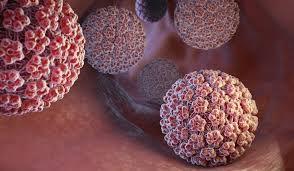
For years, the primary roadblock to eliminating cervical cancer in India has not been a lack of medical knowledge, but a lack of accessible tools. HPV is a common virus transmitted through skin-to-skin contact, and while most infections clear naturally, high-risk strains can linger quietly for years, altering cervical cells until cancer develops. Because early-stage cervical cancer rarely presents symptoms, routine screening is the single most effective way to catch pre-cancerous changes before they become fatal.
However, existing screening options have created an deep economic divide. Standard imported HPV DNA tests cost approximately ₹6,000 ($72 USD) in private hospital settings and around ₹2,000 ($24 USD) even at subsidized public facilities like AIIMS. For a household in rural India, these prices render the test an unimaginable luxury. Furthermore, conventional testing relies on centralized, high-tech laboratories, requiring women to travel long distances and wait weeks for results.
Truenat’s point-of-care design flips this script. Built as a portable, rugged molecular workstation, the testing platform can operate efficiently in low-resource settings, such as district health centers and localized clinics, away from major metropolitan hospitals.
Expert Perspectives on Reaching Elimination Goals
Independent public health experts emphasize that localized screening tools are the missing piece in India’s healthcare strategy. While the government has launched expansive national HPV vaccination campaigns for young girls, vaccines primarily protect against future exposures. They offer no protection to the millions of adult women who may already harbor high-risk infections.
“Vaccination is our shield for the next generation, but robust diagnostic screening is our rescue line for the current generation,” notes Dr. Sunita Vyas, an independent preventive oncology specialist not involved in the clinical validation study. “Without an affordable, decentralized testing apparatus, India simply cannot achieve the World Health Organization’s global elimination targets.”
The WHO’s “90-70-90” strategy outlines three pillars for erasing cervical cancer as a public health threat:
-
90% of girls fully vaccinated against HPV by age 15.
-
70% of women screened using a high-performance test by ages 35 and 45.
-
90% of women identified with cervical disease receiving consistent treatment.
By slashing manufacturing costs and eliminating the need for cold-chain shipping or specialized laboratory infrastructure, Truenat directly supports the critical 70% screening mandate.
Sriram Natarajan, Chief Executive Officer of Molbio Diagnostics, highlighted the social impact of the validation:
“With the validation of Truenat HPV-HR Plus, India takes an important step towards making cervical cancer elimination an achievable reality. At Molbio, our mission has always been to democratise access to high-quality molecular diagnostics. This milestone demonstrates the power of indigenous innovation to deliver globally validated solutions that can expand access to screening, strengthen public health programmes, and ultimately save lives.”
Limitations and Implementation Challenges
Despite the well-deserved optimism surrounding the breakthrough, researchers and policymakers urge a measured approach, pointing out several real-world hurdles that lie ahead.
First, the reduced-valency strategy—focusing on 8 viral strains rather than 14—demands ongoing epidemiological surveillance. While data shows these eight strains cause the overwhelming majority of cervical cancers in Indian women, health authorities must continuously monitor screen-negative patients over time to ensure rarer viral strains are not slipping through undetected.
Second, the hardware is only as effective as the system surrounding it. Deploying thousands of these point-of-care devices across India’s vast geography requires an immense operational lift. Frontline healthcare workers and auxiliary nurse midwives (ANMs) must be trained not only to administer the tests safely, but also to handle patient sample collection with strict quality control.
Finally, screening cannot exist in a vacuum. If a rural woman tests positive for a high-risk HPV strain via a Truenat device, there must be a seamless, pre-established pathway linking her to local district hospitals for follow-up care, colposcopies, or tissue removal. Finding a high-risk infection is only a victory if the patient has immediate access to the treatment that prevents it from turning into cancer.
Looking Forward: A Model for Health Equity
The successful validation of the Truenat test represents a triumph for international scientific collaboration. The i-HPV project was made possible through a joint effort between the IARC and the Department of Biotechnology of the Government of India, with foundational funding and support from the Bill & Melinda Gates Foundation.
This cooperative framework proves that when international expertise joins hands with local manufacturing agility, countries can build first-rate medical solutions tailored to their own demographic and financial realities. As India prepares to integrate this new test into its National Programme for Prevention and Control of Cancer, Diabetes, Cardiovascular Diseases and Stroke (NPCDCS), the Truenat model may serve as a blueprint for tackling other endemic infectious diseases and chronic conditions across the Global South.
Ultimately, this milestone marks a profound shift toward health equity—ensuring that a woman’s geographic location or economic status no longer dictates her chances of surviving a preventable disease.
Reference Section
https://www.ndtv.com/health/indias-first-indigenous-hpv-test-validated-to-make-cervical-cancer-detection-affordable-11631134
Medical Disclaimer: This article is for informational purposes only and should not be considered medical advice. Always consult with qualified healthcare professionals before making any health-related decisions or changes to your treatment plan. The information presented here is based on current research and expert opinions, which may evolve as new evidence emerges.