 0
0
 0
0
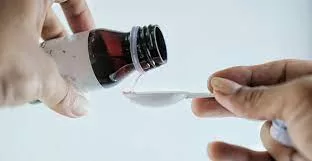
NEW DELHI — In a major regulatory intervention aimed at safeguarding public health, the Union Ministry of Health and Family Welfare has officially amended the Drugs Rules, 1945, eliminating a long-standing exemption that allowed the unlicensed sale of cough syrups in small rural villages. The Gazette notification, issued via G.S.R. 927 (E), strikes the word “Syrup” from Schedule K of the historical framework. Effective immediately across India, this policy shift mandates that all cough syrups and liquid oral formulations be distributed exclusively through licensed pharmacies, effectively ending decades of unregulated over-the-counter access in communities with populations under 1,000 residents.
The sweeping regulatory tightening arrives as a direct response to escalating national and international concerns surrounding pharmaceutical supply chains. Over the past few years, a series of fatal contamination incidents linked to toxic industrial solvents in liquid medications has pressured central regulators to fortify domestic drug distribution safety nets.
Closing the Rural Regulatory Loophole
Historically, Schedule K of the Drugs Rules, 1945, served to provide specific exemptions from retail licensing requirements under the parent Drugs and Cosmetics Act of 1940. Under Serial No. 13, Entry 7 of this schedule, small village vendors in settlements with fewer than 1,000 people were permitted to stock and dispense cough syrups without the stringent overhead of a formal retail pharmacy license. The intent was originally grounded in public utility—ensuring remote populations had access to basic home remedies where formal healthcare infrastructure was sparse.
However, the Ministry’s latest notification completely alters this rural distribution model. By omitting “Syrup” from this exempt category, the government has placed liquid oral formulations under the same strict retail parameters that govern sophisticated prescription medications.
A senior official from the Central Drugs Standard Control Organisation (CDSCO), speaking on condition of anonymity, noted that the decision was finalized after extensive public and stakeholder consultations following a draft notification issued in late December 2025.
“The amendment has been undertaken to strengthen regulatory oversight of syrup formulations and to align our safety framework with contemporary public health requirements,” the Ministry statement affirmed. “The measure is expected to promote responsible distribution while ensuring uniform compliance with regulatory standards across the country.”
The Toxic Catalyst: A History of Contamination
Public health analysts emphasize that this policy shift is not an isolated bureaucratic adjustment but a vital shield erected after multiple preventable tragedies. The most immediate domestic trigger occurred in late 2025, when a deadly wave of acute kidney injuries (AKI) claimed the lives of at least 20 children under the age of five in tribal pockets of Madhya Pradesh, alongside parallel pediatric fatalities reported in Rajasthan.
Toxicological evaluations of the implicated batches, such as the cold remedy Coldrif, revealed catastrophic levels of diethylene glycol (DEG)—an industrial fluid commonly utilized in automotive antifreeze and brake fluids. Laboratory testing exposed DEG concentrations hundreds of times greater than the globally accepted safe threshold of 0.1%.
When unscrupulous or negligent manufacturers substitute pharmaceutical-grade solvents like non-toxic glycerine or propylene glycol with cheaper, industrial-grade variants, the biological consequences are swift and devastating. Ingested DEG is rapidly metabolized into highly toxic acids that attack the human renal and central nervous systems, leading to multi-organ failure if intensive medical interventions like dialysis are unavailable.
This domestic crisis mirrored high-profile international scandals in 2022 and 2023, where contaminated Indian-made export syrups were epidemiologically linked to more than 300 pediatric deaths across the Gambia, Uzbekistan, and Cameroon. While the government subsequently imposed strict pre-export laboratory clearance rules for foreign shipments, the domestic market remained vulnerable to local retail loopholes until now.
Expert Perspectives: Bridging the Safety Gap
Independent medical professionals have largely welcomed the regulatory intervention, noting that treating cough syrups as benign, everyday commodities has historically fostered widespread misuse.
“For too long, cough syrups have been treated like candies in rural ecosystems,” explained Dr. Sandeep Vyas, an independent public health consultant and former epidemiologist at a leading national medical institute. “Beyond the terrifying threat of chemical contamination, unregulated over-the-counter availability has fed into a hidden epidemic of substance abuse. Codeine-based and dextromethorphan-based syrups are frequently hoarded and misused as cheap intoxicants. Forcing sales through a licensed pharmacy introduces a critical human firewall—a pharmacist who can screen for validity.”
Furthermore, pediatricians point out that over-reliance on cough formulations frequently masks severe underlying conditions. The National Formulary of India (NFI) has continuously updated guidelines to warn against administering standard cough and cold medications to infants under two years old without explicit clinical supervision.
Implementation Challenges and Rural Realities
Despite strong support from medical associations, public health advocates urge the government to monitor the unintended side effects of the ban on remote populations. In many isolated hamlets, a licensed pharmacy may be located miles away, meaning the immediate closure of local vendor access could inadvertently delay care for simple, non-toxic respiratory ailments.
+-----------------------------------------------------------------------------------------+
|                      Regulatory Shift: Schedule K Amendment                             |
+------------------------------------+----------------------------------------------------+
| Old Framework (Pre-Amendment)       | New Framework (Post-Amendment)                     |
+------------------------------------+----------------------------------------------------+
| Syrups exempt under Schedule K     | "Syrup" omitted from Schedule K exemptions         |
| Unlicensed over-the-counter sale   | Sales strictly confined to licensed pharmacies     |
| Permitted in villages <1,000 pop.  | Mandatory compliance with Drugs & Cosmetics Act    |
+------------------------------------+----------------------------------------------------+
“The primary challenge is ensuring that this rule does not create an access vacuum,” observed Alok Shukla, a rural healthcare activist working in central India. “While keeping toxic or addictive substances away from unlicensed desks is undeniably correct, the state must concurrently strengthen its primary health centers (PHCs) and community health networks to distribute verified, safe medications. Otherwise, desperate families might turn to completely unqualified quacks or alternative informal markets.”
Additionally, enforcement remains a formidable hurdle. While the law mandates licensed distribution, India’s fragmented enforcement apparatus relies heavily on understaffed state-level drug control inspectorates. Experts argue that without a major boost to regional auditing budgets, digital supply-chain tracking, and strict raw-material testing at the factory level, retail-end blocks can only do so much.
Looking Forward: What This Means for Consumers
For everyday consumers and parents, the regulatory message is clear: self-medicating a child’s cough with an unverified bottle from a local general store is no longer an option. Moving forward, families must seek formal medical consultations or visit licensed pharmaceutical outlets to purchase oral liquids.
Manufacturers, distributors, and rural retailers nationwide have been actively advised by the Ministry to align their supply models with the updated legal requirements immediately to avoid asset seizures, license suspensions, or potential criminal charges.
Ultimately, public health officials view the closure of the Schedule K rural loophole as a painful but necessary step toward erasing the stigma of substandard manufacturing and creating a uniform, non-negotiable standard of safety for every citizen, regardless of whether they reside in a metropolitan center or a remote village.
References
-
Government Notification: Ministry of Health and Family Welfare, Government of India. Gazette Notification G.S.R. 927 (E), Amending the Drugs Rules, 1945 (Omission of “Syrup” from Schedule K, Serial No. 13, Entry 7). Published December 30, 2025; Publicly Enforced via Press Information Bureau (PIB) Delhi, June 16, 2026. e-Gazette Access Portal
Medical Disclaimer
Medical Disclaimer: This article is for informational purposes only and should not be considered medical advice. Always consult with qualified healthcare professionals before making any health-related decisions or changes to your treatment plan. The information presented here is based on current research and expert opinions, which may evolve as new evidence emerges.