 0
0
 0
0
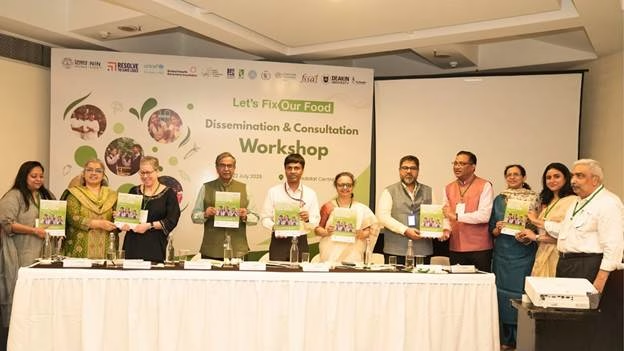
NEW DELHI — In a major effort to reshape the dietary landscape for India’s youth, the Indian Council of Medical Research–National Institute of Nutrition (ICMR-NIN), alongside the multi-institutional ‘Let’s Fix Our Food’ (LFOF) Consortium, officially released a landmark policy roadmap today at the India Habitat Centre.
The document, titled ‘Priority Policy Actions to Promote Healthier Diets and Food Environments for Children and Adolescents in India’, was unveiled by Dr. M. Srinivas, Member (Health), NITI Aayog. Built on three years of multidisciplinary research and cross-sectoral consultations, the framework outlines ten priority interventions designed to curb the escalating tide of childhood obesity, early-onset metabolic disorders, and diet-related non-communicable diseases (NCDs) across the nation.
A Shift in the Malnutrition Landscape
India has long battled undernutrition and micronutrient deficiencies, but public health data reveals a rapidly compounding challenge: the “double burden” of malnutrition. As ultra-processed foods high in fat, sugar, and salt (HFSS) become increasingly affordable and ubiquitous, dietary habits among Indian children and adolescents have undergone a drastic shift.
Recent epidemiological surveys show that childhood overweight and obesity rates in India have nearly doubled over the past decade, placing millions of young people at heightened risk for hypertension, type 2 diabetes, and cardiovascular diseases later in life.
“Evidence-based, multisectoral policy action is essential to create healthier food environments for children and adolescents,” emphasized Dr. M. Srinivas during the launch. “Collaborative initiatives such as the Let’s Fix Our Food Consortium are vital for addressing the growing burden of overweight, obesity, and diet-related non-communicable diseases in India.”
Key Pillars of the ‘Let’s Fix Our Food’ Roadmap
The newly released policy framework targets the commercial, structural, and social drivers of unhealthy eating. Rather than placing the sole burden of choice on individual families, the consortium calls for systemic structural reforms:
-
Front-of-Pack Nutrition Labelling (FOPNL): Implementing clear, mandatory interpretative labels on packaged foods to help consumers instantly identify products high in sodium, saturated fats, and added sugars.
-
Regulation of Unhealthy Marketing: Restricting predatory advertising of HFSS foods directed at children across digital platforms, television, and print media.
-
Healthy School Environments: Setting strict nutritional standards for school canteens and vendors within school perimeters.
-
Fiscal Policies and Taxation: Applying higher taxes to ultra-processed HFSS foods while offering subsidies or incentives for fresh, nutrient-dense whole foods.
-
Sodium and Trans-Fat Reduction: Promoting low-sodium salt substitutes and eliminating industrially produced trans-fatty acids across processed food categories.
-
Youth Engagement & Nutrition Literacy: Expanding direct educational tools to help young people understand food labels and build sustainable eating habits.
To support immediate implementation, the consortium launched several practical toolkits during the workshop, including the Nutrition Environment Assessment Toolkit for Schools (NEAT-S), an interactive e-learning module on deciphering food labels, and updated ICMR-NIN educational materials targeting sodium, fat, and sugar intake.
                        THE 'LET'S FIX OUR FOOD' FRAMEWORK
┌─────────────────────────────────────────────────────────────────────────┐
│                          SYSTEMIC POLICY REFORMS                        │
├──────────────────────────┬──────────────────────────┬───────────────────┤
│    SCHOOL ENVIRONMENTS   │   MARKETING RESTRICTIONS │   FISCAL MEASURES │
│   - Mandatory NEAT-S     - Bans on HFSS ads targeting - Taxes on junk food│
│     canteen standards     children across media     - Subsidies on whole │
│   - Healthy perimeters   - Protection from digital    fresh foods       │
│                            marketing tactics                            │
└──────────────────────────┴──────────────────────────┴───────────────────┘
Expert Perspectives: Moving Beyond Undernutrition
Leading public health authorities emphasized that fixing child nutrition requires a fundamental shift in how food environments are governed.
“Malnutrition is no longer only about undernutrition,” noted Marie-Claude Desilets, Chief of Nutrition at UNICEF India. “Rising obesity, driven by unhealthy diets, challenges healthy growth among children and adolescents. The release of these ten policy briefs and the NEAT-S toolkit marks a step towards creating policies for healthier school food environments. Every child has the right to grow up in an environment that enables them to thrive.”
Highlighting the structural nature of the problem, Prof. (Dr.) K. Srinath Reddy, Founder President of the Public Health Foundation of India (PHFI), called for broad action against “obesogenic” environments—spaces that continuously push low-nutrient, high-calorie foods onto young consumers. Dr. Syed Imran Farooq, Executive Director of Resolve to Save Lives (RTSL), echoed this stance, calling for urgent reductions in population-wide sodium and fat intake to head off early cardiovascular disease.
What This Means for Everyday Health Choices
For parents, educators, and young people, these policies aim to make the healthier choice the easier choice.
| Current Environmental Barrier | LFOF Proposed Solution | Practical Impact for Families |
| Confusing Nutrition Labels | Mandatory Front-of-Pack Warnings | Quick identification of excess salt, sugar, and unhealthy fats at a glance. |
| Unrestricted Canteen Sales | NEAT-S School Food Standards | Replacement of fried snacks and sodas with nutritious local foods in schools. |
| Pervasive Junk Food Ads | Ad Bans Targeting Minors | Less pressure on parents driven by aggressive food marketing aimed at kids. |
| High Cost of Healthy Eating | Fiscal Policies (HFSS Taxes/Subsidies) | Reduced price gap between nutrient-dense foods and ultra-processed snacks. |
While policy changes take time to be fully enacted into law, health professionals advise parents to immediately leverage available tools—such as the newly published ICMR-NIN dietary guidelines—to reduce processed food intake at home and encourage school communities to adopt the NEAT-S assessment framework.
Industry Resistance and Implementation Challenges
Despite broad public health consensus, implementing these policy recommendations will involve navigating significant economic and logistical hurdles.
Food industry stakeholders have previously expressed concerns over aggressive fiscal policies and mandatory front-of-pack warning labels, arguing that sudden tax increases could impact food manufacturing jobs and increase costs for consumers. Others advocate for voluntary reformulation targets rather than legally binding mandates.
Furthermore, public health analysts point out that enforcing school food perimeter rules and monitoring informal food vendors near schools present substantial administrative challenges, particularly in rural and semi-urban settings. Balancing the affordability of basic food items with strict nutritional regulations remains a delicate task for policymakers.
Nevertheless, public health advocates argue that the long-term economic burden of treating chronic NCDs far outweighs the short-term compliance costs for industry. “ICMR-NIN is committed to generating high-quality evidence and fostering partnerships that translate research into public health action,” stated Dr. Bharati Kulkarni, Director of ICMR-NIN. “These recommendations reflect the collective effort to safeguard the health of India’s future generations.”
Medical Disclaimer
This article is for informational purposes only and should not be considered medical advice. Always consult with qualified healthcare professionals before making any health-related decisions or changes to your treatment plan. The information presented here is based on current research and expert opinions, which may evolve as new evidence emerges.
Reference Section
Government & Organizational Sources
-
Press Information Bureau (PIB), Government of India: Release on ‘Let’s Fix Our Food’ (LFOF) Consortium Policy Launch (Published: July 22, 2026, New Delhi).