 0
0
 0
0
WASHINGTON — Federal health authorities opened a new front in their ongoing battle against foodborne illness on Wednesday, launching an investigation into a freshly identified cluster of 72 Cyclospora infections while thousands of related cases continue to surface across the United States.
The U.S. Food and Drug Administration (FDA) announced the new inquiry on July 22, 2026, confirming that officials are working to pinpoint the specific food vehicle responsible for the latest group of illnesses. The announcement comes amid a wider, persistent summer outbreak of cyclosporiasis—an intestinal illness caused by a microscopic parasite—that has already been linked in earlier clusters to contaminated raw produce, notably imported shredded iceberg lettuce. With thousands of reported cases nationwide under active review by state and federal epidemiologists, public health authorities are urging heightened consumer vigilance and reminding healthcare providers to test for parasitic pathogens in patients presenting with prolonged stomach flu symptoms.
Unpacking the Invisible Threat: What is Cyclospora?
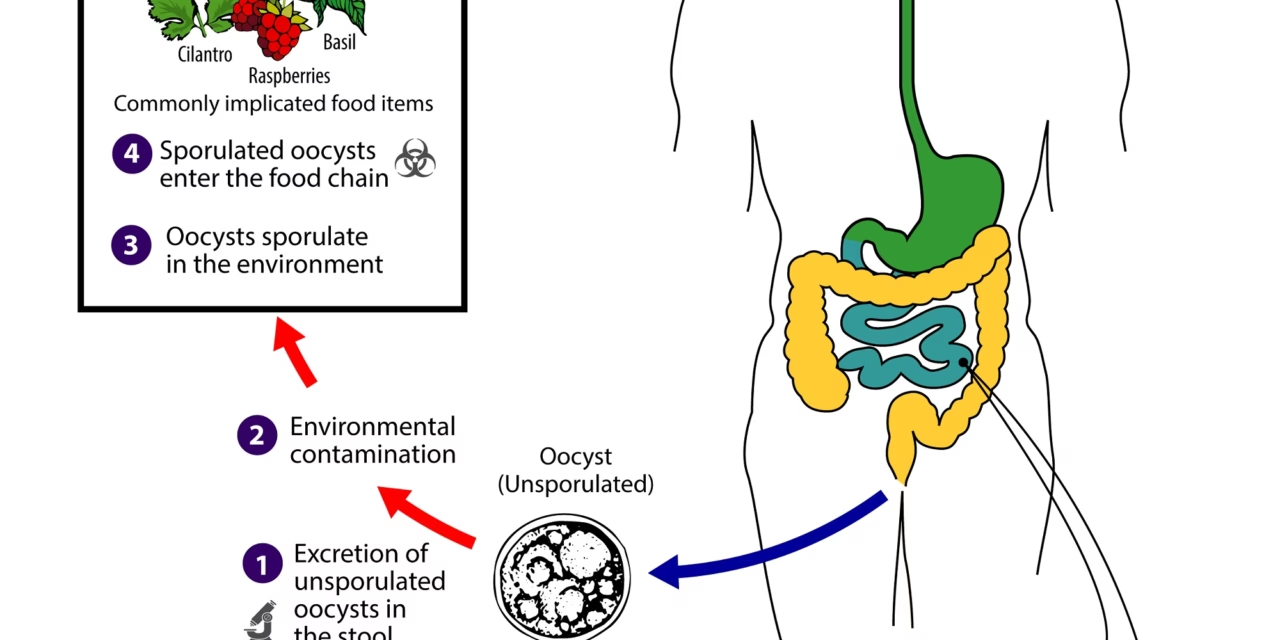
Cyclospora cayetanensis is a single-celled parasite that infects the small intestine, leading to a disease called cyclosporiasis. Unlike common bacterial pathogens such as Salmonella or E. coli, which can multiply rapidly on foods, Cyclospora requires time outside the host—often days to weeks—to become infectious.
                    [ Contaminated Produce / Water ]
                                   │
                                   ▼
                         [ Ingestion of Oocysts ]
                                   │
                         (2 to 14 Day Incubation)
                                   │
                                   ▼
                   [ Parasite Attaches to Small Intestine ]
                                   │
                                   ▼
                   [ Gastrointestinal Distress & Illness ]
Transmission typically occurs when people consume food or water contaminated with human feces containing the microscopic parasite eggs (oocysts). Because these eggs are resistant to standard water chemical treatments and cannot be seen by the naked eye, fresh fruits and vegetables eaten raw present the highest risk.
“The biology of this parasite creates a unique challenge for food safety,” explains Dr. Elena Rostova, an epidemiologist specializing in vector-borne and parasitic illnesses (not involved in the immediate FDA investigation). “Because Cyclospora is typically tied to fresh agricultural produce that isn’t cooked before serving, standard heating methods that normally kill bacteria aren’t applied. Washing helps, but it isn’t always enough to completely dislodge the parasite once it attaches to leaves or textured surfaces.”
Why Cyclospora Outbreaks Are Hard to Track
Tracing parasitic foodborne outbreaks to a single farm or distributor is notoriously complex. Epidemiologists often face weeks of lag time due to two primary factors:
-
Delayed Onset: Symptoms generally appear 2 to 14 days after ingesting contaminated food, making it difficult for patients to accurately remember everything they ate during their exposure window.
-
Complex Supply Chains: Agricultural produce like iceberg lettuce, cilantro, or berries is often harvested, washed, shredded, and blended across multiple facilities before reaching grocery shelves or restaurant kitchens.
In one major cluster tracked earlier this season, joint investigations by the Centers for Disease Control and Prevention (CDC) and the FDA connected 1,644 confirmed cases and 94 hospitalizations across five states to shredded iceberg lettuce sourced from Taylor Farms de Mexico. However, officials emphasize that the newly announced 72-case cluster is currently unexplained and may stem from an entirely different product or distribution network.
Investigative Reality: Outside of well-documented clusters, state and local health agencies across the country have reported over 7,000 additional potential cases awaiting laboratory confirmation or traceback interviews.
Symptoms, Health Impacts, and Vulnerable Groups
The hallmark symptom of cyclosporiasis is sudden, watery diarrhea that can be watery and explosive. Other frequent symptoms include:
-
Severe abdominal cramping and bloating
-
persistent fatigue and body aches
-
Nausea and loss of appetite
-
Low-grade fever and flu-like feeling
-
Unintended weight loss
If left untreated, symptoms can wax and wane for weeks or even months, leading to extreme exhaustion and dehydration.
Common Cyclosporiasis Symptoms
├── Watery Diarrhea (frequent, prolonged)
├── Severe Abdominal Cramps & Bloating
├── Persistent Fatigue & Weakness
└── Nausea & Unexpected Weight Loss
While healthy adults usually recover fully with appropriate antibiotic treatment—specifically trimethoprim-sulfamethoxazole (TMP-SMX)—the infection can be significantly more debilitating for older adults, young children, and immunocompromised individuals.
Public Health Guidance: Practical Action for Consumers
Public health leaders stress that the goal of these announcements is informed precaution rather than widespread panic. Consumers do not need to eliminate fresh produce from their diets entirely, but they should take active safety steps:
| Stakeholder Group | Recommended Action Plan |
| Consumers | Check product labels against active FDA recall lists. Discard any recalled produce immediately. Thoroughly wash all fresh fruits and vegetables under running water before preparation. |
| Diners & Shoppers | When eating out in areas with active advisories, consider asking restaurant staff about the origin of raw produce—particularly pre-packaged or pre-shredded lettuces. |
| Symptomatic Individuals | If experiencing persistent, watery diarrhea lasting more than a few days, consult a physician and specifically mention any recent raw produce consumption. |
| Healthcare Providers | Order specific stool tests for Ova and Parasites (O&P) or molecular PCR panels, as standard routine stool cultures often miss parasitic organisms like Cyclospora. |
Study Limitations and Outbreak Dynamics
Health officials caution that outbreak numbers will continue to fluctuate as investigations proceed. Data collection in active outbreaks carries inherent limitations:
-
Unconfirmed Case Counts: Reported figures often reflect a blend of laboratory-confirmed cases and suspected cases currently under epidemiological review.
-
Multiple Potential Sources: A seasonal rise in Cyclospora infections does not automatically mean every patient ate from the same contaminated shipment. Summer environmental conditions in agricultural zones can create parallel, unrelated contamination events.
-
Traceback Delays: Identifying the exact farm or processing line requires matching detailed purchase receipts, distribution manifests, and laboratory stool samples—a process that routinely takes several weeks.
References
- Reuters Health News Service. “FDA examines produce items in U.S. cyclosporiasis outbreak as cases mount.” News Report, published July 14–22, 2026.
Medical Disclaimer: This article is for informational purposes only and should not be considered medical advice. Always consult with qualified healthcare professionals before making any health-related decisions or changes to your treatment plan. The information presented here is based on current research and expert opinions, which may evolve as new evidence emerges.