 0
0
 0
0
NEW DELHI — In a major move to modernize India’s traditional medicine sector and eliminate administrative bottlenecks, the Union Ministry of Ayush has officially launched the Ayush Anudan Portal.
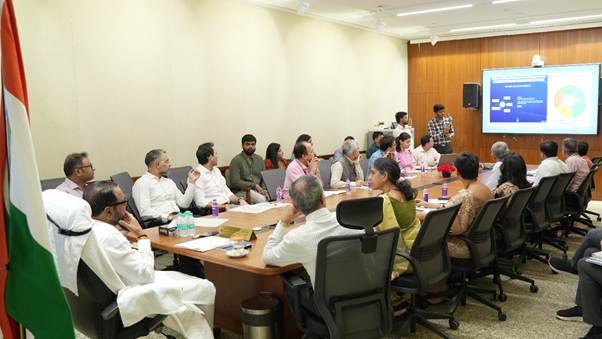
The digital platform, unveiled on May 19, 2026, at Kartavya Bhawan, New Delhi, by Shri Prataprao Jadhav, Union Minister of State (Independent Charge) for Ayush and Minister of State for Health and Family Welfare, transitions the country’s traditional health grant system into a completely paperless, trackable infrastructure. Developed as a core pillar of the Ayush Grid initiative, the portal alters how educational institutions, research organizations, non-governmental organizations (NGOs), and healthcare facilities apply for, secure, and clear government funding.
The initiative addresses long-standing vulnerabilities in manual governance by integrating an automated screening system designed to prevent fund duplication, improve institutional accountability, and accelerate clinical research in traditional Indian healthcare.
Redesigning the Flow of Traditional Health Grants
For decades, organizations seeking financial assistance under various Central Sector Schemes of the Ayush Ministry relied heavily on manual, paper-backed applications. This dependency frequently resulted in protracted administrative delays, lack of file traceability, and subjective validation procedures.
The newly launched Ayush Anudan Portal establishes a single-window interface to manage the complete life cycle of a grant proposal—spanning submission, data-driven processing, internal administrative approval, and real-time monitoring.
[Applicant Organization]
       │
       ▼ (Submits Digital Proposal)
[Ayush Anudan Portal] ◄──► [NGO Darpan Portal] (Instant Automated Authentication)
       │
       ▼ (Scheme-Wise Categorization)
[Real-Time Tracking & Evaluation]
       │
       ▼ (Verification & Compliance Check)
[Fund Disbursement / Project Monitoring]
A primary feature of the platform is its direct, backend integration with the government’s NGO Darpan Portal. This linkage allows the Ministry to achieve automated, instantaneous authentication of an applicant organization’s legal standing, key management personnel, and structural credibility, effectively reducing the risk of manual data errors or fraudulent identity claims.
Speaking at the inaugural event, Union Minister Shri Prataprao Jadhav highlighted that the architecture is built specifically around the broader state priorities of improving ease of service delivery.
“The primary objective of this portal is to ensure 100% transparency, efficiency, accountability, and easy accessibility in the grant management process,” Jadhav stated, noting that the platform represents a definitive shift toward institutional transparency.
The launch event was attended by senior administrative figures, including Vaidya Rajesh Kotecha, Secretary of the Ministry of Ayush, alongside Joint Secretaries Dr. Kavita Jain, Smt. Alarmelmangai D., and Ms. Monalisa Dash.
Technical Framework and Key Portal Pillars
The portal introduces a compartmentalized system optimized for multi-tier institutional governance:
-
Scheme-Wise Application Management: Rather than routing all financial requests through a generic, centralized channel, proposals are algorithmically categorized and processed based on the explicit administrative mandates of distinct Central Sector Schemes. This includes targeted funding for clinical trial infrastructure, public health outreach programs, and medicinal plant cultivation.
-
Real-Time Status Tracking: Borrowing modern logistics tracking frameworks, the platform introduces a transparent tracking ledger. Both institutional applicants and reviewing state officers can monitor the exact logistical lifecycle stage of a proposal, pinpointing exactly where a file sits or if additional documentation is required.
-
Ayush Grid Integration: The tool operates in harmony with the Ayush Grid initiative—a macro-scale digital framework aligned with the Ayushman Bharat Digital Mission (ABDM). The Ayush Grid unifies data systems across core clinical and non-clinical verticals, including education registries, medicinal plant administration, independent drug regulations, and global public health outreach.
Public Health Implications: Boosting Data-Driven Medicine
While the primary interface of the Ayush Anudan Portal serves administrators and researchers, its public health footprint directly impacts health-conscious consumers. By cleaning up the financial pipeline, the Ministry aims to fast-track high-caliber, evidence-based research into traditional systems, which encompass Ayurveda, Yoga & Naturopathy, Unani, Siddha, Sowa-Rigpa, and Homoeopathy.
Public health specialists suggest that introducing rigid audit trails will naturally direct capital toward higher-quality scientific inquiries. With automated verification filters, institutions possessing verifiable clinical trial capacities and strict research methodologies can be prioritized for state resources. Over time, this funding efficiency is expected to translate into more robust peer-reviewed literature, standardized treatment protocols, and well-regulated traditional formulations available to patients globally.
Furthermore, because the Ayush Grid framework connects funding directly to clinical outcomes and research portals, the data generated from these funded studies can feed into public repositories much faster. This gives clinicians across both conventional and traditional branches access to verified data regarding safety profiles, herb-drug interactions, and complementary therapeutic benefits.
Counterarguments, Risks, and the Digital Divide
Despite the optimistic projections by state officials, independent public health observers emphasize that the platform’s success depends entirely on systemic execution and digital inclusivity.
A major concern raised by rural health advocates is the inherent digital divide affecting smaller, localized grassroots organizations. While prominent urban universities and well-funded research institutes possess dedicated compliance teams to navigate complex online frameworks, remote NGOs operating in deep tribal or rural pockets—frequently the custodians of localized medicinal plant conservation—may face distinct onboarding barriers. If the user interface proves overly bureaucratic or requires high-bandwidth access, the portal could inadvertently centralize funding to technologically superior organizations.
Medical realists also note that digitizing the grant workflow does not inherently resolve the qualitative challenges of traditional medicine research. Ensuring rigorous, double-blind, randomized controlled trials (RCTs) for highly individualized holistic treatments remains a fundamental scientific hurdle.
If the internal evaluation committees processing these digitized grants do not implement strict, globally accepted scientific parameters, the portal risks merely accelerating the volume of funding without fundamentally elevating the empirical quality of the resulting clinical data.
Accessing the Platform
The grant management platform is currently operational and can be reached by candidate institutions through two principal digital gateways:
-
The primary single-window system: My Ayush Integrated Services Portal (MAISP) at
[https://maisp.ayush.gov.in/dashboard](https://maisp.ayush.gov.in/dashboard) -
The direct portal address: Ayush Anudan Portal at
[https://anudan.ayush.gov.in/index](https://anudan.ayush.gov.in/index)
Reference Section
1. Official Government Dispatches
-
Source: Press Information Bureau (PIB), New Delhi, Government of India.
Medical Disclaimer
This article is for informational purposes only and should not be considered medical advice. Always consult with qualified healthcare professionals before making any health-related decisions or changes to your treatment plan. The information presented here is based on current research, policy updates, and expert opinions, which may evolve as new evidence emerges.