 0
0
 0
0
GOMA, Democratic Republic of Congo — The Democratic Republic of Congo’s health ministry announced Thursday that confirmed Ebola cases have climbed to 676, including 136 deaths. The numbers mark a sharp, alarming acceleration in the outbreak caused by the rare Bundibugyo strain of the virus, just over three weeks after the official declaration of the epidemic. The virus has now crossed into a new health zone in the conflict-ridden northeastern Ituri province, triggering intense concern among global health agencies about sustained, uncontrolled transmission.
Key Findings: Rapid Expansion Into New Zones
The outbreak has aggressively expanded to cover 26 health zones across the country. Ituri province forms the absolute epicenter of the crisis, hosting 18 of those affected zones and accounting for more than 94% of all confirmed cases nationwide.
The newest breach occurred in Tchomia, a lakeside town situated roughly 50 kilometers south of the provincial capital, Bunia, along the shores of Lake Albert. In a single 24-hour reporting period prior to the health ministry’s latest update, the country registered 37 newly confirmed cases and 12 fatalities—all concentrated within Ituri. This represents an eightfold spike in confirmed infections over a mere two-week span.
Outbreak At A Glance:
├── Total Confirmed Cases: 676
├── Total Fatalities: 136
├── Epicenter: Ituri Province (>94% of cases)
└── Geographic Reach: 26 Health Zones
The driving force behind this rapid expansion is the Bundibugyo species of the Ebola virus, a rare strain that presents a severe medical challenge: there are currently no approved vaccines or specific therapeutic treatments available for it. According to historical World Health Organization (WHO) data, the Bundibugyo strain carries an average mortality rate of roughly 40%, with ongoing estimates in this current outbreak fluctuating between 30% and 50%.
“It’s significant. This implies that up to five out of ten infected individuals could perish,” noted Anais Legand from the WHO’s Threat Path Team, emphasizing that these mortality statistics remain preliminary as data filters in from remote areas.
Expert Commentary: A ‘Catastrophic Collision’ of War and Disease
On the ground, humanitarian and medical teams are facing a dual crisis of epidemiology and regional violence. Dr. Esther Sterk, a tropical disease specialist with Doctors Without Borders (MSF) stationed in Mongbwalu—a poor gold-mining town of 130,000 residents that sits at the center of the outbreak—described a deeply precarious environment.
“The current situation is a catastrophic collision of disease and conflict,” Dr. Sterk reported, explaining that active transmission is rippling throughout Mongbwalu. Armed group instability, widespread displacement of civilians, and deeply entrenched community mistrust are severely fracturing traditional containment strategies.
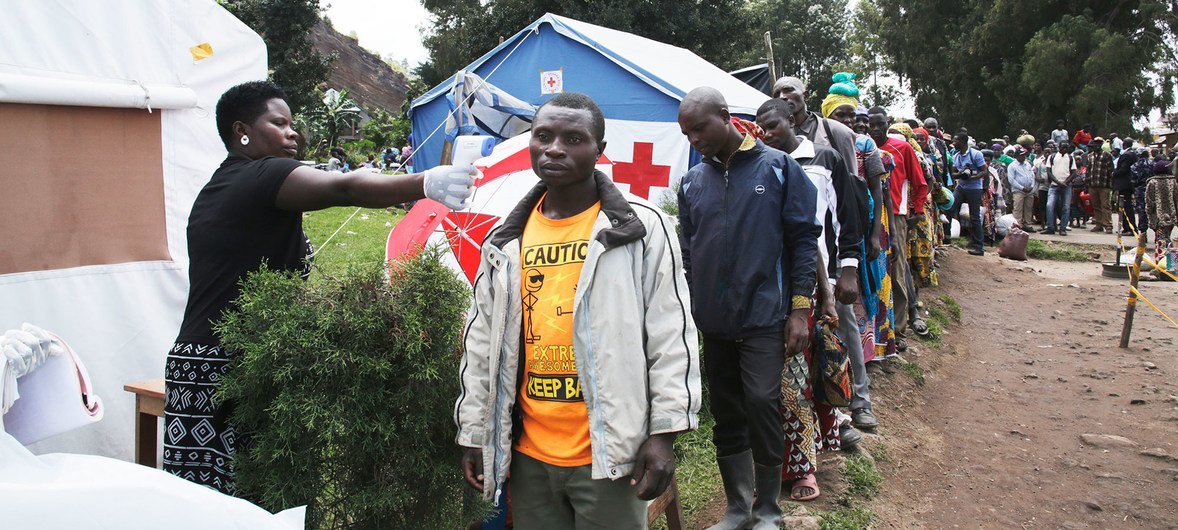
A primary pillar of stopping any Ebola outbreak is contact tracing—identifying and monitoring anyone who has interacted with an infected individual. Currently, responders are falling short of safety benchmarks.
“We have managed to reach 62% of contacts, but our goal is to achieve 90-95%,” warned Dr. Abdi Mahamud of the WHO during a briefing from Bunia to Geneva. “Healthcare professionals must establish deep trust within these communities to safely identify cases and effectively track exposures.”
Background: A Rare and Untreatable Threat
The outbreak was formally declared on May 15, 2026. However, public health investigators later discovered that the virus had already been quietly circulating in communities for approximately two months without detection, allowing it to build significant momentum.
Unlike the more common Zaire strain of Ebola—which was successfully combated in recent years using highly effective vaccines (like Ervebo) and monoclonal antibody treatments—the Bundibugyo strain has no such medical arsenal. This species has only caused one other major outbreak in history, which occurred across the border in the Bundibugyo District of Uganda between 2007 and 2008, ultimately infecting 131 people and killing 42.
The identity of the current strain was verified via rigorous laboratory analysis by the National Institute of Biomedical Research (INRB) in Kinshasa. The reference laboratory confirmed the Bundibugyo species in 8 out of 13 primary samples collected from suspected patient clusters in the Mongbwalu and Rwampara health zones.
Strain Comparison:
Zaire Strain       ──> Approved Vaccines Available  ──> Targeted Treatments Exist
Bundibugyo Strain  ──> NO Approved Vaccines         ──> Supportive Care Only
Cross-Border Spread and International Friction
Because of the high potential for regional transmission, the WHO designated the outbreak a Public Health Emergency of International Concern (PHEIC) on May 17, 2026. That warning proved prescient: the virus has already spilled over international borders.
Uganda has reported 19 confirmed Ebola cases and two deaths, with every single case epidemiologically linked back to the flare-up in the Democratic Republic of Congo. While 14 of those individuals had recently traveled from Congo, five cases have been confirmed as local transmission events within Uganda. Worryingly, the majority of the Ugandan cases have surfaced in the densely populated capital city of Kampala, with an additional case found in the neighboring Wakiso district.
In an attempt to shield its population, Uganda closed its western border with Congo on May 27, carving out strict exceptions only for humanitarian aid, cargo logistics, and emergency medical transfers. The move has sparked pushback from international health leadership. WHO Director-General Dr. Tedros Adhanom Ghebreyesus urged Ugandan authorities to reconsider the border closure, asserting that “blanket travel restrictions don’t work” and risk inflicting severe economic damage on communities, which can inadvertently drive border crossings underground and worsen the spread.
Public Health Implications and Operational Hurdles
Containment efforts are currently stymied by a combination of logistical barriers and community resistance. Early in the response, workers were monitoring fewer than half of the required contacts. While numbers have improved, they remain below the thresholds needed to halt transmission.
| Public Health Metric | Current Status | Targeted Benchmark |
| Contact Tracing Rate | 62% of identified contacts monitored | 90%–95% required for containment |
| Geographic Penetration | 26 health zones actively affected | 0 active zones (Full isolation) |
| Healthcare Worker Safety | 34+ medical staff members infected | 0 active exposures / Strict PPE protocols |
The human cost is exacerbated by security incidents. Recently, a specialized Ebola burial team was attacked by residents in South Kivu province, forcing medical responders to abandon a coffin. Such incidents highlight the severe friction generated by community fear and misinformation, leaving bodies unburied according to safety protocols and increasing the risk of community infection.
What This Means for the Public
Despite the gravity of the situation in Central Africa, health authorities emphasize that the risk profile for the broader international community remains minimal.
-
For International Travelers: The Centers for Disease Control and Prevention (CDC) maintains that the overall risk to travelers and the general public outside the immediate region is low. No cases tied to this outbreak have been reported in North America or Europe.
-
How the Virus Spreads: Ebola is not an airborne illness, nor does it spread through casual water systems. It requires direct contact with the blood, secretions, or bodily fluids of a person who is actively symptomatic or deceased. Individuals are not contagious during the incubation period.
-
Symptoms to Watch: The incubation window ranges from 2 to 21 days, though symptoms typically appear within 8 to 10 days of exposure. The illness begins abruptly with fever, severe fatigue, muscle pain, headache, and a sore throat. It then progresses to vomiting, diarrhea, a rash, and, in advanced stages, internal and external bleeding.
Because early symptoms heavily mimic common regional endemic diseases like malaria and typhoid fever, rapid laboratory testing remains the only definitive way to diagnose a patient. On a positive note, public health infrastructure is slowly spinning up: treatment units are fully operational in Bunia and Rwampara, and total documented recoveries have risen to 30.
Limitations and Looking Forward
Accurately charting the path forward remains difficult due to several critical blind spots:
-
Data Deficits: The initial two-month delay in detecting the virus means an unknown number of transmission chains may still be spreading unmonitored.
-
Volatile Terrain: Ongoing militant activity in eastern Congo prevents field workers from safely accessing certain villages, meaning the official count of 676 cases is likely an underestimation.
-
Diagnostic Scarcity: While testing capacity is expanding via mobile labs, testing kits remain strictly rationed.
WHO and local health ministries are aiming to push contact tracing past the 90% mark in the coming weeks by deploying local community advocates to bridge the trust gap. However, as the outbreak enters its fourth official week, the lack of a vaccine, combined with shifting populations and regional insecurity, has created one of the most logistically complex Ebola threats the region has faced in decades.
Medical Disclaimer
Medical Disclaimer: This article is for informational purposes only and should not be considered medical advice. Always consult with qualified healthcare professionals before making any health-related decisions or changes to your treatment plan. The information presented here is based on current research and expert opinions, which may evolve as new evidence emerges.
References
- https://www.reuters.com/business/healthcare-pharmaceuticals/congo-says-number-confirmed-ebola-cases-rises-676-2026-06-11/