 0
0
 0
0
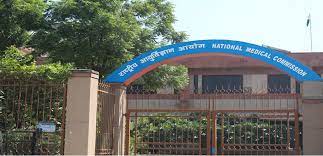
NEW DELHI — In a major development for the future of India’s healthcare infrastructure, the National Medical Commission (NMC) has officially sanctioned 25 new medical colleges and added 9,911 undergraduate medical seats for the 2026–27 academic session. Released by the NMC’s Medical Assessment and Rating Board (MARB) ahead of the National Eligibility cum Entrance Test undergraduate (NEET UG) counselling cycle, this expansion elevates the country’s total undergraduate medical capacity to an unprecedented 136,939 MBBS seats across 823 medical colleges. The move aims to directly address the country’s growing demand for medical education and bolster the long-term pipeline of physician personnel, though public health analysts warn that rapid scale-ups must be balanced with strict quality control.
Inside the Expansion: Private vs. Public Growth
The updated seat matrix represents a dual approach to expanding India’s medical training pipeline. According to data tracked across national education and regulatory registries, the expansion incorporates a mix of entirely new institutions alongside increased intake capacities at existing, established facilities.
Of the 25 newly approved institutions, seven are government-administered colleges providing 400 seats, while 18 are private institutions contributing 2,000 seats. The remaining majority of the 9,911-seat surge stems from the NMC allowing existing medical colleges to scale up their classroom and clinical batches.
Notably, this central matrix excludes Institutes of National Importance (INIs) such as the All India Institutes of Medical Sciences (AIIMS) and the Jawaharlal Institute of Postgraduate Medical Education and Research (JIPMER). Because these premier central institutions operate under independent statutory frameworks, the absolute pool of undergraduate medical training slots available to students nationwide is even larger than the NMC matrix indicates.
What This Means for Aspirants and Counselling Strategies
For lakhs of students who recently cleared the highly competitive NEET UG exam, the timing of the NMC announcement provides critical transparency. Seat availability dictates localized competition thresholds, opening up fresh opportunities in regions that previously suffered from severe institutional bottlenecks.
Medical education experts note that the influx of seats will directly alter how students approach their choice-filling strategies during the centralized and state-level counselling rounds. A wider geographic distribution of colleges allows more students to secure admissions closer to their home states, potentially reducing the financial and logistical strain on families.
Balancing the Numbers: The Public Health Matrix
From a macro public health viewpoint, the expansion aligns with the Indian government’s multi-year effort to fortify its healthcare workforce. According to data tabled in a Parliament response, India registered 1,386,145 allopathic doctors under state medical councils and the national register. Based on these metrics, official estimates place India’s aggregate doctor-to-population ratio at approximately 1:811—surpassing the World Health Organization’s (WHO) baseline recommendation of 1:1,000.
However, health policy researchers emphasize that paper counts can obscure functional reality. A cumulative registry track includes retired professionals, those who have migrated abroad, and individuals no longer engaged in active patient care. Furthermore, a favorable national average frequently masks severe geographic imbalances.
The Quality vs. Quantity Dilemma: Independent Expert Analysis
While adding nearly 10,000 seats relaxes the structural bottleneck for aspirants, independent medical education analysts emphasize that a classroom seat is only as good as the clinical ecosystem supporting it.
“Expanding institutional capacity is an important step toward broadening access to professional education,” explains Dr. Sandeep Hariharan, an independent medical education consultant and former registrar at a state health sciences university, who was not involved in the NMC compilation. “However, the true test of this expansion lies in institutional infrastructure. A medical student requires hands-on clinical exposure, diverse patient load, and mentorship from experienced, full-time faculty. If new colleges struggle with faculty deficits or low hospital bed-occupancy rates, we risk graduating doctors who lack the practical confidence required for complex, independent practice.”
Public health specialists also note that increasing undergraduate enrollment does not inherently solve India’s most persistent healthcare vulnerability: rural and primary care delivery. Workforce data consistently demonstrates that newly minted MBBS graduates gravitate heavily toward urban centers and private corporate hospital systems. Meanwhile, community health centers (CHCs) and district hospitals in tribal, mountainous, or low-income districts face chronic vacancies.
Regulatory Caveats and Structural Limitations
The NMC has firmly advised state and central counselling authorities to strictly adhere to the sanctioned intake caps, warning against over-admissions. However, stakeholders should note that the current seat matrix is not entirely static. The published figures remain subject to minor revisions based on pending appeals, compliance verifications, or judicial reviews involving individual colleges attempting to restore or upgrade their licenses.
Furthermore, public health analysts warn against viewing seat capacity as a direct proxy for immediate clinical outcomes. Transforming a medical student into a fully functional, independent physician takes a minimum of five and a half years of rigorous training, followed by years of postgraduate specialization. Consequently, the public health dividends of the 2026–27 expansion will not manifest in active community clinics until well into the next decade.
The Consumer and Patient Takeaway
For health-conscious citizens and families, the continuous scaling of the nation’s medical education framework signals a sustained state commitment to long-term health infrastructure. For the general public, it offers a promise of a more robust, accessible healthcare workforce down the line.
However, for policymakers, regulators, and the institutions themselves, the arrival of 25 new colleges underscores an ongoing structural challenge: ensuring that rapid volume growth does not dilute the clinical excellence required to safeguard patient health.
Medical Disclaimer
Medical Disclaimer: This article is for informational purposes only and should not be considered medical advice. Always consult with qualified healthcare professionals before making any health-related decisions or changes to your treatment plan. The information presented here is based on current research and expert opinions, which may evolve as new evidence emerges.
References
-
National Medical Commission (NMC): Medical Assessment and Rating Board (MARB), Official Seat Matrix Notification for the Academic Year 2026–27, Issued July 14, 2026.