 0
0
 0
0
NEW DELHI — In a comprehensive statement delivered to Parliament on July 21, 2026, Union Minister of State for Health and Family Welfare, Smt. Anupriya Patel, detailed India’s dual strategy of maintaining exceptionally high routine immunization rates while constructing a multi-layered pandemic defense system.
The parliamentary update highlights two landmark milestones: India’s Universal Immunization Programme (UIP) has maintained full immunization coverage above 93% for four consecutive years, and the nationwide Human Papillomavirus (HPV) vaccination campaign—launched on February 28, 2026—has already administered single-dose vaccines to over 5.2 million 14-year-old girls.
Together with structural overhauls in disease surveillance, laboratory networks, and frontline workforce training, the initiatives reflect a pivotal shift from reactive healthcare management to proactive, evidence-based disease prevention.
Sustained Universal Immunization and the Historic HPV Rollout
According to data presented in the Rajya Sabha, National Full Immunization Coverage (FIC) under the UIP reached 97.9% in the 2025–26 fiscal year. This follows a steady post-pandemic upward trajectory:
| Fiscal Year | Full Immunization Coverage (FIC) Rate |
| 2022–23 | 94.7% |
| 2023–24 | 93.7% |
| 2024–25 | 98.3% |
| 2025–26 | 97.9% |
(Source: Ministry of Health and Family Welfare, Govt. of India)
Building upon this routine immunization foundation, the government launched a flagship nationwide campaign targeting 1.2 crore (12 million) eligible 14-year-old girls across all 36 States and Union Territories. Cervical cancer ranks as the second most common cancer among women in India, with high-risk oncogenic strains—specifically HPV types 16 and 18—responsible for over 80% of cases nationwide.
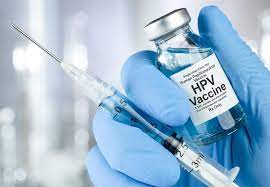
Under the campaign, a single dose of the quadrivalent Gardasil-4 vaccine is provided free of cost at primary, secondary, and tertiary government health centers. These include localized Ayushman Arogya Mandirs (formerly Primary Health Centres), Community Health Centres, Sub-District and District Hospitals, and Medical Colleges.
Target Cohort: ~1.2 Crore 14-Year-Old Girls
  │
  ├─► Delivery Network: Ayushman Arogya Mandirs, CHCs, District Hospitals, Medical Colleges
  │
  ├─► Intervention: Single-Dose Quadrivalent HPV Vaccine (Gardasil-4)
  │
  └─► Tracking & Safety: U-WIN Digital Portal + 24/7 AEFI Monitoring Centers
As of July 15, 2026, 5,210,302 girls have received the vaccine, tracked digitally in real time via the government’s U-WIN portal.
Expert Perspectives: The Science Behind the Strategy
Medical experts outside the government frame the single-dose HPV rollout as a landmark victory for preventive oncology.
“Cervical cancer is almost unique among human cancers because we have the tools to virtually eliminate it,” says Dr. Sunita Rao, a senior oncologist and clinical researcher in New Delhi not involved in the government report. “Transitioning from a multi-dose schedule to an evidence-backed single-dose regimen significantly reduces supply chain bottlenecks and cost hurdles, allowing us to reach populations in remote rural and tribal belts.”
The decision to adopt a single-dose regimen aligns with World Health Organization (WHO) scientific recommendations, which confirmed that a single dose offers protective efficacy comparable to multi-dose schedules in young adolescent girls. The National Technical Advisory Group on Immunization (NTAGI) similarly endorsed the protocol.
“Administering the vaccine at age 14 generates a robust immune response before most individuals are ever exposed to the virus,” Dr. Rao added. “When combined with early screening, this intervention will translate to a dramatic decline in advanced cervical cancer cases 15 to 20 years down the line.”
Overhauling Pandemic Preparedness and Primary Healthcare
Beyond routine and targeted vaccination, the ministry outlined four core pillars aimed at strengthening the nation’s health infrastructure against future biological threats:
-
Surveillance & Early Detection: Integrated Disease Surveillance Programme (IDSP) mechanisms have been upgraded alongside multi-disciplinary Rapid Response Teams (RRTs). These teams act as decentralized “firefighters” trained to isolate emerging local outbreaks before they scale into national crises.
-
Diagnostic Capacity: The Indian Council of Medical Research (ICMR) has operationalized a specialized network of more than 160 Virus Research and Diagnostic Laboratories (VRDLs) capable of rapid genomic sequencing and pathogen identification.
-
Data Integration: Real-time data synthesis across the Integrated Health Information Platform (IHIP), Health Management Information System (HMIS), and specialized portals allows epidemiologists to detect subtle anomaly clusters instantly.
-
Frontline Capacity Building: In April 2026, the Ministry introduced an Integrated Training Module for primary healthcare teams at Ayushman Arogya Mandirs. This unified framework provides standardized, competency-driven training for Medical Officers, Staff Nurses, Community Health Officers (CHOs), Auxiliary Nurse Midwives (ANMs), and Accredited Social Health Activists (ASHAs).
   ┌─────────────────────────────────────────────────────────┐
   │             PANDEMIC PREPAREDNESS FRAMEWORK             │
   └────────────────────────────┬────────────────────────────┘
                                │
       ┌────────────────────────┼────────────────────────┐
       ▼                        ▼                        ▼
┌──────────────┐         ┌──────────────┐         ┌──────────────┐
│ DIAGNOSTICS  │         │ SURVEILLANCE │         │ WORKFORCE    │
│ 160+ ICMR    │         │ IDSP + RRTs  │         │ Integrated   │
│ VRDL Labs    │         │ + IHIP Data  │         │ Training     │
└──────────────┘         └──────────────┘         └──────────────┘
Furthermore, memory of pandemic-era bottlenecks prompted substantial investments in medical oxygen logistics. Thousands of Pressure Swing Adsorption (PSA) oxygen plants, dedicated storage tanks, and Medical Gas Pipeline Systems (MGPS) are now permanently integrated into secondary and tertiary public care facilities.
Public Health Challenges, Hesitancy, and Counterarguments
While the numbers demonstrate momentum, public health analysts emphasize that high coverage on paper does not completely eliminate real-world operational challenges.
Addressing Vaccine Hesitancy
Human Papillomavirus is a sexually transmitted infection, which historically creates social stigma or hesitation among parents regarding adolescent vaccination. Misinformation campaigns on social media occasionally trigger safety concerns.
To address this, health authorities rely on culturally tailored Information, Education, and Communication (IEC) materials—including community radio jingles, digital myth-busting content, and local ASHA outreach. Furthermore, vaccination remains entirely voluntary and requires explicit written parental or guardian consent.
Safety Protocols
To safeguard against adverse reactions, every vaccination site is linked to 24/7 Adverse Events Following Immunization (AEFI) Management Centers under the supervision of trained medical officers. Clinical guidelines explicitly exclude girls with severe active illnesses, known yeast allergies, or histories of severe anaphylaxis.
The Need for Continued Screening
Epidemiologists caution that vaccination is not a complete substitute for cervical cancer screening. Gardasil-4 targets four specific strains (6, 11, 16, and 18). While these account for the vast majority of disease, older women and individuals infected with other high-risk strains remain reliant on regular screening (such as visual inspection with acetic acid or Pap tests) at primary health centers.
Practical Action: What This Means for Families
For parents and guardians of young teenagers, the campaign represents an accessible opportunity to protect children against future oncological risks.
-
Who is eligible? Girls aged 14 years across all Indian States and UTs.
-
Where to go: Any government primary health center (Ayushman Arogya Mandir), Community Health Centre, or District Hospital.
-
What to bring: Proof of age and a parent or guardian to provide signed consent.
-
Cost: Completely free of charge.
Following the intensive campaign phase, HPV vaccines will be integrated into regular routine immunization days, ensuring that girls turning 14 in subsequent months maintain continuous access.
Medical Disclaimer: This article is for informational purposes only and should not be considered medical advice. Always consult with qualified healthcare professionals before making any health-related decisions or changes to your treatment plan. The information presented here is based on current research and expert opinions, which may evolve as new evidence emerges.
Reference Section
-
Government Statements & Data Releases:
-
Ministry of Health and Family Welfare, Government of India. Update on Immunization Programme and Pandemic Preparedness. Press Information Bureau (PIB) Delhi; Released July 21, 2026. [PIB Release ID: 2286952].
-