 0
0
 0
0
NEW DELHI — In an ambitious move to rebuild public healthcare around prevention rather than crisis management, India is executing a massive structural overhaul of its primary healthcare infrastructure. The initiative aims to shift the burden of care away from overcrowded urban tertiary hospitals and bring comprehensive medical services directly to local communities.
According to official updates released by the Ministry of Health and Family Welfare, the government’s strategy hinges on decentralized screening, expanded public insurance, and the nationwide deployment of primary healthcare hubs known as Ayushman Arogya Mandirs (AAMs).
The announcement highlights a broader global shift in public health thinking: long-term national health outcomes depend heavily on catching diseases at the community level before they turn into severe, costly medical emergencies.
Expanding the Front Lines: 1.86 Lakh Community Outposts
At the center of this transformation is the operationalization of 1.86 lakh Ayushman Arogya Mandirs across rural and urban neighborhoods. By upgrading traditional Sub Health Centres (SHCs) and Primary Health Centres (PHCs), these outposts act as the first line of defense for millions of families.
Rather than offering only basic maternal or child immunizations—the traditional mandate of rural centers—AAMs now deliver an expanded care package. This includes:
-
Preventive and Promotive Care: Health education, lifestyle counseling, and routine health tracking.
-
Curative and Rehabilitative Services: Management of common acute illnesses and ongoing support for chronic conditions.
-
Teleconsultation Services: Connecting rural patients to hospital specialists remotely, bypassing geographic barriers and reducing out-of-pocket travel expenses.
+-----------------------------------------------------------------------+
|                 AYUSHMAN AROGYA MANDIR (AAM) SERVICES                 |
+-----------------------------------------------------------------------+
|  [Preventive]   -->  Routine screenings, wellness, and risk education |
|  [Curative]     -->  Management of acute illnesses & essential drugs  |
|  [Digital]      -->  Teleconsultation link to urban specialists       |
|  [Continuity]   -->  Long-term care for NCDs (Diabetes, Hypertension) |
+-----------------------------------------------------------------------+
To support these centers, the government continues to fund foundational programs under the National Health Mission (NHM), including the Free Drugs Service Initiative, the Free Diagnostic Service Initiative, and the National Ambulance Services.
“Primary care is the backbone of any resilient health system,” explains Dr. Aris Thorne, an independent global health policy analyst not affiliated with the ministry. “When you strengthen the primary level, you do two critical things: you catch illness early when it is cheapest and easiest to treat, and you protect families from catastrophic health expenditures that drive them into poverty.”
Tackling the Silent Epidemic: Specialized NCD Networks
While infectious illnesses historically dominated public health priorities, Non-Communicable Diseases (NCDs)—such as cardiovascular conditions, diabetes, and cancers—now account for the majority of chronic illness and mortality in the region.
To confront this shift, the National Programme for Prevention and Control of Non-Communicable Diseases (NP-NCD) has established a targeted secondary infrastructure designed to integrate directly with primary care screenings:
-
770 District NCD Clinics for specialized diagnostic evaluation.
-
6,410 Community Health Centre (CHC) NCD Clinics bringing targeted care closer to rural populations.
-
524 Day Care Cancer Centres enabling local chemotherapy and palliative management.
-
233 Cardiac Care Units equipped for emergency cardiovascular events.
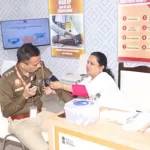
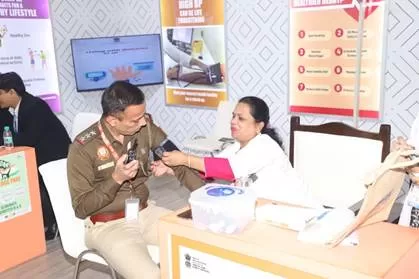
Through population-based screening programs managed at the local level, Accredited Social Health Activists (ASHAs) and primary care workers actively screen adults for hypertension, diabetes, and common cancers (oral, breast, and cervical). Patients identified as high-risk are seamlessly referred up to CHCs or district clinics for definitive diagnosis.
Closing the Financial Gap: Insurance Expansion for Seniors
Even the most robust clinical network fails if patients cannot afford care. The flagship Ayushman Bharat Pradhan Mantri – Jan Arogya Yojana (AB PM-JAY)—which currently provides a health cover of ₹5 lakh ($6,000 USD approx.) per family annually for secondary and tertiary hospitalizations—serves roughly 55 crore beneficiaries across economically vulnerable households.
In a landmark policy expansion, the scheme now extends coverage to 6 crore senior citizens aged 70 and above, encompassing 4.5 crore families. Crucially, this senior expansion applies irrespective of socio-economic status through the newly introduced Vay Vandana Card.
| Scheme Component | Target Demographic | Core Coverage |
| Standard AB PM-JAY | Bottom 40% economically vulnerable (~55 Crore people) | ₹5 Lakh / family / year for hospitalizations |
| Expanded Senior Cover | All citizens aged 70+ (via Vay Vandana Card) | Universal secondary/tertiary cover regardless of income |
| PM-ABHIM Infrastructure | Nationwide healthcare systems | ₹64,180 Crore budget for long-term health resilience |
By removing financial barriers for elderly citizens—who statistically require higher rates of hospitalization and complex medical interventions—the policy aims to reduce the financial strain placed on multi-generational households.
Maternal and Child Health: A Continuum of Care
Alongside the focus on chronic diseases, long-standing initiatives targeting maternal and infant mortality remain central to the NHM framework. High-impact programs working in tandem include:
-
Janani Suraksha Yojana (JSY) & JSSK: Cashless delivery services, free transport, drugs, and dietary support for pregnant women and sick infants in public facilities.
-
Pradhan Mantri Surakshit Matritva Abhiyan (PMSMA): Fixed-day (9th of every month) antenatal check-ups by specialists to identify high-risk pregnancies early.
-
Surakshit Matritva Aashwasan (SUMAN): A zero-tolerance policy for denial of service, guaranteeing respectful, quality maternal and newborn care.
-
Anemia Mukt Bharat (AMB): A lifecycle approach deploying iron-folic acid supplementation and testing across schools, AAMs, and community centers.
Real-World Nuances and Implementation Challenges
While the infrastructural footprint is undeniable, public health experts emphasize that scaling up physical centers is only half the battle. Independent health observers point out several critical factors that will dictate the long-term success of these reforms:
-
Human Resource Distribution: Ensuring a consistent supply of trained doctors, nurses, and community health officers in remote areas remains an ongoing operational challenge.
-
Supply Chain Consistency: Diagnostic kits and essential medications must flow uninterrupted to all 1.86 lakh AAMs to maintain community trust.
-
Data Integration: The rollout of the Ayushman Bharat Digital Mission (ABDM)—designed to maintain longitudinal electronic health records—must overcome varying levels of digital literacy and connectivity in rural belts.
Despite these hurdles, the structural framework laid down by the combination of local AAMs, digital teleconsultations, and targeted insurance expansion marks a definitive shift toward a proactive, preventive public health model.
Medical Disclaimer
This article is for informational purposes only and should not be considered medical advice. Always consult with qualified healthcare professionals before making any health-related decisions or changes to your treatment plan. The information presented here is based on current research and expert opinions, which may evolve as new evidence emerges.
References
-
Press Information Bureau (PIB), Delhi. Steps Taken to Strengthen Primary Healthcare Services in the Country. Ministry of Health and Family Welfare, Government of India. Published July 21, 2026.