 0
0
 0
0
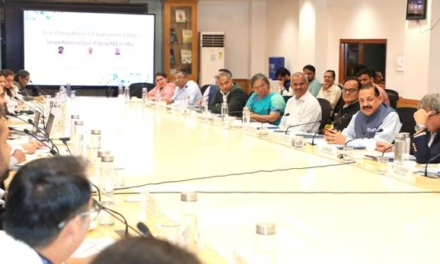
CHANDIGARH — Empanelled hospitals in Haryana may collectively withdraw from the Ayushman Bharat–Pradhan Mantri Jan Arogya Yojana (AB-PMJAY) if long-standing payment delays and governance issues remain unresolved, the Indian Medical Association (IMA) Haryana has warned. In an April 10, 2026, letter to the Ayushman Bharat Health Protection Authority, the IMA flagged unpaid reimbursements dating back to September 2025, stalled grievance-committee meetings, and unimplemented commitments to physician representation. This standoff raises urgent concerns about a potential disruption of free medical care for millions of vulnerable families across the state who rely on the scheme for life-saving treatments.
The Financial Strain: Why Hospitals are Warning of an Exit
The IMA Haryana letter states that dozens of private hospitals empanelled under AB-PMJAY are currently under “extreme financial strain” because reimbursements are failing to arrive within the legally stipulated 15-day window. According to the association, dues for claims submitted more than seven months ago remain unsettled.
This backlog has created a critical liquidity crunch. Hospitals operate on thin margins, and the absence of expected cash flow hampers their ability to:
-
Pay medical and nursing staff salaries.
-
Clear dues with pharmaceutical and implant suppliers.
-
Cover basic utility and operational costs.
In a decisive move during an online meeting on April 7, 2026, empanelled facilities reportedly agreed to submit formal surrender letters to exit the scheme after April 20, 2026, unless the government resolves the pending dues and streamlines the payment mechanism immediately.
Understanding the Stakes: The Scale of AB-PMJAY
AB-PMJAY is the world’s largest government-funded healthcare program, entitling eligible households to up to ₹5 lakh per year in cashless coverage for secondary and tertiary hospitalization. It covers roughly 12 crore economically vulnerable families—the bottom 40% of India’s population.
In Haryana alone, more than 1,300 hospitals are empanelled. Because private facilities often serve as the primary access points for complex surgeries and intensive care, their exit would be catastrophic. Historically, pending dues in the state have crossed the ₹500 crore mark, with some institutions waiting over a year for settlement. When payments lag at this scale, even medium-sized hospitals face attrition of specialists and a reduced capacity to admit new patients under the scheme.
Governance and Representation Gaps
The crisis is not merely financial; it is structural. The AB-PMJAY framework envisions regular Empanelment and Grievance Committees to review applications, approve new medical specialties, and resolve disputes between hospitals and the authority. While these committees are mandated to meet monthly, the IMA reports they have not convened for at least five months.
Furthermore, a January 2025 policy decision to include the IMA Haryana president or a nominated representative on these committees has yet to be implemented.
“Healthcare providers who are on the front lines of implementing the scheme are being shut out of policy and dispute-resolution processes,” an IMA official noted.
This lack of inclusion weakens transparency and leaves hospitals with no formal channel to address “wrongful” claim rejections or technical glitches in the portal.
A Growing National Pattern
The situation in Haryana mirrors a troubling national trend. Records from the National Health Authority (NHA) show that nationwide, over 63 lakh reimbursement files are awaiting clearance. Consequently, the rate of new hospital empanelment has plummeted, dropping from an average of 316 per month in 2024 to roughly 111 by early 2025.
Dr. R. V. Ashokan, a national-level hospital policy expert, emphasizes the fragility of the current model: “The scheme covers 55 crore people, but if providers keep exiting, beneficiaries will be left without beds or specialists. Low package rates combined with chronic payment delays make the scheme financially unsustainable for many private players.”
Impact on Public Health and Patients
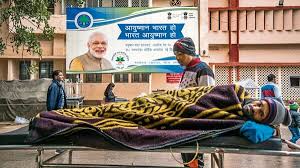
If Haryana’s private hospitals follow through on the threat to exit, analysts estimate that healthcare access could be disrupted for over 1.8 crore enrolled beneficiaries in the state. This includes senior citizens and marginalized rural households who have no other recourse for surgical care.
In semi-urban districts, where government infrastructure is often overstretched, private facilities act as the essential referral network. A public health researcher at a Delhi-based think tank warned that a mass exit would create a “ripple effect,” forcing patients to:
-
Turn to non-empanelled centers and pay out-of-pocket.
-
Delay essential surgeries, leading to worsened health outcomes.
-
Overcrowd public hospitals that are already at 100% capacity.
The Government Perspective
Officials within the NHA and state health departments highlight the scheme’s successes, noting that over 9 crore patients have been treated nationwide since 2018. They point to the Ayushman Bharat Digital Mission (ABDM) as a tool designed to reduce fraud and eventually accelerate claims processing through automated verification.
However, health economists argue that the “conservative pricing” of medical packages—often lower than the actual cost of high-quality implants or diagnostics—leaves no room for payment delays. When the financing model between the Center and the states becomes fragmented, the stability of the entire system is compromised.
Guidance for Patients and Families
For ordinary families, the immediate risk is the “hidden” denial of care—where a hospital claims a bed is unavailable or a procedure cannot be done under the scheme due to financial stress. To navigate this period of uncertainty, health experts recommend:
-
Verify Status: Check the current empanelment status of a hospital via the official AB-PMJAY portal or the national helpline (14555) before admission.
-
Document Everything: Retain copies of all medical records and discharge summaries to support any future grievances or claims.
-
Utilize Helplines: Use local health-welfare centers (Ayushman Mitras) to track claim status and escalate issues of denial of service.
The Path Forward: Systemic Lessons
The standoff in Haryana highlights three critical needs for the future of Indian health financing:
-
Strict Timelines: Implementing interest penalties for payments delayed beyond the 15-day window.
-
Rate Recalibration: Periodic, evidence-based revisions of procedure tariffs to match inflation and clinical costs.
-
Inclusive Oversight: Ensuring frontline healthcare providers have a seat at the table in governance and dispute resolution.
Without these reforms, the promise of “Universal Health Coverage” may remain out of reach for the citizens who need it most.
Medical Disclaimer
Medical Disclaimer: This article is for informational purposes only and should not be considered medical advice. Always consult with qualified healthcare professionals before making any health-related decisions or changes to your treatment plan. The information presented here is based on current research and expert opinions, which may evolve as new evidence emerges.
References
-
Economic Times Health Desk. “Empanelled hospitals may exit Ayushman scheme if payment issues remain unresolved: IMA Haryana.” The Economic Times – Health, April 11, 2026.
-
NDTV. “Haryana Hospitals Suspend Ayushman Bharat Scheme Over Rs 490 Crore Dues.” NDTV News, August 6, 2025.