 0
0
 0
0
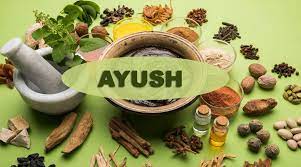
NEW DELHI — In an effort to bridge traditional medicine with modern global health metrics, India’s Ministry of Ayush is accelerating the implementation of the Ayush Quality Mark. Originally unveiled on December 19, 2025, during the 2nd World Health Organization (WHO) Global Summit on Traditional Medicine, this comprehensive initiative aims to transform how traditional remedies and healthcare services are standardized, tested, and exported worldwide.
The implementation is being spearheaded by AYUSHEXCIL (the Ayush Export Promotion Council), supported by the Ministry of Ayush and notified by the Directorate General of Foreign Trade (DGFT). By creating a unified quality assurance framework, Indian health authorities aim to boost consumer trust domestically while addressing long-standing international skepticism surrounding the purity, safety, and therapeutic consistency of traditional herbal medicines.
A Unified Framework Across Products and Services
Unlike previous isolated certification efforts, the Ayush Quality Mark establishes an overarching benchmark across seven key domains within the traditional healthcare ecosystem:
-
Ayush Products: Manufactured formulations across Ayurveda, Siddha, Unani, Sowa-Rigpa, and Homeopathy systems.
-
Healthcare Delivery Facilities: Ayush hospitals, day-care centers, clinics, and wellness centers.
-
Medical Value Travel Facilitators (MVTFs): Agencies arranging international patient care for traditional therapies.
-
Analytical Testing Infrastructure: Approved Ayush product testing laboratories.
       ┌─────────────────────────────────────────────────────────┐
       │                   AYUSH QUALITY MARK                    │
       └────────────────────────────┬────────────────────────────┘
                                    │
    ┌────────────────┬──────────────┼──────────────┬────────────────┐
    ▼                ▼              ▼              ▼                ▼
Products        Facilities       Wellness        MVTFs         Testing Labs
(ASU&H)     (Hospitals/Clinics)   Centers    (Travel Care)     (Quality Assurance)
The standard relies on accredited, third-party assessments to ensure that facilities and products adhere to parameters comparable to modern clinical care environments.
“Standardization is the single most crucial factor if traditional medicine is to integrate into mainstream global healthcare,” notes Dr. Eleanor Vance, an independent public health practitioner and clinical researcher in integrative medicine. “Historically, the lack of uniform testing protocols created legitimate safety concerns regarding heavy metal contamination, batch-to-batch variation, and adulteration. Moving toward accredited, third-party verification is a vital step toward protecting patient health.”
Strengthening Regulatory Mechanics and Export Controls
To support the Quality Mark, the regulatory framework relies on mandatory compliance with the Drugs and Cosmetics Act, 1940, and Drugs Rules, 1945. Under these rules, manufacturers must strictly adhere to Good Manufacturing Practices (GMP)—detailed in Schedule T and Schedule M-I—and comply with official pharmacopoeial standards maintained by the Pharmacopoeia Commission for Indian Medicine & Homoeopathy (PCIM&H).
Currently, 34 State/UT Drug Testing Laboratories process official legal samples drawn by regulatory inspectors, while 118 private Drug Testing Laboratories have been formally approved under Rules 160A to 160J to conduct independent identity, purity, and strength assays.
To further ensure global acceptance, the Central Drugs Standard Control Organization (CDSCO)—via a specialized Ayush Vertical—issues the World Health Organization Certificate of Pharmaceutical Product (WHO-CoPP) for traditional drugs intended for international trade. These certificates require rigorous joint inspections by CDSCO officials, the Ministry of Ayush, and state licensing authorities, following WHO Technical Report Series guidelines.
+-------------------------------------------------------------------------------+
|                            AYUSH REGULATORY STACK                             |
+-------------------------------------------------------------------------------+
| International Export | WHO Certificate of Pharmaceutical Product (WHO-CoPP)    |
+----------------------+--------------------------------------------------------+
| Voluntary Quality    | Ayush Quality Mark / QCI Premium Mark / ISO TC249      |
+----------------------+--------------------------------------------------------+
| Mandatory Statutory  | Drugs & Cosmetics Act (1940), Schedule T / M-I (GMP)   |
| Baseline             | Compendial Standards by PCIM&H                         |
+----------------------+--------------------------------------------------------+
Infrastructure and Research Funding: The AOGUSY & ABIHR Initiatives
To back regulatory requirements with practical infrastructure, the Indian government approved the central sector scheme Ayush Oushadhi Gunvatta Evam Uttpadan Samvardhan Yojana (AOGUSY) with a five-year budget allocation of ₹122.00 crore ($14.6 million USD).
During the 2025–26 fiscal year, the scheme set aside ₹17.50 crore in Grant-in-Aid funds specifically to upgrade state-level Drug Testing Laboratories (DTLs) and pharmacies to meet WHO-GMP and National Accreditation Board for Testing and Calibration Laboratories (NABL) criteria.
Recent Laboratory Upgrades (AOGUSY FY 2025-26)
| State | Facility Component | Total Sanctioned (INR) | FY 2025–26 Release (INR) | Primary Objective |
| Arunachal Pradesh | State Govt. DTL | ₹53,24,026 | ₹17,99,813 | Upgradation to NABL standards |
| Mizoram | State Govt. DTL | ₹1,60,61,384 | ₹18,00,000 | Testing infrastructure expansion |
| Madhya Pradesh | State Govt. DTL | ₹75,83,262 | ₹75,83,262 | Analytical capacity building |
Parallel to physical quality control, the AYURGYAN Scheme‘s new component—Ayurveda Biology Integrated Health Research (ABIHR)—bridges traditional concepts with modern preclinical science. Eleven national collaborative projects are currently underway, focusing on rigorously evaluating single botanicals and polyherbal formulations.
Research targets include conducting oral toxicity, genotoxicity, and pharmacokinetic studies on common botanical leads like Withania somnifera (Ashwagandha), Bacopa monnieri (Brahmi), Boswellia serrata (Shallaki), and Trigonella foenum-graecum (Fenugreek), alongside investigating Ayurvedic leads to address Antimicrobial Resistance (AMR).
What This Means for Consumers and Patients
For health-conscious consumers and medical tourists, the roll-out of the Ayush Quality Mark offers clearer, safer benchmarks when selecting natural remedies and clinical services:
-
Verified Purity: Look for verified quality marks on packaging, which signal that the batch has been evaluated for heavy metals, pesticide residues, and microbial contamination.
-
Standardized Dosage: Ensures that active herbal constituents remain consistent from one batch to another, reducing the risk of unexpected side effects or therapeutic failure.
-
Credentialed Care: Patients seeking care at Ayush wellness centers or hospitals can verify whether the facility meets national healthcare quality and safety guidelines.
Limitations, Gaps, and Public Health Challenges
Despite these regulatory strides, challenges remain. A fundamental barrier in traditional medicine safety is pharmacovigilance execution. Unlike synthetic pharmaceuticals with single chemical entities, complex botanical formulations contain hundreds of active compounds, making adverse event tracking and drug-herb interaction monitoring intricate.
Furthermore, geographical disparities in research infrastructure persist. For instance, in a recent written response to the Lok Sabha, Union Minister of State (I/C) for Ayush, Shri Prataprao Jadhav, noted that no proposals had yet been received or considered for establishing specialized research units in under-represented areas like Kandhamal, Odisha. Ensuring uniform enforcement of drug testing across rural and remote regions remains an ongoing operational challenge.
Health authorities emphasize that while certification guarantees product purity and standard manufacturing, it does not replace the need for professional medical advice. Consumers should consult certified medical practitioners before combining botanical remedies with conventional prescription medications.
References
-
Ministry of Ayush, Government of India. (2026, July 31). Implementation of Ayush Quality Mark. Press Information Bureau (PIB), Delhi.
Medical Disclaimer: This article is for informational purposes only and should not be considered medical advice. Always consult with qualified healthcare professionals before making any health-related decisions or changes to your treatment plan. The information presented here is based on current research and expert opinions, which may evolve as new evidence emerges.