 0
0
 0
0
WASHINGTON — In a major escalation of a regional agricultural crisis, two prominent United Nations agencies launched a $1 million joint research initiative on June 19, 2026, aimed at containing a resurgent New World screwworm outbreak that has crossed vital ecological barriers. The emergency mobilization by the Food and Agriculture Organization (FAO) and the International Atomic Energy Agency (IAEA) comes immediately after the U.S. Department of Agriculture (USDA) confirmed the first domestic animal case of the flesh-eating parasite in Texas in more than four decades. The re-emergence of the pest has triggered high-level biosecurity alarms, threatening an already strained livestock industry and raising localized public health concerns across the Americas.
The Outbreak Scale: From Panama to the Texas Border
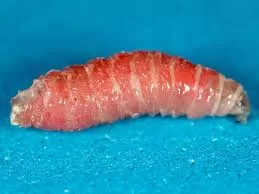
The New World screwworm (Cochliomyia hominivorax) is a devastating parasitic fly whose larvae burrow into the open wounds of warm-blooded animals, feeding on living tissue. While standard maggots only consume dead tissue, screwworms actively eat their host alive, a condition known pathologically as myiasis.
Once widespread across the Americas, the parasite was successfully pushed back to South America decades ago via a permanent “biological barrier” maintained in Panama. However, that containment line has collapsed.
In Central America, the surge has reached catastrophic proportions. According to data from the USDA’s Animal and Plant Health Inspection Service (APHIS), official screwworm detections in Panama skyrocketed from an historic average of just 25 cases per year to more than 6,500 cases annually by late 2023. Since that breakthrough, the parasite has steadily marched northward, establishing active transmission networks through Costa Rica, Nicaragua, Honduras, Guatemala, Belize, El Salvador, and Mexico.
The crisis struck U.S. soil on June 3, 2026. APHIS laboratory testing confirmed that a three-week-old calf in Zavala County, located in southern Texas near the Mexican border, was infested with New World screwworm larvae. According to records from the Centers for Disease Control and Prevention (CDC), this represents the first confirmed animal case in Texas since 1966, effectively breaching a 60-year regional eradication baseline.
The Solution: A Severe Shortage of ‘Sterile Flies’
To halt the outbreak, the UN agencies are relying heavily on the Sterile Insect Technique (SIT). Originally pioneered in the 1950s, SIT functions as a form of birth control for insects. Millions of male screwworm flies are bred in specialized laboratories and exposed to controlled doses of gamma radiation, rendering them sterile.
When these sterile males are released en masse into the wild, they mate with wild female flies. Because female screwworms typically mate only once in their lifetime, these pairings produce unfertilized eggs, causing the wild population to plummet over successive generations. The USDA emphasizes that the technique is non-toxic, does not involve gene editing, and poses no biological risk to humans, livestock, or native wildlife.
However, the strategy is currently bottlenecked by a severe manufacturing deficit.
[Required Weekly Production for Emergency Measures]: 600 Million Flies
=======================================[ 600M ]

[Current Active Production (Panama Facility)]: 100 Million Flies
===[ 100M ]
The IAEA notes that containing the current multi-country outbreak requires the deployment of up to 600 million sterile flies every week. Currently, the sole operating production facility, located in Panama, maxes out at approximately 100 million flies per week.
To bridge this 500-million-fly deficit, emergency expansion plans are underway to scale up production capacity at facilities in Metapa de Domínguez, Mexico, and Mission, Texas. The USDA has injected $109.8 million in emergency funding to accelerate these expansions and reinforce containment lines in Mexico and the Darién Province. Once fully operational, these sites are projected to add 400 million flies per week, bringing total regional capacity to 500 million. However, authorities caution that reaching these production milestones will take several years.
Economic Fallout: Threats to the U.S. Food Supply
The screwworm’s arrival in the United States coincides with an era of record-high consumer grocery costs. According to the Bureau of Labor Statistics and the USDA, retail beef prices hit a historic high of $9.64 per pound in April 2026—a steep 13% increase from the prior year, driven by prolonged droughts and dwindling domestic cattle herds.
“A widespread, unchecked screwworm outbreak could inflict up to $3 billion in economic devastation across the American Southwest,” notes an economic impact report published by the Federal Reserve Bank of Dallas.
Because Texas is the nation’s leading cattle producer, state agricultural experts warn that the local livestock sector could suffer up to $1.8 billion in direct losses from livestock mortality, veterinary costs, and strict export quarantines if the parasite establishes a permanent foothold.
Human Health Risks: What the Public Needs to Know
While the primary threat is agricultural, the New World screwworm can infest any warm-blooded animal, including humans. The CDC emphasizes that the risk to the general U.S. public remains “very low,” and no locally acquired human infestations have been reported in the country during the current outbreak cycle.
However, the threat is not entirely theoretical. In August 2025, federal health officials confirmed the first travel-associated human case in decades: an individual who returned to the U.S. after sustaining an infestation while traveling in El Salvador.
According to clinical profiles published in Medscape Medical News, the risk to humans is highly localized and limited to individuals with direct exposure to infested zones. Those at elevated risk include agricultural workers, individuals who sleep outdoors near livestock, and travelers with untreated open wounds. Malnourished, immunocompromised, very young, or elderly individuals face higher risks of severe complications.
Clinical Signs of Human Infestation
-
Larval Movement: Visual observation or a distinct crawling sensation of fly larvae inside skin wounds, ears, nose, eyes, or mouth.
-
Wound Degradation: Rapidly worsening, painful skin lesions that enlarge within days.
-
Distinct Odor: A foul, decaying smell emanating from the site of the wound.
-
Tissue Complications: Bleeding from open sores and secondary bacterial infections, which can trigger systemic symptoms like fever and chills.
There are no oral or systemic medications capable of curing screwworm infestations. Medical treatment requires the meticulous manual removal of every individual larva by a healthcare professional, followed by extensive wound debridement and antiseptic care to prevent secondary bacterial superinfections.
Expert Perspectives and Counterarguments
Independent medical and veterinary experts urge caution but advise against widespread panic.
Dr. Mazumder, a veterinary parasitologist not involved in the UN research project, noted that the speed of the outbreak serves as a stark warning. “The explosive shift from a double-digit caseload to thousands of infections in Panama demonstrates how rapidly this parasite exploits gaps in biosecurity,” Dr. Mazumder stated. “While the Sterile Insect Technique remains our gold-standard tool, our severe production deficits mean we are effectively fighting a wildfire with limited water.”
Federal officials are working to project a calm, structured response. U.S. Agriculture Secretary Brooke Rollins issued a statement seeking to reassure both producers and consumers:
“There is no reason to believe this incursion will result in the permanent establishment of the pest in our country. The single case detected in Texas is, for now, an isolated incident, and our domestic containment protocols have been activated immediately.”
Some agricultural economists also argue that predicting immediate, runaway consumer beef spikes solely due to the Texas detection is premature. Because the U.S. beef herd has not entered a systemic screwworm crisis, these analysts suggest the primary consumer impact will be keeping existing beef prices elevated, rather than triggering an immediate domestic supply shock.
Public Health Action and Moving Forward
For the immediate future, public health and agricultural agencies are shifting toward strict active surveillance. The FAO has mandated that veterinary services across vulnerable borders inspect millions of animals transitively moving through designated agricultural checkpoints.
Actionable Guidance for Consumers and Professionals
For Health-Conscious Consumers and Travelers:
-
Travel Safety: Individuals traveling to endemic areas in Central America should keep open wounds clean, dressed, and covered, and avoid sleeping outdoors near livestock environments.
-
Livestock Management: Livestock owners and hobby farmers should perform daily checks on their animals. Watch for signs of unusual irritation, head-shaking, or an unexplained odor of decay. Any wound containing visible larvae must be reported immediately to local agricultural extension offices.
For Healthcare Professionals:
-
Travel History: Physicians should routinely ask about recent travel to Central or South America when treating patients presenting with unusual, rapidly degrading skin wounds or myiasis symptoms.
-
Clinical Management: Focus on physical extraction of the larvae, meticulous wound care, and monitoring for secondary bacterial infections that require targeted antibiotic therapies.
The $1 million UN project represents a critical first line of defense, but experts agree that long-term eradication will depend entirely on how quickly the expanded production facilities in Texas and Mexico can go live to supply the missing millions of sterile flies.
Medical Disclaimer
Medical Disclaimer: This article is for informational purposes only and should not be considered medical advice. Always consult with qualified healthcare professionals before making any health-related decisions or changes to your treatment plan. The information presented here is based on current research and expert opinions, which may evolve as new evidence emerges.
References
-
Reuters. “UN agencies launch $1 million project to contain screwworm outbreak.” Published June 19, 2026.