 0
0
 0
0
NEW DELHI — In a swift response to an escalating international health crisis, India has dispatched its first emergency tranche of medical supplies and personal protective equipment (PPE) to the Africa Centres for Disease Control and Prevention (Africa CDC). The deployment comes in the wake of a stark declaration by the World Health Organization (WHO) on May 17, 2026, designating the ongoing Ebola outbreak in the Democratic Republic of the Congo (DRC) and Uganda as a Public Health Emergency of International Concern (PHEIC).
The outbreak, fueled by the rare and virulent Bundibugyo species of the Ebola virus, has prompted the Indian government to issue an official travel advisory, urging its citizens to avoid non-essential travel to the DRC, Uganda, and neighboring South Sudan. As global health agencies rush to reinforce border surveillance, the joint international mobilization underscores the high stakes of containing a deadly pathogen in a region historically complicated by conflict, displaced populations, and fragile health infrastructures.
The Scale of the Outbreak: Numbers and Geography
According to official situation reports released by the WHO, the outbreak has rapidly gained a foothold across national borders. As of mid-May 2026, epidemiologists have documented:
-
Democratic Republic of the Congo (Ituri Province): 8 laboratory-confirmed cases, 246 suspected cases, and 80 suspected deaths.
-
Uganda: 2 confirmed cases, including 1 fatality, directly linked to an individual who had recently traveled from the affected zone in the DRC.
The WHO’s decision to trigger its highest level of global alert—the PHEIC framework—reflects the unusual cross-border risks of this specific event. Public health monitors emphasize that the crisis is unfolding in a highly volatile setting characterized by intense population movements, deep-seated regional insecurity, and a widespread reliance on informal, unregistered health facilities. These overlapping factors mean that official tallies likely represent only the tip of an iceberg, masking a much larger, unmapped chain of transmission.
Reported Outbreak Metrics (As of May 2026)
+------------------------+-------------------+-------------------+-------------------+
| Region                 | Confirmed Cases   | Suspected Cases   | Suspected Deaths  |
+------------------------+-------------------+-------------------+-------------------+
| DRC (Ituri Province)   | 8                 | 246               | 80                |
| Uganda                 | 2                 | 0 (Monitored)     | 1                 |
+------------------------+-------------------+-------------------+-------------------+
Why the Bundibugyo Strain Commands Global Fear
The primary driver behind the current international anxiety is the specific genetic profile of the virus at fault. Unlike the more common Zaire strain of Ebola—which was successfully combated in recent years using highly effective, newly licensed vaccines and monoclonal antibody therapies—the Bundibugyo virus species has no licensed vaccine and no approved specific treatment.
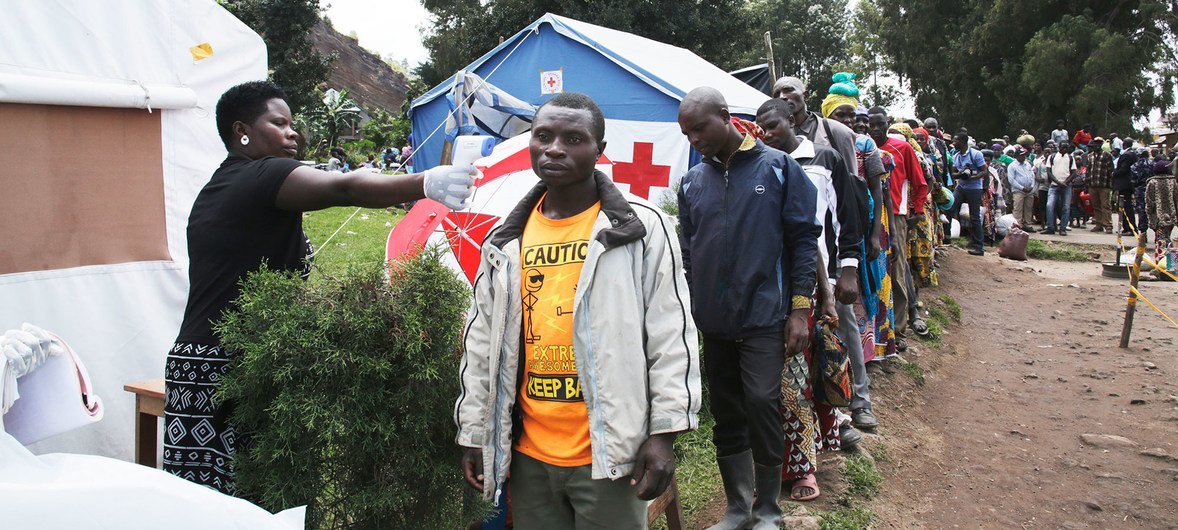
Without targeted medical countermeasures, the clinical management of infected patients relies entirely on aggressive supportive care, including intravenous fluid hydration, electrolyte balancing, and the immediate treatment of secondary infections. This therapeutic deficit elevates the importance of classic public health interventions. To halt the virus in its tracks, medical teams must rely exclusively on rapid case detection, immediate isolation, rigorous contact tracing, and strict infection prevention and control (IPC) protocols.
Understanding Transmission: What the Public Needs to Know
For the general public and international travelers, understanding how Ebola spreads is crucial to preventing unnecessary panic while maintaining appropriate vigilance.
Key Fact: The Ebola virus is not an airborne pathogen like influenza or COVID-19. It cannot be contracted through casual contact, such as sitting next to an asymptomatic person on public transit or breathing the same air.
Instead, transmission occurs via direct contact with the bodily fluids (such as blood, saliva, emesis, urine, or semen) of an individual who is actively symptomatic or has deceased from the disease. It can also spread through contact with surfaces or materials—such as bedding or clothing—contaminated with these fluids.
Global health guidance dictates that anyone identified as a contact of a confirmed Ebola case must undergo strict active monitoring for a period of 21 days—the maximum incubation period of the virus. To prevent geographical expansion, individuals under surveillance are strictly prohibited from international travel unless authorized for specialized medical evacuation.
Strategic Aid and the Expert Perspective
India’s rapid dispatch of medical cargo, announced by External Affairs Minister S. Jaishankar, is a vital logistical lifeline. The shipment includes heavy-duty gowns, masks, face shields, gloves, and diagnostic tools designed to protect frontline health workers who face the highest risk of exposure.
Independent public health experts stress that sending physical resources directly to the epicenter is far more effective than sealing international borders.
“Imposing blanket travel bans or closing borders often backfires during a hemorrhagic fever outbreak,” explains Dr. Aris Vance, an independent infectious disease epidemiologist not involved in the current deployment. “When legal border crossings shut down, desperate people utilize informal, unmonitored bush paths. This effectively blinds public health surveillance. Coordinated regional aid—ensuring local nurses and doctors have the PPE they need—is the true benchmark of successful containment.”
The European Commission echoed this sentiment in a recent briefing, noting that while the cross-border risk is severe and unusual, response efforts must remain targeted, evidence-based, and human-centric to maintain community trust.
Limitations, Uncertainties, and the Path Forward
The international community faces profound blind spots in the coming weeks. Because many deaths in remote villages occur outside traditional hospital walls, and because safe burial practices are not yet universally enforced across Ituri province, tracking the virus’s true velocity remains difficult. Public health updates and case counts are expected to fluctuate significantly as surveillance teams penetrate insecure zones.
Simultaneously, the scientific community is moving to pivot clinical trial protocols toward the region. While no licensed Bundibugyo therapies exist, global research coalitions are evaluating whether experimental vaccine candidates and broad-spectrum antivirals can be deployed under emergency access frameworks.
Ultimately, India’s involvement highlights a core truth of modern epidemiology: an infectious threat anywhere is a threat everywhere. The success of this global intervention will depend on how quickly international resources can match the speed of a silent, fast-moving pathogen.
References
-
Economic Times Health World Desk. India dispatches first tranche of urgent medical supplies in wake of Ebola health emergency. Published May 24, 2026.
Medical Disclaimer
Medical Disclaimer: This article is for informational purposes only and should not be considered medical advice. Always consult with qualified healthcare professionals before making any health-related decisions or changes to your treatment plan. The information presented here is based on current research and expert opinions, which may evolve as new evidence emerges.