 0
0
 0
0
February 24, 2026
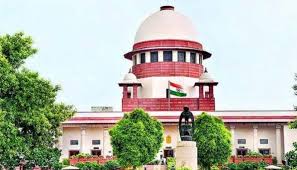
NEW DELHI — The Supreme Court of India has announced it will formally investigate whether the Union Government’s recent decision to drastically lower the qualifying percentile for the NEET-PG 2025 exam compromises the quality of specialist medical education. The Union Government maintains that the National Eligibility-cum-Entrance Test Postgraduate (NEET-PG) is merely a ranking tool and not a certificate of clinical competence. With the future of specialist training and long-term patient safety at the center of the debate, the Bench has scheduled a detailed hearing for March 24, 2026, to determine if the “zero or negative” percentile threshold undermines the integrity of India’s healthcare system.
The Catalyst: A Race to Fill Vacant Seats
The controversy began in January 2026, when the National Board of Examinations in Medical Sciences (NBEMS) issued a notice sharply reducing the minimum qualifying percentile for the third round of NEET-PG 2025 counseling. The move was designed to address a persistent problem in Indian medical education: thousands of postgraduate seats in MD, MS, and DNB programs going vacant each year.
The Union Government, in a recent affidavit, defended the reduction as a pragmatic policy decision. The primary goal is to prevent the “wastage” of expensive training infrastructure and faculty resources, particularly in less popular specialties or rural teaching hospitals. However, the decision quickly drew fire from medical advocates and students, who filed petitions claiming that allowing candidates with near-zero or even negative scores to enter specialist training could dilute academic standards.
The Centre’s Defense: “Ranking, Not Licensing”
Central to the government’s legal position is the distinction between an entrance exam and a licensing exam. In its submission to the Supreme Court, the Centre argued that every candidate appearing for NEET-PG is already a qualified, licensed doctor.
“NEET-PG is not an entry-level examination like MBBS,” an Additional Solicitor General argued before the Bench. The government’s stance highlights three key points:
-
Prior Qualification: All aspirants have already completed a five-and-a-half-year MBBS degree and a mandatory one-year clinical internship.
-
Existing Competence: Clinical competence is legally established by the MBBS degree and registration with the National Medical Commission (NMC), which allows these individuals to practice medicine independently regardless of their NEET-PG score.
-
Exam Design: Because the exam uses negative marking, a low or negative score is a reflection of relative performance against peers in a competitive setting, not a lack of foundational medical knowledge.
“The reduction in percentile does not lower the baseline competence required to care for patients,” the government affidavit stated, “because that baseline is tied to MBBS-level training and final postgraduate exit exams.”
Judicial Skepticism: Quality vs. Quantity
While the Supreme Court has not stayed the counseling process, the Bench expressed significant reservations regarding the “drastic” nature of the reduction. The Court has directed the NBEMS to provide a transparent rationale for the move, seeking assurance that the decision was not driven by “devious reasons” or commercial interests of private medical colleges.
The Court’s primary concern is the educational environment. If a candidate enters a rigorous three-year surgical or medical residency with a significantly lower academic baseline, does it place an undue burden on the teaching faculty?
“We must reflect on the long-term consequences for the health system,” the Bench noted, signaling that while policy decisions are usually the domain of the government, the potential erosion of “specialist quality” falls under judicial scrutiny.
Expert Perspectives: A System Under Pressure
Medical educators not involved in the litigation suggest that the debate highlights a “tension of scale.” India desperately needs more specialists to staff its burgeoning public health infrastructure, yet quality cannot be mass-produced.
The Training Burden
“Admitting candidates with very low entrance scores may increase the teaching load on already stretched faculty,” says one Delhi-based medical educator. “Faculty must ensure that by the end of three years, every trainee—regardless of their entry score—reaches the same high-level exit competency. If the starting point is too low, that gap becomes harder to bridge.”
The Public Trust Factor
There is also the matter of public perception. While the government views NEET-PG as a seat-allocation tool, the public often views it as a “quality filter.” A perceived “lowering of the bar” could potentially erode trust in the specialists emerging from the system five years down the line.
| Perspective | Key Argument |
| Government | Prevents wastage of seats; fills gaps in high-need specialties. |
| Petitioners | High risk of diluting academic rigor and specialist standards. |
| Medical Educators | Increased pressure on faculty to “remediate” low-performing entrants. |
What This Means for Patients
For the average patient, the impact of this legal battle may not be felt today, but it could shape the healthcare landscape for the next decade.
-
Increased Access: If the lower cut-off successfully fills seats in regional government hospitals, it could mean more specialists available in underserved areas in the long run.
-
Supervised Care: It is important to remember that postgraduate residents do not practice in isolation. They work within teams, supervised by senior residents and consultants. Patient safety is theoretically protected by these institutional layers.
-
The Exit Barrier: The “safety valve” in the government’s logic is the final MD/MS exit exam. This exam is rigorous and serves as the final checkpoint before a doctor is recognized as a specialist.
Looking Ahead: The March 24 Hearing
As the medical community awaits the March 24 hearing, several questions remain:
-
Will the government provide data showing that previous cut-off reductions did not negatively impact patient outcomes?
-
Will the Court mandate a “floor” percentile below which no candidate can be admitted, regardless of vacancies?
For now, the message to the public is one of cautious observation. A doctor’s professional journey is a marathon, not a sprint. While the NEET-PG rank is a significant milestone, it is only one chapter in a career defined by continuous learning and clinical experience.
Medical Disclaimer
This article is for informational purposes only and should not be considered medical advice. Always consult with qualified healthcare professionals before making any health-related decisions or changes to your treatment plan. The information presented here is based on current research and expert opinions, which may evolve as new evidence emerges.
References
-
Medical Dialogues. (2026, Feb 22). NEET PG: SC to examine impact of cutoff reduction after centre maintains exam does not certify doctors’ competence.