 0
0
 0
0
KOLKATA — In what is being hailed as a major milestone for preventive public health in eastern India, Kolkata’s iconic Red Road is undergoing final preparations to host the national celebrations for the 12th International Day of Yoga (IDY) on June 21, 2026. Prime Minister Narendra Modi will lead thousands of physical participants in the Common Yoga Protocol at 5:00 AM, anchoring a global event that will simultaneously span nearly 2,500 locations across more than 210 Indian Missions worldwide.
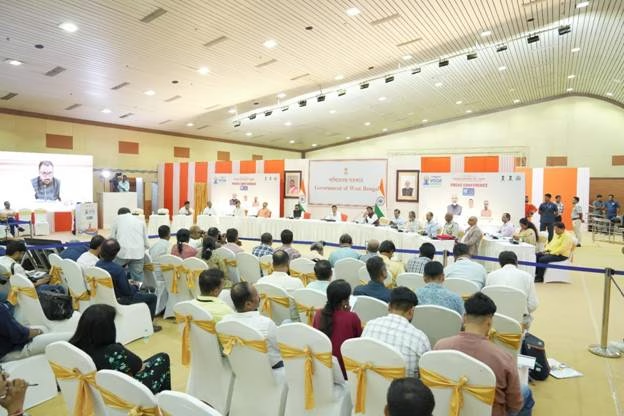
The announcement was made during a high-profile curtain-raiser press conference at Nabanna Sabhaghar on June 18, led by West Bengal Chief Minister Shri Suvendu Adhikari and Union Minister of State for Ayush, Shri Prataprao Jadhav. This year’s event marks a formal convergence of cultural heritage and clinical science, shifting the conversation around yoga from a casual lifestyle choice to an evidence-based framework for public health, under the official 2026 theme: “Yoga for Healthy Ageing.”
A Global Movement with Deep Local Roots
The scale of the 12th IDY highlights how rapidly mind-body interventions are scaling globally. Beyond the central demonstration at Red Road, the Ministry of Culture is coordinating specialized yoga sessions at 100 iconic heritage sites across the country, aiming to leverage tourism and cultural identity to drive community wellness participation.
To mark the occasion, the West Bengal Postmaster General released twelve special philatelic covers, celebrating the historical preservation of these wellness traditions.
The build-up to the event has already broken digital health engagement records. Union Minister Prataprao Jadhav revealed that a nationwide live virtual yoga session conducted on June 14, 2026, registered over four lakh simultaneous participants, securing a new Guinness World Record for mass digital wellness mobilization.
“International Day of Yoga 2026 is not merely an event but a national celebration of India’s timeless wisdom,” Minister Jadhav stated, pointing to the Ministry’s flagship “Yoga 365” initiative. “Yoga 365 aims to transform yoga from an annual celebration into an uninterrupted, daily preventive health habit for every citizen.”
Kolkata itself is hosting an extensive series of lead-up activities, including the “Daud Se Dhyan” (Run to Meditation) initiative across eleven urban locations on June 19, and mass yoga demonstrations on 500 boats along the Hooghly River to celebrate Bengal’s riverine culture.
The Clinical Subtext: The Science of “Yoga for Healthy Ageing”
By dedicating the 2026 theme to healthy ageing, health authorities are directly addressing a pressing global demographic shift. As life expectancy rises, the global burden of non-communicable diseases (NCDs)—such as cardiovascular disease, type 2 diabetes, and neurodegenerative disorders—has increased exponentially.
Peer-reviewed medical literature increasingly validates yoga as a viable adjuvant (supplementary) therapy for managing these age-related conditions. According to the World Health Organization (WHO), physical inactivity is a primary risk factor for global mortality. Mind-body interventions like yoga combine low-impact aerobic activity, strength training, and mindfulness, which address several components of healthy aging simultaneously.
Cognitive Preservation and Cellular Aging
Studies published in journals like Frontiers in Human Neuroscience indicate that regular yoga practice is associated with structural changes in the brain, particularly in the hippocampus and prefrontal cortex—areas highly vulnerable to age-related atrophy. The integration of pranayama (controlled breathing exercises) and dhyana (meditation) has been shown to downregulate systemic inflammatory markers, such as Interleukin-6 (IL-6), and potentially slow down cellular aging by optimizing telomerase activity.
Balance and Fall Prevention
For the elderly, accidental falls represent a leading cause of severe injury and loss of independence. Clinical trials tracked by organizations like the American Geriatrics Society demonstrate that yoga significantly improves static and dynamic balance, increases core strength, and enhances proprioception (the body’s ability to perceive its position in space), thereby reducing fall risks by up to 30%.
Independent Medical Perspectives and Public Health Impact
While government leaders emphasize national pride and cultural heritage, independent public health experts view the mass mobilization through a clinical lens.
“Large-scale public health campaigns like Yoga 365 are critical because they lower the barrier to entry for behavioral change,” says Dr. Aranya Sengupta, an independent preventive medicine specialist based in New Delhi, who was not involved in organizing the event. “If we can successfully shift the population’s mindset toward low-cost, daily preventive care, we can significantly ease the long-term structural strain on our primary and secondary healthcare systems, particularly regarding chronic hypertension and metabolic syndromes.”
To illustrate how these public health frameworks compare to historical wellness metrics, the scale of the 2026 campaign is summarized below:
| Initiative / Metric | Scope & Impact (2026) | Primary Public Health Target |
| Global Footprint | ~2,500 locations across 210+ Indian Missions | International wellness adoption & cross-cultural health integration |
| Yoga 365 & Free Online Program | 100 Days of open-access training; 400,000+ simultaneous users | Reducing barriers to daily physical activity; habit formation |
| Theme: Healthy Ageing | Focused protocols for senior citizens & clinical NCD management | Improving balance, reducing cognitive decline, and lowering systemic inflammation |
| “Gangotri to Gangasagar” Journey | Multi-city riverbank yoga relay (Varanasi, Hooghly, etc.) | Linking community wellness directly with environmental and eco-awareness |
Crucial Safety Caveats and Limitations
Despite the robust clinical backing for yoga, independent medical professionals urge a balanced approach, warning against viewing the practice as a universal panacea or a total replacement for conventional medicine.
1. Risk of Musculoskeletal Injuries
Yoga involves complex spinal extensions, inversions, and deep joint rotations. Without qualified supervision, elderly individuals or those with pre-existing osteopenia, severe osteoarthritis, or lumbar disc herniations run a high risk of sustaining acute musculoskeletal injuries or exacerbating joint degradation.
2. The Danger of Medical Substitution
A major concern among clinicians is the potential for patients to substitute evidence-based pharmacological treatments for chronic conditions—such as severe hypertension, clinical depression, or advanced diabetes—with alternative therapies alone. Yoga serves as an effective adjuvant therapy to enhance quality of life and metabolic control, but it cannot cure advanced organic pathologies independently.
3. Need for Individualized Protocols
Mass demonstrations utilize the Common Yoga Protocol, which is designed for a general, healthy population. However, an aging population requires highly tailored modifications—such as chair yoga or prop-assisted variations—to safely accommodate physical limitations, cardiovascular restrictions, and vertigo.
Actionable Takeaways for Consumers
For health-conscious readers looking to integrate the insights of the International Day of Yoga 2026 into their daily lives, medical experts recommend the following step-by-step approach:
-
Consult a Physician First: Before initiating any new physical regimen, individuals over the age of 60 or those living with chronic illnesses should secure medical clearance, specifically checking for cardiovascular stability and joint limitations.
-
Prioritize Consistency Over Intensity: In alignment with the “Yoga 365” philosophy, 15 to 20 minutes of mild, daily stretching and controlled breathing yields vastly superior long-term neuro-endocrine and metabolic benefits compared to an intense, sporadic two-hour session.
-
Utilize Verified Government Resources: Citizens are encouraged to access verified instruction via the Ayush Ministry’s Yoga Sangam portal and utilize the 100 Days of Free Online Yoga archives to learn correct postures, minimizing injury risks at home.
As Kolkata prepares its final arrangements for the drone shows and riverfront demonstrations on June 21, the true success of the 12th International Day of Yoga will not be measured by the size of the crowd at Red Road, but by how many individuals successfully transition from the temporary excitement of a national celebration to the quiet, sustained practice of daily preventive health.
Reference Section
- https://www.pib.gov.in/PressReleasePage.aspx?PRID=2274801®=48&lang=1
Medical Disclaimer: This article is for informational purposes only and should not be considered medical advice. Always consult with qualified healthcare professionals before making any health-related decisions or changes to your treatment plan. The information presented here is based on current research and expert opinions, which may evolve as new evidence emerges.