 0
0
 0
0
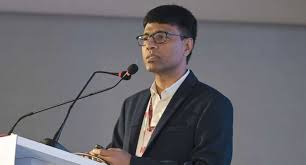
NEW DELHI – In a move that signals a strategic pivot toward clinically grounded policymaking, the Government of India has officially appointed Dr. M. Srinivas, Director of the All India Institute of Medical Sciences (AIIMS) Delhi, as a full-time Member of NITI Aayog.
The announcement, confirmed on April 26, 2026, sees Dr. Srinivas succeeding Dr. V.K. Paul, whose tenure redefined India’s primary healthcare and pandemic response. This transition marks a critical moment for the nation’s premier policy think-tank as it seeks to integrate high-level hospital administration and frontline surgical expertise into the blueprint for India’s evolving public health landscape.
As India navigates the dual burden of infectious diseases and a rising tide of non-communicable diseases (NCDs), the appointment of a “reformist doctor” to the highest levels of planning suggests a focus on operational efficiency and institutional accountability.
The Reformer’s Resume: Who is Dr. M. Srinivas?
Dr. M. Srinivas, a renowned pediatric surgeon with over three decades of experience, is no stranger to “impossible” administrative tasks. Since joining AIIMS Delhi in 1994 and becoming a professor in 2011, his career has been defined by a balance of rigorous clinical work and radical institutional overhaul.
Before taking the helm at AIIMS Delhi in 2022, Dr. Srinivas earned national acclaim for his transformation of the Employees’ State Insurance Corporation (ESIC) Medical College and Hospital in Hyderabad. Tasked with reviving a facility that was largely “concrete walls” in 2016, he turned it into a premier, NABH-accredited institution.
His tenure at ESIC was marked by a unique social consciousness, including the allocation of 35% of MBBS seats to children of insured workers. At AIIMS Delhi, he has been a vocal advocate for India-specific research, often telling staff and students that the country must move beyond adopting Western protocols and instead aim for “Nobel-level breakthroughs” in understanding local disease pathology.
Filling Large Shoes: The Legacy of Dr. V.K. Paul
Dr. Srinivas takes over the health portfolio from Dr. V.K. Paul, a figure synonymous with India’s modern healthcare infrastructure. Since 2017, Dr. Paul spearheaded the Ayushman Bharat-PMJAY, which currently provides health coverage to over 500 million of India’s most vulnerable citizens.
Dr. Paul’s legacy is perhaps most defined by his role as the “face of India’s COVID-19 battle.” As the chair of multiple empowered task forces, he navigated the country through the complexities of a vaccine rollout that exceeded 2 billion doses.
“Dr. Paul’s exit caps a pivotal era,” says a senior public health analyst. “He successfully blended the clinical insight of a pediatrician with the macro-vision required to manage a population of 1.4 billion. Moving from the ‘expansion phase’ under Paul to the ‘operational refinement phase’ under Srinivas is a logical progression for the government.”
NITI Aayog’s Vision: Tech, Prevention, and GDP
As a member of NITI Aayog, Dr. Srinivas will influence a budget and policy framework that impacts every level of the Indian healthcare system. Current priorities include:
-
Increased Health Spending: NITI Aayog remains the primary engine pushing to increase public health expenditure from the current 1.9% of GDP toward the 2.5% target outlined in the National Health Policy 2017.
-
Digital Integration: The expansion of the Ayushman Bharat Digital Mission (ABDM), which has already generated over 500 million health records, remains a top priority.
-
AI in Diagnostics: Leveraging Dr. Srinivas’s interest in technology, the Aayog is expected to further integrate Artificial Intelligence for early diagnosis of cancer and respiratory diseases in rural settings.
Expert Perspectives: Bridging the Gap
Healthcare leaders have largely welcomed the appointment, citing the need for “hospital-trench” experience at the policy table.
Dr. T. Jacob John, a prominent public health expert, notes the importance of continuity. “Dr. Paul’s schemes, like the 34 crore Ayushman cards issued, have built the foundation. Dr. Srinivas’s operational expertise is what we need now to accelerate implementation, especially as NCDs now account for roughly 65% of deaths in India, according to ICMR data.”
However, some within the medical community express concern over the vacancy left at AIIMS Delhi. Dr. Nikhil Tandon, Professor and Head of Endocrinology at AIIMS, has previously noted that administrators like Dr. Srinivas are rare assets in high-pressure environments. There are fears that an “interim” or “acting” director at AIIMS—which handles upwards of 10,000 outpatients daily—could slow the momentum of ongoing campus reforms.
What This Means for the Public
For the average citizen, this leadership change could translate into more practical, patient-centric policies. Dr. Srinivas has famously focused on reducing “wait times”—a chronic issue at major government hospitals where patients often wait weeks for elective surgeries.
His appointment likely signals a focus on:
-
Workforce Expansion: Addressing the physician-to-patient ratio. India currently strives toward the WHO standard of 1 doctor per 1,000 people (currently hovering near 0.8-0.9 depending on the region).
-
Preventive Care: A shift toward making the 1.5 lakh Ayushman Arogya Mandirs (Health and Wellness Centers) more effective at screening for hypertension and diabetes before they require expensive tertiary care.
-
Medical Education Reform: A move away from purely theoretical, online-heavy learning toward empathetic, patient-side clinical training.
Balanced Outlook: Challenges Ahead
Despite the optimism, the road ahead for NITI Aayog is steep. Critics argue that while clinicians bring valuable experience, health policy also requires deep economic expertise to manage the complexities of insurance markets and drug pricing.
Furthermore, the issue of nutrition remains a significant hurdle. With 35% of children in India still facing stunting (per NFHS-5 data), the transition from Dr. Paul’s nutrition-focused “POSHAN Abhiyaan” to Dr. Srinivas’s tenure must ensure that maternal and child health remains a core priority, rather than being overshadowed by high-tech medical advancements.
As Dr. Srinivas steps into his office at NITI Bhawan, the expectations are clear: he must take the reformist energy that transformed a hospital in Hyderabad and a campus in Delhi, and apply it to the heartbeat of the nation.
Medical Disclaimer: This article is for informational purposes only and should not be considered medical advice. Always consult with qualified healthcare professionals before making any health-related decisions or changes to your treatment plan. The information presented here is based on current research and expert opinions, which may evolve as new evidence emerges.
References
-
AIIMS New Delhi. (2026, April 25). Official Announcement regarding Dr. M. Srinivas’s appointment to NITI Aayog. Social Media Release.
-
The News Mill. (2026, April 24). AIIMS Delhi director M Srinivas set to join NITI Aayog. * NITI Aayog Official Portal. Leadership Profiles: Member (Health) Dr. V.K. Paul. [https://niti.gov.in/about-us/whos-who/leadership/members/dr-vk-paul]