 0
0
 0
0
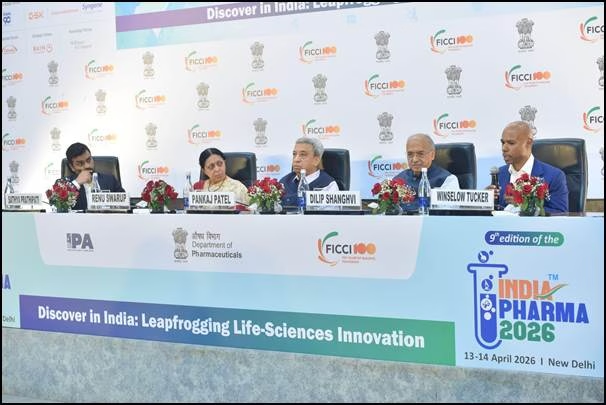
NEW DELHI – The 9th edition of India Pharma 2026 concluded on April 14, 2026, marking a pivotal shift in the nation’s healthcare trajectory. Over two days, more than 800 delegates and 60 global experts convened to address a critical mandate: transitioning India from a manufacturing powerhouse of generic drugs to a global leader in breakthrough medical innovation.
Organized by the Department of Pharmaceuticals under the Ministry of Chemicals & Fertilizers, the summit emphasized that the next frontier of Indian medicine—ranging from advanced biologics to AI-driven drug discovery—will require a massive infusion of strategic funding, specialized infrastructure, and a drastic increase in the speed of regulatory and developmental processes.
The Triple Pillars: Funding, Infrastructure, and Speed
Delivering the valedictory address, Shri Satyaprakash T L, Joint Secretary of the Department of Pharmaceuticals, summarized the consensus of the 10 high-level sessions. He noted that while India has secured its position as a global provider of affordable vaccines and generics, staying competitive in 2026 and beyond requires a “proactive” rather than “reactive” stance.
“Discussions converged around three critical enablers for the next phase of growth: funding, infrastructure, and speed,” Satyaprakash stated. He emphasized that the “coordinated action across government, industry, and academia” is no longer optional but essential for survival in the evolving global pharmaceutical landscape.
Financing the Future of Medicine
A significant portion of the final day was dedicated to the “vibrant pharma financing ecosystem.” Pharmaceutical research and development (R&D) is notoriously high-risk, often requiring a decade of investment before a single molecule reaches the patient.
Dr. Shivkumar Kalyanaraman, CEO of the Anusandhan National Research Foundation (ANRF), outlined a new architecture for funding. This model seeks to bridge the gap between academic research and commercial viability through:
-
Grant-based support for universities and non-profits.
-
Capital-based instruments (venture capital and private equity) for the private sector.
-
Blended finance models to mitigate the risks inherent in early-stage drug discovery.
Industry veterans, including Shri Pankaj Patel, Chairman of Zydus Lifesciences, noted that for Indian consumers to benefit from local innovation, the financial ecosystem must support the entire value chain—from the laboratory bench to the pharmacy shelf.
Moving Beyond Generics: The Leapfrog Strategy
India currently provides approximately 20% of the global supply of generic medicines by volume. However, experts at the summit argued that the “volume-to-value” transition is the only way to address unmet medical needs in areas like oncology, rare diseases, and chronic lifestyle conditions.
Dr. Renu Swarup, former Secretary of the Department of Biotechnology, reflected on the lessons learned during the COVID-19 pandemic. She described the crisis as a “testbed” that proved India could innovate rapidly when barriers were removed.
“India has successfully strengthened linkages between academia and industry, which were earlier fragmented,” Dr. Swarup noted, highlighting that the infrastructure built during the pandemic must now be pivoted toward long-term therapeutic breakthroughs.
Shri Dilip Shanghvi, Executive Chairman of Sun Pharmaceutical Industries Limited, added a pragmatic lens to the discussion. He reminded delegates that innovation requires “risk-sharing” mechanisms. For patients, this means that a strong pipeline of innovative Indian products could eventually lead to more personalized treatments and better access to cutting-edge science that was previously only available in Western markets.
Implications for Public Health and the Consumer
For the general public, the outcomes of India Pharma 2026 translate into more than just economic data. The push for “speed” and “innovation” has direct consequences for patient care:
-
Faster Access to New Treatments: By streamlining the “speed” of clinical trials and regulatory approvals, life-saving drugs for conditions like diabetes or heart disease may reach Indian patients years earlier than under previous frameworks.
-
Affordability of Innovation: Locally discovered and manufactured “innovator” drugs are typically more affordable for the Indian population than imported patents.
-
Harnessing AI: Experts highlighted the transformative role of Artificial Intelligence in predicting drug efficacy, which could reduce the cost of medicine by making the R&D process more efficient.
Shri Winselow Tucker, Co-Chair of the FICCI Pharma Committee and President of Eli Lilly India, noted that this transformation requires a phased roadmap with clear milestones to ensure that “innovation” doesn’t remain a buzzword but results in tangible health outcomes.
Challenges and Counterarguments
Despite the optimism, the summit did not shy away from the hurdles. Panelists addressed “market uncertainties” and the “long R&D cycles” that often deter investors. Some public health advocates have previously expressed concerns that a pivot toward high-cost innovative drugs might divert resources away from the essential generic medicines that the rural poor rely upon.
Furthermore, the integration of AI in pharmaceuticals raises questions regarding data privacy and the need for robust ethical frameworks—a topic industry leaders acknowledged would require “accountability across stakeholders.”
Conclusion: A Global Leader in Sight
As India Pharma 2026 concluded, the message was clear: the nation is no longer content being the “world’s pharmacy.” It aims to be the world’s laboratory. With over 20 partner organizations and hundreds of delegates aligned, the roadmap for the next decade focuses on advanced therapeutics and a resilient, well-funded ecosystem that places India at the heart of global healthcare science.
Reference Section
Primary Source:
-
Press Information Bureau (PIB) Delhi. “Two-day ‘India Pharma 2026’ concludes with strong call for enhanced funding, infrastructure and speed.” Posted 14 April 2026.
Medical Disclaimer: This article is for informational purposes only and should not be considered medical advice. Always consult with qualified healthcare professionals before making any health-related decisions or changes to your treatment plan. The information presented here is based on current research and expert opinions, which may evolve as new evidence emerges.