 0
0
 0
0
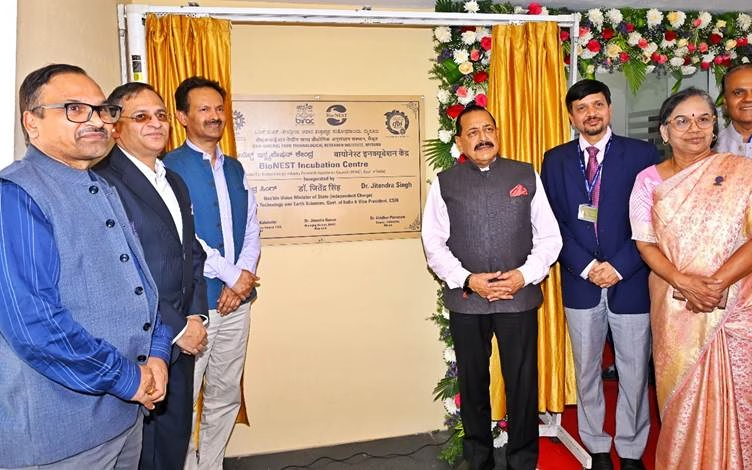
MYSURU — In a move set to redefine the intersection of biotechnology and nutrition, Union Minister for Science and Technology Dr. Jitendra Singh inaugurated the state-of-the-art BIRAC-BioNEST Incubation Centre at the Central Food Technological Research Institute (CFTRI) on April 4, 2026. The launch marks a pivotal shift in India’s food science landscape, transitioning from traditional laboratory research to a market-driven ecosystem focused on high-value “smart foods,” including probiotics, CRISPR-based crop enhancements, and precision fermentation.
The inauguration, held during CFTRI’s 75th-anniversary celebrations, highlights a growing national urgency to bridge the “valley of death” between scientific discovery and commercial availability. With 26 startups already integrated into the BioNEST facility, the center is positioned as the primary engine for India’s burgeoning food-tech sector.
Bridging the Gap: Laboratory Research Meets Consumer Health
For decades, many nutritional breakthroughs remained confined to academic journals. The BioNEST (Bioincubation Nurturing Entrepreneurship for Scaling Technologies) initiative aims to change that. By providing dedicated incubation suites, shared infrastructure, and regulatory guidance, the center allows entrepreneurs to validate and scale food bioprocessing technologies that were previously cost-prohibitive.
“While starting a venture has become easier, sustaining it requires continuous value addition,” Dr. Singh noted during his address. He emphasized that the future of public health lies in research–industry linkages, ensuring that scientific innovation aligns with modern consumer demands for convenience without sacrificing nutritional integrity.
The facility’s current portfolio is a snapshot of the future of medicine through food. Startups at the center are currently developing:
-
Precision Fermentation: Using microorganisms to produce specific proteins or fats, reducing the need for intensive animal farming.
-
Postbiotics and Probiotics: Focused on gut microbiome health, which emerging research links to immune function and mental clarity.
-
Nutraceuticals: Bioactive compounds derived from botanicals that offer physiological benefits beyond basic nutrition.
The Rise of “High-Science” Foods
The shift toward science-driven food segments comes at a time when the global “functional food” market—foods that provide health benefits beyond basic nutrition—is projected to grow exponentially. According to data from the Ministry of Food Processing Industries (MoFPI), the Indian food processing sector is one of the largest in the world, yet the integration of high-end biotechnology like CRISPR and gene-editing in food remains in its nascent stages.
“The work being done at BioNEST is not just about making food taste better; it’s about molecular-level intervention,” says Dr. Aranya Iyer, a clinical nutritionist not affiliated with the project. “When we talk about CRISPR-based technologies or precision fermentation, we are looking at the ability to remove allergens from nuts or increase the bioavailability of vitamins in staple grains. This has massive implications for addressing hidden hunger and malnutrition.”
As of March 2026, the BioNEST facility has already seen tangible results:
-
12 Patents Filed: Protecting intellectual property in novel food formulations.
-
26 Startups Supported: Ranging from physical residents to hybrid “incubation-at-a-distance” models.
-
Product Commercialization: Several ventures have already transitioned from prototypes to retail-ready products.
Public Health Implications: More Than Just “Ready-to-Eat”
While much of the focus is on the economy and entrepreneurship, the underlying impact is public health. Dr. Singh highlighted the need for innovation in the Ready-to-Eat (RTE) and convenience food segments. In a fast-paced urban environment, the “convenience” of processed foods has historically been linked to higher rates of non-communicable diseases (NCDs) like obesity and Type 2 diabetes.
The CFTRI initiative seeks to flip this narrative by applying rigorous scientific standards to convenience foods. By incorporating probiotics and botanicals into accessible formats, the goal is to make healthy choices the “default” choice for the average consumer.
However, experts urge a balanced perspective. “While the promise of precision-engineered food is vast, we must ensure these technologies undergo rigorous long-term safety assessments,” says Dr. Rajesh Kumar, a public health policy analyst. “The challenge for BioNEST will be navigating the regulatory hurdles of the Food Safety and Standards Authority of India (FSSAI) while maintaining the pace of innovation.”
A Legacy of Innovation: 75 Years of CFTRI
The event also marked the 75th anniversary of CFTRI, an institute that has developed over 450 technologies transferred to thousands of licensees. To commemorate the milestone, the institute released a compendium of its R&D achievements, documenting a journey from solving post-independence food shortages to modern-day bio-innovation.
Four new Memoranda of Understanding (MoUs) were signed during the event, alongside the launch of two new CFTRI-developed products. These partnerships between the public institute and private MSMEs (Micro, Small, and Medium Enterprises) are designed to ensure that even small-scale manufacturers have access to high-end biotechnology.
What This Means for Consumers
For the average health-conscious reader, the growth of the BioNEST ecosystem means that the next generation of “superfoods” will likely be backed by peer-reviewed science rather than just marketing buzzwords.
Key takeaways for the public:
-
Evidence-Based Nutrition: Look for products coming out of certified incubators like BioNEST, which require rigorous validation.
-
Gut-Health Focus: The heavy investment in probiotics and postbiotics suggests these will become staple components of fortified foods in the next 2-3 years.
-
Sustainability: Many of the startups focus on “circular bio-economy” models, meaning the healthy foods of the future will likely have a lower environmental footprint.
As India moves toward a market-linked food innovation ecosystem, the BioNEST at CFTRI stands as a testament to the power of “Lab-to-Market” strategies. It is a bold bet that the future of India’s health will be decided not just in the clinic, but in the startup incubators where food meets science.
Medical Disclaimer: This article is for informational purposes only and should not be considered medical advice. Always consult with qualified healthcare professionals before making any health-related decisions or changes to your treatment plan. The information presented here is based on current research and expert opinions, which may evolve as new evidence emerges.
References
Official Sources:
-
Press Information Bureau (PIB) Delhi: “Dr. Jitendra Singh inaugurates BioNEST at CFTRI Mysuru,” Posted 04 APR 2026.