 0
0
 0
0
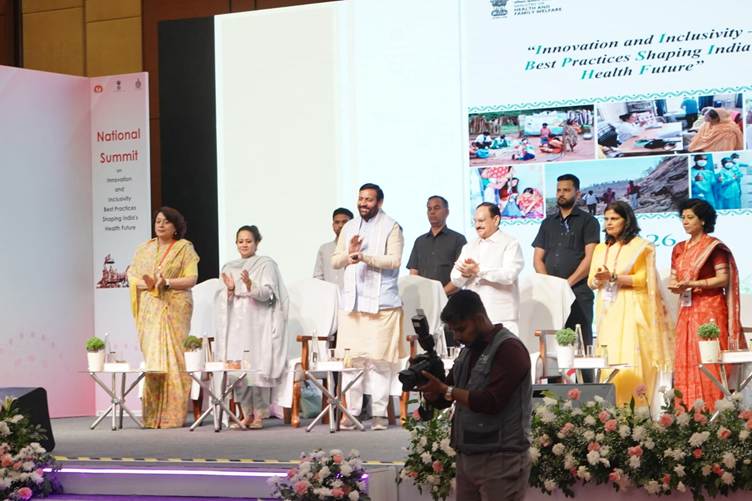
PANCHKULA, HARYANA – In a significant move toward universal health coverage, Union Minister of Health and Family Welfare Shri J.P. Nadda inaugurated the 10th National Summit on Innovation and Inclusivity today. The summit, attended by policymakers, medical experts, and state leaders, serves as a critical stocktake of India’s healthcare evolution—transitioning from a traditional curative model to a holistic system focused on prevention and digital integration.
The event highlights a pivotal shift in the National Health Mission (NHM), emphasizing “last-mile delivery”—the effort to ensure that even the most remote citizens have access to quality care without financial hardship.
The Rise of Preventive Care: Ayushman Arogya Mandirs
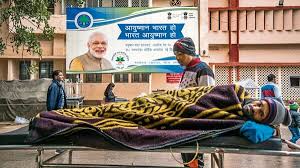
A central theme of the summit is the success of the Ayushman Arogya Mandirs (AAMs). With over 1.85 lakh centers established nationwide, these facilities have become the frontline of India’s healthcare defense.
Unlike traditional clinics that wait for sick patients to arrive, AAMs are designed for proactive screening. Minister Nadda noted that these centers are now the first point of contact for nearly 1.5 billion people, focusing heavily on non-communicable diseases (NCDs).
-
Mass Screening: Large-scale screening for hypertension, diabetes, and three common cancers (oral, breast, and cervical) is now standard for individuals over age 30.
-
Quality Standards: Over 50,000 of these centers have already achieved National Quality Assurance Standards (NQAS) certification, moving the needle from mere “access” to “quality access.”
Improving Vital Statistics: Maternal and Child Health
The summit presented data indicating a sharp decline in mortality rates, which experts attribute to increased institutional deliveries and better neonatal care.
| Metric | Previous Rate/Status | Current Achievement |
| Institutional Deliveries | 79% | 89% |
| Under-Five Mortality | – | 79% Decline (Global Estimate) |
| Infant Mortality | – | 73% Decline (Global Estimate) |
| TB Treatment Coverage | – | 92% |
“The shift from the 2002 National Health Policy to the 2017 framework has allowed us to incorporate palliative and promotive care,” Minister Nadda stated. He also celebrated milestones such as India remaining polio-free since 2014 and the recent elimination of trachoma as a public health concern.
Breaking Financial Barriers: The “Zero Cost” Milestone
One of the most striking revelations came from Union Health Secretary Smt. Punya Salila Srivastava, who cited the 80th Round of the National Statistical Organization (NSO) survey.
The findings indicate that the median out-of-pocket expenditure (OOPE) for outpatient care in public health facilities has reached zero. For a country where medical debt has historically been a leading cause of poverty, this statistic represents a major victory for the National Health Mission’s goal of making healthcare “affordable and accessible.”
Digital Revolution: Portals for the Future
The summit saw the launch of several digital “interoperable” platforms designed to reduce the paperwork burden on frontline workers like ASHAs and ANMs:
-
Swasth Bharat Portal: A unified interface that integrates multiple national health programs, allowing healthcare providers to use a single login for data entry and monitoring.
-
JANANI Portal: A robust platform tracking the “lifecycle” of maternal and child health—from pre-pregnancy through childhood—to ensure no “high-risk” pregnancy falls through the cracks.
-
RBSK 2.0: An updated Rashtriya Bal Swasthya Karyakram (RBSK) framework that expands screening for birth defects, developmental delays, and now, childhood NCDs like diabetes.
Expert Perspective: The Challenge of the “NCD Wave”
While the government celebrated the decline in infectious diseases, medical experts at the summit issued a cautionary note regarding the “silent epidemic” of non-communicable diseases.
Independent health analysts suggest that while screening numbers are high, the next hurdle is continuum of care. Screening a patient for diabetes is only the first step; the system must now ensure that those patients receive consistent medication and follow-up care at the village level to prevent complications like kidney failure or stroke.
Haryana Chief Minister Shri Naib Singh Saini showcased his state’s CARE Campaign as a potential solution, which trains families to support patient care at home, bridging the gap between hospital discharge and long-term recovery.
Public Health Implications: What This Means for You
For the average citizen, these developments signal a change in how they should interact with the health system:
-
Don’t wait for symptoms: Use local Ayushman Arogya Mandirs for routine annual screenings.
-
Digital Identity: Creating an ABHA (Ayushman Bharat Health Account) ID is becoming essential for seamless records across different hospitals and states.
-
Zero-Cost Awareness: Patients should be aware that outpatient services in public facilities are increasingly free of charge, including essential medicines and diagnostics.
Limitations and Future Hurdles
Despite the optimism, the summit acknowledged significant gaps. The Union Health Minister emphasized that “financial resources are available, but the key lies in effective and timely utilization.”
Some states still struggle with “last-mile” delivery due to geographic barriers or local administrative delays. Furthermore, while the median expenditure in public clinics is zero, specialized private-sector care remains expensive, highlighting the ongoing need to strengthen the public secondary and tertiary sectors.
References
- https://www.pib.gov.in/PressReleasePage.aspx?PRID=2256956®=3&lang=1
Medical Disclaimer: This article is for informational purposes only and should not be considered medical advice. Always consult with qualified healthcare professionals before making any health-related decisions or changes to your treatment plan. The information presented here is based on current research and expert opinions, which may evolve as new evidence emerges.