 0
0
 0
0
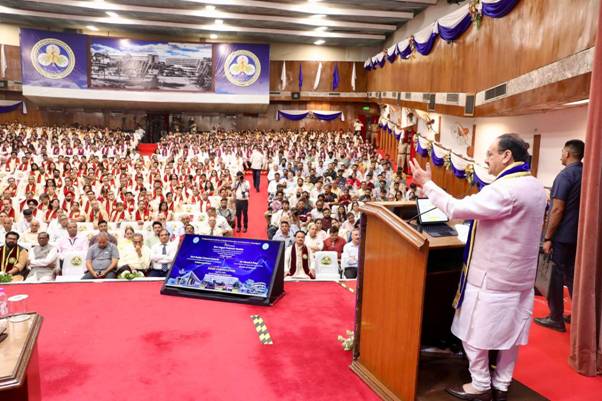
CHANDIGARH – In a landmark address that underscored India’s rapidly evolving healthcare landscape, Union Minister for Health and Family Welfare, Shri J.P. Nadda, celebrated the 39th Convocation of the Postgraduate Institute of Medical Education and Research (PGIMER) on April 30, 2026. Speaking to a distinguished gathering of 682 graduates, faculty, and health officials, Nadda detailed a “monumental leap” in the nation’s medical infrastructure, noting that the country has reached a historic threshold of over 200,000 medical seats.
The ceremony, which saw the conferring of 61 PhDs and 114 DM (Doctorate of Medicine) degrees, served as a platform to highlight how the expansion of tertiary care is reshaping public health accessibility in North India and beyond.
A Decade of Expansion: By the Numbers
The Health Minister provided a comprehensive overview of the government’s efforts to bridge the gap between healthcare demand and professional supply. Highlighting a decade of “visionary leadership,” Nadda compared the current infrastructure to the turn of the century when India possessed only one All India Institute of Medical Sciences (AIIMS).
-
AIIMS Growth: From a single institution to 23 nationwide.
-
Medical Colleges: An increase from 387 a decade ago to 818 today.
-
Capacity Building: Undergraduate medical seats have surged from 51,000 to over 126,000, with a target of adding 75,000 more seats in the next five years.
“While basic education is a right, higher and professional education is a privilege supported by significant public investment,” Nadda remarked. He revealed that the government invests approximately ₹30-35 lakh per student per year in public medical education, ensuring that the next generation of specialists is equipped without the prohibitive costs often seen in private sectors.
PGIMER: A Hub of Innovation and Research
Ranked 2nd in the medical category of the National Institutional Ranking Framework (NIRF) 2025, PGIMER Chandigarh continues to be a cornerstone of the Indian healthcare ecosystem. The institute currently manages a massive patient load, with 2,233 beds across 47 specialty departments, facilitating nearly 2.8 million outpatient visits annually.
Pioneering Research and Clinical Success
Nadda praised PGIMER’s robust research ecosystem, which currently hosts over 850 extramural and 100 intramural projects. These initiatives are supported by global and national bodies including the World Health Organization (WHO) and the Indian Council of Medical Research (ICMR).
The institute’s expertise in transplant surgery was a particular point of pride. In 2025 alone, PGIMER performed:
-
250 Kidney Transplants
-
11 Simultaneous Pancreas-Kidney (SPK) Transplants (maintaining its status as a national leader in this complex procedure).
“PGI is not just a hospital; it is a reputed brand name that carries the weight of excellence in clinical research and pioneering surgeries,” Nadda said.
The Human Element in the Age of AI
As healthcare enters the era of Artificial Intelligence, stem cell research, and precision medicine, the Health Minister issued a poignant reminder to the graduating class. While he encouraged the adoption of telehealth and advanced diagnostics, he emphasized that technology must not eclipse the patient-provider relationship.
“While technological advancements are transforming healthcare, the human touch must not be lost,” Nadda stated. “Compassion has its own strength and must remain central to medical practice.”
This sentiment resonates with current public health trends where “patient-centered care” is increasingly recognized as a vital component of successful clinical outcomes. Experts suggest that while AI can improve diagnostic accuracy, the emotional intelligence of a physician remains irreplaceable in chronic disease management and end-of-life care.
Public Health Implications and Regional Outreach
For the general public, the most significant takeaway from the convocation is the decentralization of specialized care. PGIMER is actively expanding its footprint through satellite centers in:
-
Sangrur (Punjab): Already operational and serving over 1.27 lakh patients.
-
Una (Himachal Pradesh): Under construction.
-
Ferozepur (Punjab): Under construction.
This “Satellite Model” is designed to reduce the burden on main tertiary centers and provide high-quality care closer to rural and semi-urban populations. Furthermore, under the PM-JAY (Ayushman Bharat) scheme, PGIMER has treated approximately 1.81 lakh patients, underscoring its commitment to making world-class healthcare affordable for the economically vulnerable.
Perspectives and Limitations
While the expansion of medical seats and colleges is a significant achievement, independent health analysts often point to the “faculty gap” as a potential limitation. Increasing seat capacity requires a proportional increase in experienced medical educators to maintain the high standards PGIMER is known for.
Additionally, while the surge in medical colleges is impressive, the distribution of these institutions remains skewed toward certain states. Ensuring equitable access to medical education across all regions remains a persistent challenge for the Union Health Ministry.
Conclusion: A Call to Service
As the 682 graduates embark on their professional journeys, they do so at a time when India is positioning itself as a global leader in medical tourism and research. The Health Minister urged the new doctors to view their education as a responsibility to society, advocating for honest self-assessment and continuous improvement.
For the patients of North India, the continued growth of PGIMER and its satellite centers represents a promise of better access, cutting-edge technology, and a healthcare system that aims to balance modern science with traditional empathy.
Reference Section
Primary Source:
-
Press Information Bureau (PIB) Delhi. “Union Health Minister, Shri J.P. Nadda addresses 39th Convocation of PGIMER, Chandigarh.” Posted April 30, 2026.
Medical Disclaimer: This article is for informational purposes only and should not be considered medical advice. Always consult with qualified healthcare professionals before making any health-related decisions or changes to your treatment plan. The information presented here is based on current research and expert opinions, which may evolve as new evidence emerges.