 0
0
 0
0
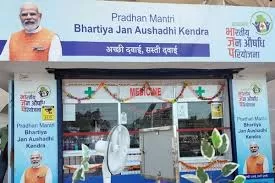
NEW DELHI — In a major update on the country’s healthcare infrastructure, Union Minister for Chemicals and Fertilizers Jagat Prakash Nadda informed Parliament that India’s flagship generic medicine initiative, the Pradhan Mantri Bhartiya Janaushadhi Pariyojana (PMBJP), has surpassed a crucial landmark. As of June 30, 2026, more than 20,149 Jan Aushadhi Kendras (JAKs) are operational nationwide, delivering an estimated ₹45,000 crore ($5.4 billion) in direct out-of-pocket savings to citizens over the past 12 years.
The statement, delivered in a written response in the Lok Sabha, highlights how the government-backed network of affordable pharmacies has scaled up to reduce the crushing financial burden of healthcare on Indian households, particularly in semi-urban and rural areas.
Expanding the Product Basket to Essential Care
The Pharmaceuticals & Medical Devices Bureau of India (PMBI), which implements the PMBJP scheme, has continually broadened the scope of treatments available at these outlets. The national product portfolio currently comprises 2,110 medicines and 315 surgicals, medical consumables, and devices.
This comprehensive basket spans major therapeutic groups, including:
-
Cardiovascular and anti-diabetic medications for long-term chronic disease management
-
Anti-cancer therapies to alleviate oncology care costs
-
Anti-infectives, gastrointestinal drugs, and anti-allergics for acute illnesses
-
Nutraceuticals and hygienic products, including affordable sanitary napkins
With the exception of laboratory reagents and vaccines, the scheme covers virtually all bio-equivalent generic formulations listed in the National List of Essential Medicines (NLEM). By pricing these items 50% to 90% lower than branded equivalents, the program targets the single largest component of personal healthcare expenditure in India: prescription medication.
Supply Chain Reforms and Demand Forecasting
Maintaining a steady supply of high-volume medicines across thousands of outlets has historically posed logistical challenges for public health initiatives. To prevent stockouts and inventory gaps, PMBI has overhauled its logistical backbone using an end-to-end, IT-enabled supply chain.
The distribution system now relies on one central warehouse, four regional hubs, and a growing network of nationwide distributors. To further strengthen last-mile availability:
-
Top-Selling Incentives: Since September 2024, PMBI has incentivized JAK operators to maintain mandatory stock levels for 200 essential medicines (100 top-selling scheme drugs and 100 fast-selling market drugs), offering monthly financial incentives tied to stock compliance.
-
Predictive Forecasting: PMBI actively tracks and forecasts demand for 400 fast-moving pharmaceutical products using digitized predictive tools to prevent sudden supply crunches.
Public Health Impact and Expert Commentary
Out-of-pocket expenditure (OOPE) on healthcare has long been a primary driver of household poverty in developing economies. According to public health policy experts, reducing pharmaceutical costs is the most direct lever to prevent families from slipping into medical debt.
“When patients with chronic conditions like hypertension or diabetes skip doses due to the cost of branded drugs, the downstream risk of strokes, kidney failure, or cardiac events increases exponentially,” says Dr. Ananya Mukherjee, a public health specialist not affiliated with the PMBI program. “Providing reliable, low-cost generic substitutes directly improves medication adherence and long-term health outcomes.”
Pharmacological experts also emphasize that quality assurance remains central to building patient and physician confidence. Medicines distributed under PMBJP undergo rigorous testing at laboratories accredited by the National Accreditation Board for Testing and Calibration Laboratories (NABL) before entering the market.
Addressing Gaps: Local Awareness and Prescription Challenges
Despite covering 776 out of 784 districts nationwide, challenges persist in achieving uniform penetration and usage. District-level evaluations indicate that localized gaps remain in public awareness, geographic accessibility, and physician prescribing habits.
To bridge these gaps, PMBI is partnering with local administrations to secure rent-free spaces in public hospitals within under-served blocks. Additionally, targeted public education campaigns are being deployed to dispel myths surrounding generic drug quality:
-
Jan Aushadhi Week: Annual national educational drives every March involving health camps, pharmacy seminars, and public rallies.
-
Grassroots Outreach: Rural engagement via mobile health camps, folk theater (nukkad-natak), and audiovisual displays at Common Service Centres (CSCs).
-
Digital Tools: Interactive WhatsApp chatbots and outbound calls to help citizens locate their nearest pharmacy and calculate potential cost savings.
Entrepreneurship and Socio-Economic Outreach
Beyond public health benefits, the PMBJP operates as a franchise-based social entrepreneurship model. Individual entrepreneurs, non-governmental organizations, and private firms can apply online to establish outlets.
To ensure inclusive growth, the government offers a one-time special incentive of ₹2 lakh for setting up pharmacies in North-Eastern states, Himalayan regions, island territories, and designated Aspirational Districts. The same incentive applies to outlets opened by women, youth, ex-servicemen, divyangjan (persons with disabilities), and Scheduled Caste/Scheduled Tribe entrepreneurs.
Practical Takeaways for Patients and Consumers
For patients looking to reduce their prescription expenses through the Jan Aushadhi network:
-
Verify Equivalence: Patients can consult their primary physician or pharmacist to verify that the generic chemical formulation matches their prescribed branded medication.
-
Locate Outlets: The official portal (
www.janaushadhi.gov.in) and the ‘Jan Aushadhi Sugam’ mobile application allow users to search for nearby stores, check product availability, and compare prices. -
Report Availability Issues: Citizens can use official helpline channels and digital chatbots to report stock shortages at local stores, aiding real-time inventory monitoring.
Medical Disclaimer: This article is for informational purposes only and should not be considered medical advice. Always consult with qualified healthcare professionals before making any health-related decisions or changes to your treatment plan. The information presented here is based on current research and expert opinions, which may evolve as new evidence emerges.
Reference Section
Official Government Statements & Reports
-
Press Information Bureau (PIB) Delhi: Evaluation and Expansion of Pradhan Mantri Bhartiya Janaushadhi Pariyojana (PMBJP). Written reply by Union Minister for Chemicals and Fertilizers Shri Jagat Prakash Nadda in Lok Sabha. Published July 24, 2026.