 0
0
 0
0
KINSHASA, Democratic Republic of Congo — The rapidly evolving Ebola outbreak in the Democratic Republic of Congo (DRC) has breached containment lines and expanded into two additional northeastern provinces, Haut-Uele and Tshopo. The regional expansion underscores growing concerns that the deadly virus is outpacing containment efforts, prompting the World Health Organization (WHO) to issue warnings regarding a wider geographic risk across East Africa.
The current outbreak, which health authorities officially declared in May 2026, has already established dual-country transmission, impacting both the DRC and neighboring Uganda through cross-border movement. According to data released by the European Centre for Disease Prevention and Control (ECDC) on July 9, 2026, the situation has become critical: the DRC has recorded 1,792 confirmed cases and 625 related deaths, while Uganda has documented 20 confirmed cases and two fatalities.
Undetected Transmission Chains Strain the Frontlines
Public health officials warn that the official toll likely understates the true scale of the crisis. A major challenge for response teams is the presence of “blind spots” in disease surveillance. In early July, a WHO official revealed that four out of every five new Ebola cases identified in parts of eastern Congo had no known epidemiological link to existing patients.
When the majority of new patients cannot be traced back to a known contact, it indicates that invisible chains of transmission are actively spreading undetected within communities. Insecurity, fluid population movements across porous provincial borders, and a general hesitation to seek formal medical care have combined to obscure the virus’s true trajectory.
Dr. Helen Jenkins, an independent infectious disease epidemiologist not involved in the direct response, emphasizes the gravity of these gaps. “When eighty percent of new cases appear without an established contact link, it tells us that our surveillance network is catching only the visible tip of the iceberg,” Jenkins notes. “Without rapid isolation of patients and meticulous contact tracing, the virus will continue to establish a foothold in new health zones before response teams even realize the threat is there.”
Why the Bundibugyo Strain Demands a Different Strategy
The complexity of this outbreak is significantly compounded by the specific virus responsible: Bundibugyo ebolavirus.
Unlike the more common Zaire ebolavirus strain—which was successfully mitigated in recent years using highly effective, licensed countermeasures like the Ervebo vaccine and targeted monoclonal antibody treatments—the Bundibugyo strain currently has no approved vaccine or specific therapeutic treatment.
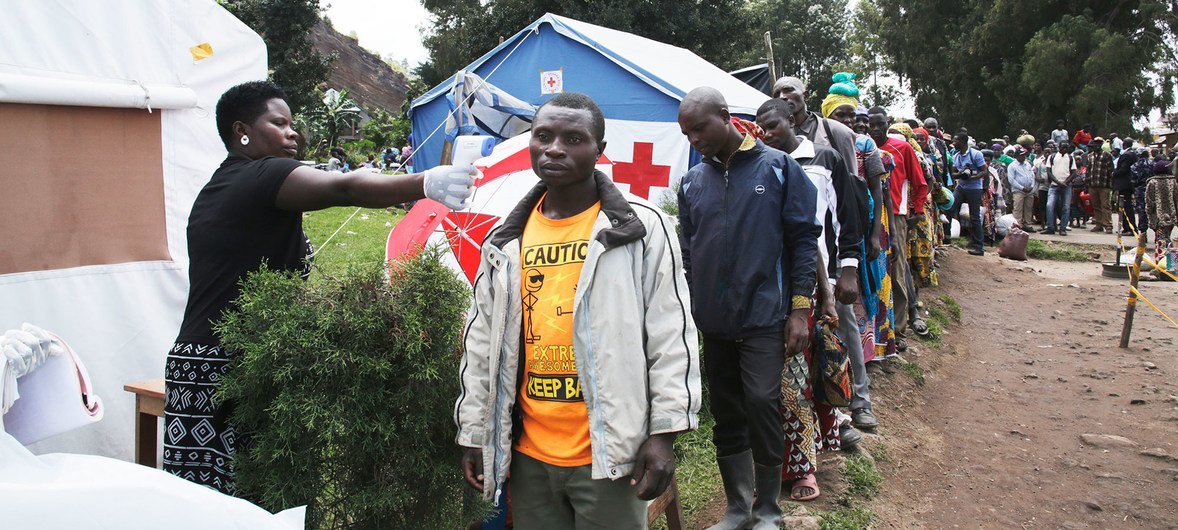
Consequently, frontline healthcare workers cannot rely on widespread ring vaccination to halt transmission. Instead, containment hinges strictly on classic, resource-intensive public health measures:
-
Early Detection: Identifying symptomatic individuals before widespread community exposure occurs.
-
Rigorous Isolation: Housing patients in specialized treatment centers to break transmission lines.
-
Infection Prevention & Control (IPC): Providing health workers with adequate personal protective equipment (PPE).
-
Community Engagement: Partnering with local leaders to build trust, dispel misinformation, and ensure safe, dignified burials.
Signs of Clinical Progress: On July 2, 2026, the WHO added the very first rapid diagnostic test for the Bundibugyo virus to its Emergency Use Listing (EUL). Concurrently, health authorities initiated patient enrollment in a randomized clinical trial designed to evaluate the efficacy of investigational therapeutics against the strain. While these steps represent crucial scientific milestones, they are experimental and will take time to alter the immediate operational realities on the ground.
The Global Race for a Preventative Vaccine
The expansion into Haut-Uele and Tshopo has intensified global efforts to develop a preventative vaccine. On July 13, 2026, the University of Oxford announced the launch of the world’s first human trial for a Bundibugyo-specific vaccine candidate, designated as BD-Ebov.
The Phase 1 clinical trial, conducted in partnership with the Serum Institute of India, aims to evaluate the safety profile and the strength of the immune response generated by the vaccine. The study is enrolling 50 healthy adult volunteers aged 18 to 55 in Oxford. The Serum Institute has already manufactured investigational doses to support this early-stage evaluation.
While the scientific community has welcomed the trial, public health experts urge caution against viewing it as an immediate solution to the ongoing crisis. Phase 1 trials are strictly designed to assess baseline safety and confirm whether a vaccine triggers an immune response in a controlled, healthy population. They do not demonstrate whether a candidate provides real-world protection against the virus during an active, highly dynamic epidemic. A deployable vaccine remains months, if not longer, from widespread field distribution.
Public Health Implications and the Shadow of Co-infections
For the general public and international travelers, understanding how Ebola spreads is vital to maintaining an accurate perception of risk. Unlike respiratory pathogens such as influenza or COVID-19, Ebola is not airborne. It spreads strictly through direct contact with the bodily fluids (such as blood, saliva, sweat, or vomit) of an infected person who is actively symptomatic, or someone who has died from the disease. It can also spread via surfaces or materials contaminated with these fluids.
Because the virus requires direct physical contact to transmit, the general community risk for individuals living outside the immediate outbreak zones remains very low. However, international health agencies maintain heightened travel screening and border surveillance to identify potential imported cases early.
Beyond the direct threat of the virus, the outbreak is severely destabilizing local health infrastructure. Healthcare facilities in affected hotspots are becoming heavily strained, leading to dangerous secondary public health consequences. Historically, during severe viral hemorrhagic fever outbreaks, mortality from routine, treatable conditions like malaria, severe diarrhea, and maternal complications can skyrocket.
Patients often avoid clinics out of fear of contracting Ebola, or because resources have been diverted entirely to containment. Public health agencies emphasize that response teams must actively sustain routine medical care alongside Ebola containment measures to prevent an escalation in indirect, preventable deaths.
Limitations, Uncertainties, and the Path Forward
Major epidemiological uncertainties continue to cloud long-term projections. The lack of clear links between transmission chains, paired with logistical difficulties in remote parts of the northern DRC, makes accurate mapping of the outbreak exceptionally difficult. Health authorities emphasize that the public should remain grounded: while the diagnostic advancements and the Oxford vaccine trial offer genuine scientific hope, they are not silver bullets for the current emergency.
For individuals residing in or traveling near the affected regions in the DRC and Uganda, safety depends on adhering strictly to official health directives. This includes avoiding contact with individuals showing symptoms of illness, avoiding contact with deceased bodies, and practicing rigorous hand hygiene. For the rest of the world, clear, factual reporting remains the best tool to foster awareness without inducing panic. The evidence confirms that the regional response is under immense pressure, but standard, disciplined public health interventions remain the most effective line of defense.
References
-
Reuters. Congo’s Ebola outbreak spreads to two more provinces. Kinshasa Bureau, July 13, 2026.
Medical Disclaimer: This article is for informational purposes only and should not be considered medical advice. Always consult with qualified healthcare professionals before making any health-related decisions or changes to your treatment plan. The information presented here is based on current research and expert opinions, which may evolve as new evidence emerges.